

Showing posts with label philosophy. Show all posts

Argument Fallacies and How the Faithful Reason

Dave Armstrong

Dear Dave,

Hello. I was reading your Catholic blog and your latest debate, this time with a Lutheran, and wondered if you spent more time debating fellow Christians or non-Christians?

That reminds me, I recently looked up Sogn, a Christian with whom you have had discussions in the past, on homosexuality, abortion, vegetarianism, and, whether people can be saved after death. You seemed interested in speaking with him, perhaps because he is a fairly recent convert to Anglicanism and of a more moderate sort that yourself. Though I was particularly amused by this web exchange between Sogn and yourself in which you said:

Dave: “Modern folk do not disbelieve because scholarship has disproved the Christian faith. Modern folk disbelieve because they do not want to follow our Lordʼs call of discipleship.”

Sogn: “That is an extreme generalization and oversimplification. Itʼs also an ad hominem argument, perpetuating a stereotype that insults many non-Christians who have given a lot of honest thought to Christian claims and yet remain skeptical. As you say, ‘We are ALL selfish sinners’ and as such we all have motives to resist the call of Christ, including those of us who have already embarked on the path of discipleship. Regarding informed disbelief in Christianity, sometimes people simply havenʼt heard any cogent arguments for Christianity. Apologists might make more progress with honest nonbelievers if they would respect carefully considered reasons for disbelief instead of assuming that the only reason people are not convinced by Christianity is because of their wicked unwillingness to see the truth.” Source

Edward: The exchange, above, between Sogn and yourself also reminded me of the way you opened your first blog discussion with me, making me the “disbeliever,” for you wrote this…

Dave: “Christians believe… that there is a purpose to everything. We may never discover it in this life, but that makes it no less likely for a loving God to have some inscrutable reason for difficult-to-understand things like this… Edʼs skeptical take on this is clear… Godʼs promises are null and void, and obviously vacant.”

Edward: Dave, in my eyes you were overstuffing a host of questionable assertions/appeals into your first two paragraphs. Here are your assertions/appeals again, Dave, from your very first two paragraphs:

  1. “what Christians believe” [Not an argument in itself but an assertion/appeal of sorts.]

  2. “there is a purpose to everything” [About such an assertion much could be said, as well as meriting a discussion of the words “purpose,” and, “everything”]

  3. “We may never discover it in this life” [Another assertion, or perhaps an admission of lack of proof, or indeterminacy, at least in this life, and for some people.]

  4. “Loving God” [Assertion/Appeal]

  5. “inscrutable reason” [A weird combination of words about which much could be said, or perhaps about which nothing need be said, since if “reasons” are “inscrutable” then neither you nor I are “scruting” any of them. *smile* How can anyone tell that their interpretation of the “inscrutable reason” lying behind an unusual or tragic event is superior to another personʼs interpretation that their own philosophy or religion might supply? And in what sense is defending oneʼs beliefs via employing “inscrutable reason” an effective rejoinder to folks who think differently than you do? Again we have lack of proof or indeterminacy.]

  6. “difficult-to-understand things” [Assertion. It was difficult for me to understand why the words and promises of Psalm 91 that spoke of being spared earthly death or discomfort in the face of deadly diseases (or in the midst of a battle with an army of foes; or faced with a stone in the pathway of oneʼs toes), would be sung at my young friendʼs funeral, especially knowing that according to one ancient Biblical school of thought, divine protection and long life were the ultimate blessings, while a short life was viewed as a misfortune, sometimes even as a curse or punishment of God. But Dave, you saw things differently, namely that if I could be reminded right up front of a host of your assertions/appeals, you might be able to convince me that Psalm 91 contained a heavenly promise that could apply equally well to all manner of loving providential care and “wisdom sayings” in general—and hence I might be able to leave behind the “this worldly” dimension of that psalmʼs promises and teachings, no matter how clearly the psalmist appeared to be reiterating such promises in “this worldly” ways.]

  7. “Edʼs skeptical take” [Assertion. It hardly seems fair to label an article that merely mentions obvious questions a “skeptical take,” especially prior to proving all of oneʼs own supernatural assertions and interpretations that point to “inscrutable reasons.” You could have employed the more neutral less prejudiced phrase, “Edʼs thinking on the matter” rather than “Edʼs skeptical take.”]

  8. “Edʼs take on this is clear: Godʼs promises are null and void, and obviously vacant.” [Assertion/Appeal to “God” and “Godʼs promises.” In my own mind and in my original article I had been appealing to a particular school of ancient Hebrew thought that envisioned Yahwehʼs promises in a “this worldly” fashion, a school that this psalm seemed to exemplify par excellence, and was comparing that with the incongruous reality of a friendʼs youthful demise. Perhaps there is life after death, perhaps there is a God, I have my hopes, though not tied to any particular holy book or holy church. So, though I donʼt speak encouragingly nor enthusiastically of “Godʼs promises” in the psalm, nor encourage others to do so, I have my own larger hopes (and prayers in my own closet), and also my own doubts concerning the Bible being “Godʼs” word from cover to cover. Dave, you yourself himself admitted there were “inscrutable reasons” “we may never discover” in this life, for why “everything” happens as it does. I admit if there are reasons for everything that happens, I for one have not discovered them all, far from it, and if they exist they remain as “inscrutable” to me as they are to you, Dave, in this life. We agree there. I even know some Catholics or other types of Christian theologians who leave room for God and “chance” to work together in “inscrutable” unison in the cosmosʼs evolution, and in peopleʼs lives. The reasoning of that particular psalmist however, appears pretty “scrutable” (*smile* i.e., understandable) from the standpoint of ancient Near Eastern “this worldly” promises, blessings and expectations.]

Perhaps if I had simply written the above as my first blog reply, a brief reply, our discussion might have gone on smoother. I also recognized several things after our online debate, Dave, namely that there is a difference between people like me who simply believe in “mystery” and continue to ask questions and have hopes, and people like you whose lives revolve around particular “holy mysteries of the church” about which you believe you have more supernatural answers than I presently claim to have.

First realization: I could question the beginning of the Catholic Bible focusing on the creation myths with which it begins. But to a believer in the “inscrutability” defense, there is nothing even remotely questionable about God starting the Bible off with myths and speaking in mythical stories. Thatʼs as “sure” a start as any holy book needs apparently.

Second realization: Or I could cite a book nearer the end of the Bible, namely the “letter of Jude” in the N.T. that many scholars believe was probably not even written by Jude nor by any apostle but was a pseudepigraphical writing. And I could quote a verse that “Jude” quotes from a definitely pseudepigraphical source, the Book of Enoch, i.e., since “Jude” explicitly says that “Enoch the seventh from Adam” “prophesied” “such and such.” “Jude” thus cites a passage directly from the flat-earth book of Enoch and says that passage was a “prophecy” about what was happening to the church in “Judeʼs” day. So we have a pseudepigraphical author citing another pseudepigraphical author! But again thatʼs as good a way to convey “truth” as any to a believer in the “inscrutability” defense. I assume your answer, Dave, to all such questions is that “The Bible needs proper interpretation, and that is provided by the church.”

Third realization: I could critique the 600+ pages of the official interpretation of the Catholic church, the Catholic Catechism, a 600+ page book written to explain what Catholics believe about their 1000+ page Bible, and their church, and what they should practice. The Catechism of course is a document that can continue to undergo at least some future changes. But I think you would say, Dave, that if I criticized anything in the Catechism for not changing soon enough, or changing too late that I was nitpicking. “Look at the Big Picture” youʼd say. (But of course you wouldnʼt mean the picture of Christians persecuting pagans, Jews, and fellow Christians throughout the millennia, nor the history of doctrinal differences too numerous to mention, nor of todayʼs internal differences among Catholics.)

Fourth realization: My response to you, Dave, and to the Bible scholar whom I originally contacted and who chose to defend his faith at your site via that same “inscrutable” defense as you, probably can only be this…

I donʼt see a personal need to have a holy book nor a catechism to help me interpret what I believe about that holy book. I am capable of growing and learning, reading more than just two books. I am capable of citing inspirational bits of wisdom from a wide variety of spiritual and secular sources and deciding what sayings seem more “wise” and appropriate than others (just as the “wise men” who collected the “wisdom” sayings in the Bible did, even collecting some sayings from pagan Egypt as that Catholic scholar admitted).

Of course I do not claim to know as much as Catholic theologians do about ‘God’ and the ‘afterlife’ and what you must believe and practice as concerns that particular Church. Nor am I eager to join Catholicism and have to defend any particular side within todayʼs Catholic church controversies (both local and national, both spiritual and institutional) of which I read each week in various Catholic publications like the conservative Catholic Miscellany, or the more moderate/liberal Catholic publications like the National Catholic Reporter, or, Catholic Worker, or America magazine.

Neither am I enamored with all the “middle men” in religion either. I have also heard enough even from local Catholics who are my friends and relatives about local church politics, disputes, likes and dislikes, and the way people even in town here gravitate toward the more energetic and/or younger and more handsome priests and churches as an almost Darwinistic matter of course. (Those things donʼt change much from religion to religion. People who work harder and show more enthusiasm always attract more laity their way. It doesnʼt hurt to also be handsome, though thatʼs not essential in the religion bizz. Though perhaps thatʼs also more of a Southern religious phenomenon, since preachers have to compete down here for a limited number of congregants in the religion-soaked South.)

Neither do I feel myself drawn back to the days when my mind was abuzz thinking about how to politely point out to some other well educated, civilized fellow believer that they were in Eternal Error, or in danger of soon embracing it. *smile*

Neither do I feel I am without any spirituality. I have a closet and choose to pray in it. I see no reason to separate the doubter in my mind from the hoper in my heart, nor am I eager to divvy up my brain making part of me declare the other a heretic whenever I entertain certain thoughts, nor eager to declare others outside me heretics in some “eternal” sense just because our religious beliefs or practices do not all jive according to some holy book or catechism.

Personally, I began having questions about religion after studying the way the N.T. authors cited O.T. verses. The O.T. verses were not saying exactly what the N.T. said they were. Especially not in the attempt by N.T. writers to interpret Isaiahʼs prophecy to king Ahaz as a prediction of Jesusʼ “virgin birth” centuries later. And, typological defenses offered by Christian apologists struck me as also being unsatisfactory. Couldnʼt a God who wanted me to believe in some relatively well delineated church creeds, doctrines and dogmas reveal himself in a more directly prophetic fashion? Couldnʼt such a God do better than mere typological prophecies and typological fulfillments? Reminds me of that alleged prophecy about an “old coat” being “divvied up” by Roman guards at Jesusʼ crucifixion, call that a “prophecy?” The psalm itself isnʼt even talking about a crucifixion! Surely a few “prophecies” predicting the alleged darkness that enveloped the world; or the two earthquakes and “raising of the many”—as told only by Matthew—would have been more to the point? Neither does Matthew say where he even got some of his prophecies from, like the one, “He shall be called a Nazarene,” in response to Jesus being raised in the “city of Nazareth.”

I read several fascinating books in which Jews critiqued Christian missionary interpretations of their holy books. In fact for centuries Jewish scholars have been critiquing the Christian scheme of salvation in light of the Jewish Bible and its teachings about forgiveness from sin.
See for instance Jews for Judaism

Other questions also came to mind, like why did the Arian Christians have such a field day citing the first three Gospels, and the Athanasian Christians only had a field day citing the oldest last-written Gospel? Has the Arian/Athanasian controversy ever gone away, or was it merely legislated away under the Christian Roman Emperors, only to continue to reemerge again and again, from Unitarians in Calvinʼs day to Jehovahʼs Witnesses today?

Finding Christianityʼs truth began to appear to me more like having to tilt your head and squint and stand back far enough, until you began to see how the claims of Christian apologists “matched” what scant partisan evidence there is in the N.T. In the end I found myself standing back so far that I was outside the fold. *smile* (Prior to leaving I defended Christianity in long letters for several years with three close friends, two of whom had left the fold before me. One of whom was never a Christian and whom I apparently led toward the fold, only to find him grow increasingly more liberal over the next few years, reading John Macquarrie, a moderate/liberal Anglican theologian. That person whom I was instrumental in helping to convert is no longer very religious if at all. Not so far as I presently know. The other two, who left the fold before me, remained outside the fold. One was Robert M. Price who now has two Ph.D.s one in N.T. history and the other in N.T. theology. Priceʼs free online work, Beyond Born Again, was written while he was still in graduate school, and left the fold for liberalism not long afterwards. He cites in that work all of the Christian apologists he read at that time. The points he makes about Christian psychology and Christian apologetics are fascinating and worth pondering. See his online book, Beyond Born Again.)

I also began having doubts about N.T. historicity, since the Gospels are partisan documents and many questions arise when you compare them one with another and when you start with Mark as ostensibly the earliest Gospel. If you ever read Straussʼ The Life of Jesus (which was even written before the days when Markan priority had become the agreed upon hypothesis), you soon become “Strauss-sick” just from his incredible knowledge of all four Gospels and his ability to point out obvious and interesting comparisons that you had never noticed before. Randall Helmsʼ books, Gospel Fictions, and Who Wrote the Gospels?, are also interesting. There are too many interesting books to mention in fact. Thomas Paineʼs simple older work, “On the Prophecies.” Michael Arnheimʼs work, Is Christianity True? I mention others in my testimony in Leaving the Fold. Jim Lippardsʼ concise article, “The Fabulous Prophecies of the Messiah” is free online and also very interesting as is his latest response just this year to apologist Christians (who wind up resorting to the typology defense mentioned earlier) Jim Lippardʼs personal testimony is also in Leaving the Fold.

Some of Jesusʼ sayings and teachings also worried me. But leaving those aside, I also learned about the way “Satan” grew to tremendous proportions and inflated importance (“the god of this world,” “the prince of the power of the air”) between the O.T. and N.T. The obvious growth of such a lesser figure in the O.T. to such mythical proportions during the intertestamental period worried me (even a professor at Wheaton College, professor Walton, who wrote the recent NIV Application Commentary on Genesis, took note of the way “satan” was a more generic term in the O.T., in fact the “angel of the Lord” who stood in the road before Balaam was called a “satan,” as were mortal men in the Psalms, and the “satan” in Job and in Zechariah are not even necessarily the same “satans,” as Walton himself admits! Get his commentary at any major Christian bookstore). Other things that grew during the intertestamental period was a pessimism concerning human history, attempts to sum it up in various stages, and alerting people to various “woes” before “the end.” Such ideas grew during the intertestamental period. In fact the Dead Sea Scrolls in that period contained predictions of a final world-wide battle of the sons of light against the sons of darkness (a literal worldwide Armageddon that was written before Rev.), and also featured some “last generation” predictions before Jesus was even born! The Dead Sea scrolls even mention a human being in heaven who was exalted by God to judge the world (Melchizedek scroll).

Cheers,
Ed

More thoughts on the Psalms

On December 20, 2004, Edward T. Babinski wrote:
Subject: further thoughts from Bruce and myself

From Bruce To Ed: Hi Ed, Just a couple of quick thoughts on the Psalms debate you and Dave Armstrong have been having:
Dave has a valid point when he notes that the Psalms need not and should not be pressed literally on every word because they are poetry and homilies that try to say something about life experiences in general for devotional purposes, they are not narratives trying to state historical or scientific truth for every individual. The Psalm addressed a community and its promises concerned the experiences of the community, not of every individual within the community. This is true of all of the so-called Deuteronomistic or retribution-theology literature. So itʼs true that one cannot say that the hopeful promises of Psalm 91 are falsified by the fact that personal tragedy struck one individual who happened to believe in what this Psalm has to say.
Even so, what sinks Daveʼs argument, and ultimately the claims of Psalm 91 and other biblical passages like it, is the fact that there are in the world many other cases like that of your friend Becca. One example of a person of faith suffering tragedy may not disprove the claim that people of faith benefit from Godʼs protections and blessings; but when such tragedies are commonplace in the world and affect large numbers of people of faith — to the point where it can be said that people of faith are no less likely to experience tragedy and suffering than non-believers — then the claim has been decisively falsified. The reality of the world is that injustice, suffering and evil hit all of us in way or another, and people of faith enjoy no observable advantage over unbelievers in this respect. For every example of a person of faith who enjoys a long, happy life that Dave can cite, you and I can cite a counter example. This simple proves what should be readily obvious to everyone with an open mind and a grasp of reality: suffering and pain is totally indiscriminate with respect to who is affected by it and who is not. Faith in God is no more a protection against this than is eating vegetables.
So the claims of Psalm 91, far from being strengthened by emphasizing its “universal truth”, are in fact more easily discredited by this approach because looking at the big picture (the state of the world and the sweep of human history) simply makes it that much more obvious that people of faith are no less prone to suffering and tragedy and no more likely to have a long happy life than anyone else. I simply donʼt know how anyone can argue with a straight face, given the realities of this world and of human history, that faith in God improves oneʼs chances of a long happy life. Itʼs a patently ludicrous idea. And even many of the better theologians and religious philosophers will admit this (which is why they tend to emphasize the importance of justice in the world to come — i.e. the eschatological age or in some sort of afterlife)
More thoughts on the Psalms

Edward: I agree. The priestly Deuteronomistic theology of earthly blessings in this life, as represented by the author of Psalm 91, is ethnocentric hyperbole and patently absurd, even in the corporate sense, i.e., given the history of Israel.

It is enough to note what happened to the nation “blessed by God” according to the Bible:

The God of Israel tried to kill Moses (and failed); struck dead two sons of Aaron; commanded “brother to kill brother” leading to the deaths of 3,000 Israelites (right after He gave them the commandment, “Do not kill”); opened up the earth and buried alive “wives, sons and little children;” sent a fire that consumed 148 Levite princes; cursed his people to wander in the desert for forty years and eat 40,000 meals of quail and “manna” (talk about a monotonously torturous diet—and when they complained about it, God killed 3,000 Israelites with a plague); had a man put to death for picking up sticks on the Sabbath; denied Moses and Aaron entrance into the “promised land” because Moses struck a rock twice with his staff instead of talking to the rock; delivered to his people a “promised land” that was parched, bordered by desert, and a corridor for passing conquering armies; sent fiery serpents among Israel, killing many; wanted to kill every Israelite and start over with Moses and his family (but Moses talked God out of that plan); drove the first king of Israel to suicide; killed someone who tried to steady a teetering ark of the covenant; murdered king Davidʼs innocent child; sent plagues and famines upon his people that killed men, women and children; ordered the execution of 42 children of the king of Judah; “smote all Israel” killing half a million men of Israel in a civil war between Israel and Judah; “delivered into the hand of the king of Israel” 120,000 Judeans massacred in one day along with 200,000 Jewish women and children; gave Satan the power to kill Jobʼs children and servants (in order to win a bet); let the Babylonians conquer the holy city of Jerusalem, and then the Greek forces of Alexander the Great, followed by the Romans; and finally left the Jews homeless and persecuted by Christians and Moslems for nearly 2000 years. Furthermore, the large number of laws in the Hebrew Bible concerning the treatment of lepers and those with sores, demonstrates that the Israelites were far from being blessed with unparalleled good health. And archeological evidence indicates that in ancient Israel the infant mortality rate was as high as fifty percent.

[See the Bible for all of the references above, except for the archeological evidence concerning ancient Israelʼs infant mortality rate. For the latter see, Drorah O’Donnell Setel, “Abortion,” The Oxford Guide to Ideas and Issues of the Bible, ed. by Bruce Metzger and Michael D. Coogan
(Oxford University Press, 2001)]

Another Nation that Invoked “Godʼs Blessing”: the South

After the states of the South seceded from the Northern states in the U.S., the Confederacy drew up its own separate Constitution and made sure it contained an invocation to God: “We, the people…invoking the favor and guidance of Almighty God”

Learning what the South had done, a few legislators in the North drafted bills to have a Divine invocation added to the Constitution in the North, but all such bills were voted down. To this day (2004), the U.S. Constitution does not mention “God” nor invoke “Godʼs favor and guidance.” It does however, guarantee “freedom of religion.”

[See The Confederate Constitutions, compiled by Charles Robert Lee, Jr.]

Speaking of which, consider some of the earliest mathematical studies that questioned the effectiveness of prayer, like those of Francis Galton who examined the longevity of clergy. He reasoned that clergy should be the longest lived of all since they were the most “prayerful class” of all and among the most prayed for. When Galton compared the longevity of eminent clergy with eminent doctors and lawyers, the clergy were the shortest lived of the three groups. In this study of the clergy, he cited a previous study by Guy (Galton wasnʼt the first to think of analyzing prayer statistically but usually gets the credit) where Guy found prayer did not protect royalty, who were much prayed for, when compared to other members of the aristocracy. In analyzing the data on royalty, Galton concluded: “Sovereigns are literally the shortest lived of all who have the advantage of affluence.”

Galton looked for other statistical data. He examined the insurance rates for ships. He reasoned that ships carrying missionaries and pilgrims should have lower rates since frequent praying by the occupants should decrease the number of accidents. He found that the rates were the same; ships carrying missionaries and pilgrims sank just as often as other ships.
Following up on Galtonʼs statistical studies on prayer, Rupert Sheldrake, a 20th century Cambridge-trained plant biologist, did one of his own, examining the effects of prayer in India. Most people there prefer having a son, and a tremendous amount of praying goes into the effort to produce one. Sheldrake examined statistics of live male births in India and used data from England as a control where the preference for sons was less strong. He found that in both England and India there were 106 males to 100 females, just as in every other country. He stated, “if this enormous amount of psychic effort and praying of holy men were working, you would expect on average the percentage of live male births to be higher.”

Also on the topic of the effectiveness of prayers, I might mention that recently over a hundred children were taken captive in a schoolhouse hostage situation in Russia (2004), which included several children of Baptist missionaries, who died in the final act of that hostage tragedy. Prior to the childrenʼs deaths I had recʼd an email begging for prayers for the children sent out by the Baptist World Alliance (I am on their email list). I also read about a year ago in the magazine, Christianity Today, that four American missionaries went to Iraq and no sooner were they off the plane and driving through town than they were gunned down, all four dead. The article further explained that it was not the fact that they were missionaries that got them killed, but they had lost their way in the streets and simply driven into the wrong side of town and were gunned down simply for appearing to be Americans. I am sure those missionaries did not arrive in Iraq without many prayers having been said for them. In another case, a few years ago, on the television news show, 20/20, a South American missionaryʼs small airplane was gunned down with the missionary inside by a military jet aircraft who mistook the tiny missionaryʼs plane as a drug-runnerʼs plane. In Pucuro, Panama, three missionary men were taken away from their families in 1993. After eight long years of praying for the safe return of the men, their families recently learned that they had been killed by their captors five years previously.

On the opposite hand, what about people who have actively opposed “prayer?” Sure, there was “Mad” Madeline Murray O’Hair, the atheist who opposed prayer in schools, and who wound up murdered decades later. However O’Hairʼs court case was not the only one dealing with mandatory prayer in schools. Consider the case of someone who opposed mandatory Bible readings in public schools: “Supreme Court state/church victor Ed Schempp, 95, died in New Hampshire on Nov. 8, 2003 surrounded by the beauty of nature,” writes his son Ellery. The father/son pair launched the landmark lawsuit, Schempp v. Board of Education, ridding public schools of devotional Bible readings. In 1956, Ellery protested the mandatory Bible reading by reading from the Koran. After he was reprimanded, his father filed suit. Ellery was dropped from the suit after he graduated from high school. Madalyn Murrayʼs similar case out of Maryland was joined with the Schempp case before the Supreme Court, with the high court reserving the bulk of its opinion for the Schempp case. The Supreme Court issued an 8-1 ruling on June 17, 1963, barring mandatory Bible reading in public schools, which followed its 1962 decision barring prayer. Ed was a longtime member and honorary officer of the Freedom From Religion Foundation, and was featured in the FFRF film, “Champions of the First Amendment.” A native Philadelphian, Ed took over his fatherʼs hardware business as a young man, and later worked in electronics. He was active in Unitarianism and peace groups. Ed Schempp is survived not only by the enduring legacy of his major court victory, but by his wife of 69 years (!), Sidney, and their children Ellery, Roger and Donna. Speaking of longevity: Freedom From Religion Foundation member Clara Carlson of Washington State is 96, and her husband Ralph is 100. The Peninsula Daily News recently ran a feature story about the long-lived couple, who have been married for more than 75 years. When asked her secrets to longevity and a long marriage, Clara replied: “Drink lots of champagne, eat lots of chocolate, and laugh a lot.” “Everything we do is a partnership,” Ralph told the newspaper. Clara also credited the “miracles of modern medicine” with helping Ralph survive four cancers, two heart attacks and two bouts with pneumonia. They have three daughters, nine grandchildren and 17 great-grandchildren. Both have longevity in their genes, and stayed physically and mentally active after retirement. Home health and chore service workers have enabled them to keep living at home. Clara remains active in freethought, humanist and feminist causes. She had planned to travel to a recent FFRF national convention, but had to cancel the trip to help celebrate her daughterʼs 50th wedding anniversary (!)

Other famous overachievers in todayʼs news (who are not religious) include: Bill Gates, and Lance Armstrong (bicycle racing champion).

The benefits claimed by the most ardent advocates of the healing properties of prayer continue to produce relatively meager differences experimentally and statistically speaking, and the overall interpretation of the results remains controversial. You get far more significant results from simply taking vitamin and mineral supplements, watching your diet and weight, and by lowering your risks via rational means, like not driving with bald tires in the rain, or not driving too fast when trying to get to church or a prayer meeting on time. *smile*

I would like to end on a more amicable note, and agree that there are many beautiful passages in the psalms as well as in non-Biblical literature throughout the world. But I do not see why the psalms as a whole should be considered “holy writ” while all the rest of the earthʼs poetry, hyperbole, religious writings must necessarily be viewed as “less inspired.” Nor does it appear to me that the imprecatory psalms are much more than one personʼs wish to call down evil on another. A witch doctor could write curses like those. (Note, I am not “questioning God” but simply questioning how certain portions of the Bible might appear to anyone with a heart and head who has read similar passages outside of the Bible.)

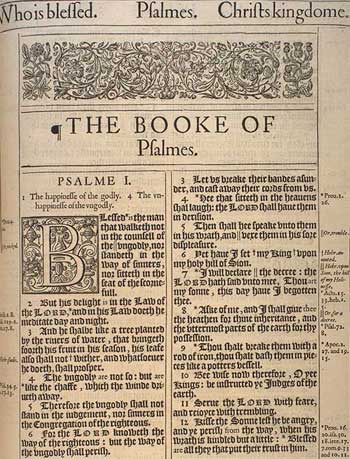
Psalm 91

Dave writes: Hi Ed,
Before I make my way through another 30K “reply” having (in all likelihood) little to do with our initial discussion, with all due respect, may I ask: have you dealt with that original point of how to interpret the Psalm read at your friendʼs funeral or not? As far as I am concerned, you need to either defend your original assertions (which I critiqued) or concede the point and admit that you had an inadequate understanding of how to properly interpret such ancient Hebrew poetic literature.
Psalm 91

Edward: In all honesty, I do not think that particular psalm was appropriate at the funeral of someone who died young and who had just begun going back to church. Read the psalm for yourself, note the promise of being kept from pestilence, and delivered, and granted long life. Becca was granted none of that. Do you concede such obvious differences? If you wish these lines of the psalm to say something about eternal life, they donʼt, yet they were the lines sung in church:
Surely He will deliver you…You will not be afraid of…the arrow that flies by day; or of the pestilence [disease] that stalks in darkness; or of the destruction that lays waste at noon. A thousand may fall at your side, and ten thousand at your right hand; but it will not come near you…Because you have made the Lord your refuge… no evil will befall you…His angels…will bear you up in their hands, lest you strike your foot against a stone. You shall tread upon the lion and cobra…you will trample them under foot…Because you have set your love upon Me, therefore I will deliver you…with long life I will satisfy you.
- Psalm 91

Going over 10,000 points (now hell is brought into it too?) does not advance the discussion, which was about a very particular claim you made. Just simply concede the point (if you have no answer) and then we can move onto something else if you like.

Edward: In all fairness In your first reply you didnʼt deal with the lines in the psalm that I cited. Instead you cited other lines, several that seemed to me more appropriate for Beccaʼs funeral. But you did not deal with the lines of Psalm 91 above. Please deal with the particular lines I mentioned that were sung at Beccaʼs funeral. Go through them line by line if you wish and explain each of them, or metaphorize each of them away, but deal with them. I am the one citing a particular psalm, and you havenʼt dealt with a sentence of it.

But I refuse to deal with 7,532 things at once. Thatʼs an old tactic, used by fundamentalists and atheists alike, that I never fall for.

Edward: I was not employing a “tactic.” I figured that since you did not deal with the actual words I cited from the Bible, I would cite them again for you to read and discuss line by line. Also, we agree in one thing, finding each otherʼs replies less than direct.

My time is too valuable to fall into that trap. I actually believe that real progress can be attained in agnostic/atheist — Christian dialogue, if people will remain amiable and stay on the subject. Youʼre doing great regarding the former, but I give you a C- on the latter (maybe even a D+).smile

Edward: Handing out grades are we? My own study of the history of Hebrew literature has led me to recognize two divergent schools of thought concerning whether following Yahweh will grant protection and long life, or not. There are other divergencies in Hebrew thought as well, such as priests and their animal sacrifices compared with the teachings of the prophets. And there were differences in belief concerning the afterlife, did everyone go to Sheol or not? Danielʼs afterlife judgment is a late Hebrew development—unless you believe that the book of Daniel was written in its entirety back in the days of Babylon, in which case, I would suggest reading the works of Collins, one of the foremost scholars on Daniel and intertestamental literature.

Take care,
Dave

God's Will

God's Will

On December 20, 2004, Edward T. Babinski wrote:
Subject: Logan Pearsall Smith [Anglican wit]

As I came away from the Evening Service, walking home from that Sabbath adventure, some neighbors of mine met and passed me in their car, laughing. Were they laughing at me? I wondered uneasily; and as I sauntered across the fields I vaguely cursed those misbelievers. Yes, yes, their eyes should be darkened, and their mocking lips put to silence. They should be smitten with the botch of Egypt, and with the scab, and with the itch, and with hemorrhoids (Deut. 28:27). All the teeth should be broken in the mouths of those bloody men and daughters of backsliding; their faces should become as flames, and their heads be made utterly bald. Their little ones should be dashed to pieces before their eyes (Ps. 137:9), and brimstone scattered upon their habitations. They should be led away with their buttocks uncovered.
Logan Pearsall Smith [Anglican wit], “The Danger of Going to Church,” All Trivia


Phil: While I was painting today and having looked again at the debate last night I thought,“…Dave wants Ed to concede his points but Dave is unwilling to simply concede that the Psalm in question was not just inappropriate for Beccaʼs funeral but bitterly ironic — unless of course one is an apologist and fully grasps the metaphoric and poetic beauty of such a psalm.” Would this be the need to be right? Iʼll have a look at it again — and the comments — I havenʼt looked at them either

Edward: You can find metaphoric beauty in much of the worldʼs literature, not just in psalms about Godʼs angels preventing a person from stubbing their toe because they love God. The point is that Dave adores the Bible it is his beloved, a letter from God. He will defend it all, from Eden to the Flood, from the tower of Babel to the slaughter of the Canaanites, with poetry, hyperbole, and metaphor if he has to, in fact, anyway he can, to make even the vilest shit in it smell like it should be served at communion to the heavenly choir. Therefore, you canʼt really argue with a person whose perception is that caught up in a single book. I recall a TV show about the garbage-eaters, a sect of ultra-conservative protestants who evangelize college kids and live owning nothing, eating out of dumpsters, memorizing Bible verses, and denying themselves contact with former family members (because Jesus didnʼt even let one of his own followers go home to bury a dead relative, and said that he came to set family members against one another, and said that his brothers and sisters were those who believed the word of God). The Bible is the whole world and only book of these people. One of the kids who joined used to be a college honor student who even owned his own business, but he was evangelized, took the bait, dropped out of school, gave his money to the group, and memorized the Bible. His parents hired a detective to find him, but the other members hid him. Finally one day, he was found, and his Dad, Mom, and sister rushed to see him, but he could only speak to them in Bible-speak, citing chapters and verses and trying to convert them. Finally they had to leave. This was all on a TV show I saw, 20/20 or something like that. You can look up “garbage eaters” on the internet and find into about them. They are an orthodox Christian organization. The sadness that that family experienced, knowing that communication was impossible with their once very bright son, is the same sadness I experience when I see some one as bright as Dave turn over his mind to defending one book and every passage in it, above all. I am sure that focusing on something such as one book or one religion is soothing. It simplifies life. So does being married to one person. But, unlike a single book, people can each read lots of books and seek out the best in all of them. People can also develop different opinions over time as they read widely and deeply from many books. Their views can change. But a book no matter how good, does not have the capability of learning, developing changing. And the New Testament is now older than the Old Testament was when the New Testament was first written, and still no new books from God. Itʼs been two thousand years of conflicts over interpreting the one book (the Bible), and tens of thousands of schizmatic Christian denominations, sects and missionary organizations later (including conservatives, moderates and liberals in each denomination).

Also, have any of the conservative/fundamentalistic Catholics or Protestants noted how quietly the Deity endures the writing of innumerable non-Christian books all claiming to speak for Him/Her/Them/It? Surely any Deity that thought their exact words were vitally important would have “zapped” every scribe, printing press, or website, that dared to put false ones into the Deityʼs mouth. But such “zapping” only appears to have taken place on extremely rare occasions, while new words of the Deity (as well as controversial translations and interpretations of older words) continue to flood the world in a veritable deluge of “God said this, God teaches that-ness.” Could it be that the Deityʼs exact words do not matter as much to the Deity as they do to such defenders of the one true book?


“It is not easy to account for an infinite God making people so low in the scale of intellect as to require a revelation. Neither is it easy to perceive why, if a revelation was necessary for all, it was made only to a few.”
—Robert Ingersoll, Some Mistakes of Moses


What the Priest or Minister Says (And what they really mean)

  1. “I donʼt feel led.” (“Canʼt make me.”)
  2. “If it be Godʼs will.” (“I donʼt believe God will answer this one.”)
  3. “The Lord works in mysterious ways.” (“I am clueless.”)

Sandra Allen, “Sounding Spiritual 101,” The Door, #146, March/April 1996


A minister wrote in the margin of his sermon notes, “Weak argument here. Shout louder.”


Why the whole “priest” and “prophet” routine? If God is God, He can talk to everyone immediately, directly. He doesnʼt need to employ “middle-men” like books, priests, prophets, ministers of a million different sects, denominations and religions—which makes Him look like a confused devil whenever He wants to “tell us” something.

And whatʼs that verse in the Old Testament, “The man who does not heed and obey the priest shall die?” (Deut. 17:12) Tell me some priest didnʼt write that!


I never got into religion much. Too many middle men.

Chris Rock, Rock This!


The faith in which I was brought up assured me that I was better than other people; I was saved, they were damned—we were in a state of grace and the rest were heathens. Our hymns were loaded with arrogance—self-congratulation on how cozy we were with the Almighty, and what hell everybody else would catch come Judgment Day.

Robert Heinlein, Stranger in a Strange Land


Look at the songs of Fundamentalism: “That will be glory for me. I shall see Him face to face. My sins are gone. Iʼm so happy. Iʼm saved, saved, saved. Love lifted me. He holds my hand. Now I belong to Jesus. Safe am I. My Lord is real, yea, real to me.”

I was even taught as a child to sing that shameless chorus, “For me, for me, for me, for me.”

Itʼs like someone decided to set “original sin” to music.

Daniel Stevick, Beyond Fundamentalism


This is not piety, this oft-respected bowing of oneʼs head; this bustling to temples/churches; this kow-towing and tear-jerking, this deluging of affirmations and re-affirmations, vow on vow. True piety lies rather in the power to contemplate the universe with a quiet mind.

Lucretius, On the Nature of Things

Flat Earth Assumptions of Biblical Authors

Flat Earth Assumptions of Biblical Authors

by Edward T. Babinski

Dear Dave, Please note that I did not head this article, “Flat Earth Teachings of the Bible,” but “Flat Earth Assumptions of Biblical Authors.” I agree that the question of “Whether the Bible teaches the world is flat” is separate from the question of “What the ancient Hebrew writers of the Bible may have thought about the shape of the cosmos.” One can accept all of the prima facia evidence that the ancient Hebrews believed and spoke in terms of a flat earth without necessarily having to believe that the Bible was written in order to “reveal to future mankind” the true shape of the earth. Therefore Evangelicals (like Seely and Walton, mentioned below) as well as Catholic biblical scholars can and will continue to employ the historical approach when it comes to discovering what the Hebrews mostly likely believed about the shape of the cosmos based on their writing in the Bible, and at the same time argue that the Bible might not have been written in order to provide accurate information as to the shape of the cosmos. So we probably agree there.

However, one point I wish to add to the above is that IF God allowed ancient naive flat-earth views of the cosmos (as well as views of a “six day creation” of the entire cosmos that revolved around “earth” evenings and morning) to exist in the minds of his ancient followers, what other ideas in the Bible might not also be the result of naiveté rather than truth?

What about the ancient view that animal sacrifices were necessary to appease god(s) for instance? Was that the result of naiveté or eternal truth? Or the idea that “the life was in the blood” instead of being primarily in the brain and nervous system? Might it not have been naiveté that inspired the ancient Hebrews to view the world in terms of “sympathetic magic,” as in the case of their belief that by laying their hands on a goat and then driving the goat into the wilderness, their sins would thus be carried away? (Lev. 16:20-22) Or was it naiveté that inspired the Hebrews to use the same word to describe both mildew stains on walls, and leprosy sores on the human body, and in both cases employ a bird to which the priest claimed to transfer such stains and sores, and then let the bird go into the sky to try and make both of those unwanted things likewise go away? (Lev. 14:4-7,48-53) What other beliefs and practices in the Bible might not also be based on naiveté rather than truth? That is my question.

For instance, the Bible has much to say about the all-directing heart of man, his life-blood, and his soul-breath, i.e., the pounding heart, the whistling breath, and the sharp color of blood, together with its lack being a sign of death, attracted the attention of the ancients. While the organ known as “the brain,” a silent unobtrusive organ, was overlooked (see here and here) and therefore not granted the meagerest mention or symbolic association in the Bible, unlike the heart, bowels and kidneys which are all granted symbolic “guiding” mentions. The brain was ignored even when animals were offered up to Yahweh who wanted their hearts, kidneys, bowels and blood, but not their brains. Yet today we know that it is the organ of “the brain” that is our chief directing organ and holds the “life” most precious to us, being the center of our conscious life. All of which goes to prove that the Bible is far from being an authoritative guide to science and/or the authors of the Bible dwelt more on appearances than on scientific facts.

Ancient Near Eastern accounts of creation depicted the heavens (usually curved) above a flat earth, as they appear to the naive eye even today. Even modern day observations by children produce similar results (The Harvard Smithsonian Center for Astrophysics conducted a study during the 1980s on the mental sophistication of children and discovered that almost one-half of children aged ten years and younger in the United States and other countries believe the earth is flat. And those who say it is round picture “round” as a giant pancake or a curved sky covering a flat ground. One in four thirteen-year olds also believes the earth is flat.) The blue appearance of the sky may have also prompted the ancients to think in terms of the color of vast waters, and thus be the basis for their belief that the cosmos arose out of primeval waters, and lay in the midst of those same waters with a firm firmament holding back “the waters above.” (And the apostolic fathers right up to Martin Luther believed that was the case, based on words from the Bible.)

Which brings me to your recent reply to a brief online article of mine on flat earth verses in the Bible. (Please note that my most recent and comprehensive paper on the topic, Evolving Interpretations of the Bibleʼs “Cosmological Teachings”—or—Does the Bible “Teach Science?”)

Please note that our views that not that far apart since we both agree that the Bible does not appear to have been written to teach us about modern astronomy, cosmology, geology, or biology. In your case however, you appear to have gone so far as to try to argue (ala J. P. Holding) that the Biblical authors were supernaturally preserved from assuming a single erroneous thing regarding the shape of the cosmos. (What about regarding itʼs creation too? Were the authors of the Bible also preserved from assuming or writing down even a single statement that might be erroneous concerning how creation happened? I donʼt suppose youʼre willing to agree with J. P. Holding in making a “six day creation” your fall back assumption, as he does, are you)?

In all kindness, and regardless of what you wrote concerning my views, much of what I wrote about the “flat earth assumptions” of the ancient Hebrews is far from being out of the ordinary in the world of biblical scholarship, so you cannot blame what I wrote on “atheism/agnosticism.” Mainstream scholars, orthodox Catholics, and even Protestant Evangelicals, would agree with what I wrote, and find J. P. Holdingʼs inventive explanations just as unconvincing as I do.

Also, here are some notes on the sources you employed in your attempted “refutation” of what is a mainstream theological view. You employed:

  1. The Concordia Theological Monthy, produced by the Lutheran Church-Missouri Synod, a young-earth creationist inerrantist church that teaches “God…created heaven and earth…in the manner and in the space of time recorded in the Holy Scriptures…namely…in six days.”

  2. The International Standard Bible Encyclopedia, published in 1915. [But why cite only the single article in the above Encyclopedia when there are books that contain information galore on ancient views of the cosmos, even of the Near Eastern cosmos in particular? Have neither Holding nor yourself ever read or heard of such books?]

  3. E. W. Maunder, who was not a theologian but an astronomer born in the mid-1800s.

  4. James Orr, a theologian from the late 1800s who admitted even then that “I [Orr] do not enter into the question of how we are to interpret the third chapter of Genesis—whether as history or allegory or myth, or most probably of all, as old tradition clothed in oriental allegorical dress…” [James Orr, The Christian View of God and the World (1897), p. 185, see also p. 447]

  5. Bernard Rammʼs book, The Christian View of Science and Scripture, published in 1954.

    However, you neglected to mention that after a couple decades Ramm was no longer a progressive creationist as he was when he wrote the book you cited above. In After Fundamentalism [written in 1983], Rammʼs new approach consisted of recognizing that “If the writers of Holy Scripture are truly children of their cultures, then they express themselves in the terms, concepts, and vocabulary of their culture.” And he agreed with Barth in letting “the Genesis record stand as it is, a product of the prescientific world with its prescientific cosmologies.”

    Ramm even wrote in that same book, “Fundamentalists [inerrantists, et al] do not properly interact with modern learning and thus are condemned to the losing strategy of obscurantism… Evolution, modern geology, scientific anthropology, and biblical criticism are subjected to continuous castigation. The fundamentalist presses do not rest in turning out the literature of obscurantism. Sometimes they do try to make hay out of modern knowledge. Harry Rimmer and a number of others attempted to show that the Scriptures contain anticipations of modern science [and modern cosmology—E.T.B.]. But that solution no longer works. There is also much reliance on the discoveries of modern archeological research but that foundation is laid only by ignoring findings that seem to counter the biblical record.”]

    You also employed the following as an authority:

  6. J. P. Holding, ex-prison librarian, self-styled web-pologist, who does not have a graduate degree in theology, has not pursued a seminary degree, and his self-styled study of the Bibleʼs original languages has been shown to be deficient. What Holding specializes in is inventing imaginative denials of questions raised by far more informed biblical scholars than himself.

Holdingʼs nemesis is Paul Seely a fellow Evangelical, but one who disagrees with Holding on this issue. Seely cites plenty of experts on the views that the ancients held of the cosmos. Seely knows more about Hebrew, has graduated from a conservative Christian Seminary, and cites biblical scholars galore in his impressive bibliographies that accompanied each of his three articles on the shape of the ancient Hebrew cosmos, all three of which were published in the Westminster Theological Review. See here, and here and here and here and here for online versions of all papers, all well worth reading.

Seely recently had this to add concerning Holdingʼs attempted rebuttals:

“Holding does not cite even one OT verse as evidence that God had revealed the sphericity of the earth to the Hebrews. Presumably he knows as well as I that there is no such verse in the OT which would stand up to close scrutiny. In fact, Holdingʼs position that the word ‘earth’ in the OT is equivocal implies that the Hebrews did not have a revelation that the earth was spherical. He believes the Hebrews could read the word ‘earth’ in the OT and think flat while we can read the same word today and think spherical. He cannot, therefore, logically argue against the strong historical probability that the Hebrews believed the earth was flat because his own position agrees with that historical probability.

“Holding says I provided, ‘…an impressive and informative list proving that several early scientifically naïve societies thought either that the earth was flat and/or was surrounded by water on all sides, upon which the land floated.’ This statement begins accurately, but then misrepresents both my original paper and a very important fact: It is not ‘several’ scientifically naïve societies (people who have no modern Western scientific knowledge) who thought the earth was flat, but virtually all of them, hundreds of them all across the world, in every part of the earth. It is such a universal belief that one scholar has called it ‘the usual primitive conception.’ In the light of this universality, it would be contrary to probability to think that the Hebrews, who were a scientifically naïve society, did not believe that the earth was flat.

“In addition, the most influential and dominant cultures in the Near East in OT times, namely the Mesopotamian and the Egyptian, believed the earth was flat. Since the forefathers of the Hebrews were Mesopotamians and their greatest leader, Moses, was trained in ‘all the wisdom of the Egyptians,’ it is historically probable that they inherited the belief that the earth was flat. Putting the universality of the belief in a flat earth together with the specific historical background of the Hebrews, one must conclude that it is historically probable that the Hebrews believed the earth was flat. From a historical point of view it is highly improbable that the Hebrews did NOT think the earth was flat. Consequently, there is a heavy burden of proof on anyone saying the Hebrews did not believe the earth was flat.”

Seelyʼs research, along with that of several other Evangelical scholars (like Gordon Wenhamʼs commentary on Genesis 1-15), helped convince Dr. John Walton, a professor of O.T. at Wheaton College, that the ancient Hebrew writers of the Bible imagined the shape of the cosmos was flat. See Dr. Waltonʼs NIV Application Commentary on Genesis (Zondervan, 2001). Keep in mind that Wheaton is an Evangelical Christian institution, Billy Grahamʼs alma mater in fact. Waltonʼs Application commentary is worth a read, because he agrees as I do with much mainstream scholarship in the area of the shape of the ancient biblical cosmos.


Further Resources

Mesopotamian Cosmic Geography by Wayne Horowitz (Eisenbrauns, 1998) “The strengths of this study are Horowitzʼs demonstrated familiarity with the available Sumerian and Assyrian texts relevant to the Mesopotamian perceptions of the physical structure of the universe and its constituent parts, and his meticulous and intelligent presentation of them in an attractive and accessible format. Indeed, it is a handsome book, of the high quality typical of Eisenbrauns. Advanced students and scholars whose interests lie in Mesopotamian cosmography and who wish to explore it further will find this work to be an indispensable resource.”—Marilyn M. Schaub, Duquesne University in The Catholic Biblical Quarterly (61, 1999)

Famed Presbyterian inerrantist, B. B. Warfield, whose defense of Scriptural inerrancy and inspiration was published in the Princeton Review (1881), and republished since then (B. B. Warfield and Hodge, A. A., Inspiration. Grand Rapids: Baker, 1979), continues to be highly regarded among conservative Protestants, yet he wrote that an inspired writer of the Bible could “share the ordinary opinions of his day in certain matters lying outside the scope of his teachings, as, for example, with reference to the form of the earth, or its relation to the sun; and, it is not inconceivable that the form of his language when incidentally adverting to such matters, might occasionally play into the hands of such a presumption.” [B. B. Warfield, “The Real Problem of Inspiration,” in The Inspiration and Authority of the Bible (Philadelphia, Presbyterian & Reformed, 1948) 166-67.]

Charles Hodge accepted the solidity of the sky in Scripture as a divine accommodation. [Charles Hodge, Systematic Theology, vol. 1 (Grand Rapids: Eerdmans, 1952), 569-70.]

Famed Baptist theologian, Augustus Strong, wrote, “Inspiration might leave the Scripture writers in possession of the scientific ideas of their time, while yet they were empowered correctly to declare both ethical and religious truth.” [Augustus H. Strong, Systematic Theology, vol. 1 (Philadelpha: Judson Press, c. 1907), 226.]

Gordon Wenham, Genesis 1-15, Word Biblical Commentary (Waco: Word, 1987) takes the ancient Near Eastern context of Genesis seriously.

Dr. Conrad Hyers (retired Chair of Religion at Gustavus Adolphus College), The Meaning of Creation, and also an online article that deals with some of the topics raised in that book, “Genesis Knows Nothing of Scientific Creationism: Interpreting and Misinterpreting the Biblical Texts”

Dr. Stephen C. Meyers (Th.D. from Trinity Evangelical Seminary of Florida and co-founder of the Institute for Biblical and Scientific Studies) addresses how seriously the Bibleʼs ancient Near Eastern context must be taken when discussing its creation stories and cosmology. His thesis in grad school was titled, “A Biblical Cosmology.” See:
“Genesis One”
“The Bible and Science, Do They Agree?”

Article by a Jewish scholar: “Biblical Views of Creation” by Frederick E. Greenspahn

Cheers,
Ed

Thoughts on the Psalms

Dave,
Some comments from my friends, below, pertinent to the discussion weʼve been having. One friend graded us with an “A” for amicability, while another friend thought your responses appeared “mean.” (No doubt some of your friends thought I was being “mean” or “irrational” as well.) Bruce Wildishʼs comments, below, about certain broad differences in theological viewpoint in different books of the Hebrew Bible, are the most interesting of all.

Phil: Well, if weʼre grading, I would give both of you “Aʼs” for “amiability, “ impassioned and thought provoking discussions. I would give an “F” to the guy who sent you (Ed) the “burn in hell” hate mail posted on your site. Thanks for the update!
Thomas: Ed, Armstrong and his gang are just too mean! Talk origins is propaganda? Why isnʼt the stuff they write considered propaganda? I thought none of the Christians treated you with kindness. Every response was belittling to you. Perhaps Steve could also take them on? Is he still debating with Turkel? Are you going to continue to reply to Armstrong?
Psalms

Edward (To Thomas): I thought it was interesting that in his first reply to me, Dave began with this line: “Edʼs skeptical take on this is clear already: Godʼs promises are null and void, and obviously vacant: just look at this poor woman; she was a Christian, and trusted God, but did that help her? No! Quite the contrary. God didnʼt do a darned thing to save her… Etc.” Dave begins by picturing me as questioning “God,” when I never said that I believed “God” wrote the psalms. I was contrasting what Psalm 91 said and promised (whether the psalms and their promises were inspired by “God” or not is another question), with what actually happened to Becca. Daveʼs response seems to have demonstrated Christianityʼs built-in defense system at work, namely that if you question the meaning, propriety, overblown pomposity/hyperbole, interpretation, or intent of a Biblical work or writer, then you are directly questioning “God” Himself.

A long-time friend of mine, Bruce Wildish, who has studied theology (though he is not a theologian), had a discussion with me years ago about certain broad differences between the theological views found in different parts of the Hebrew Bible, differences that Dave might disagree exist, or attempt to harmonize away, but which seem plain to a lot of religion professors whom Bruce has read. Whether or not you believe in “God” is not the point. The point is that the Bible remains a book whose origin and interpretations remain contested even by the worldʼs greatest living religion professors.

Hereʼs what Bruce wrote recently, recapping what he and I discussed years ago;.you can see how it applies to the discussion Dave and I have been having about the psalms:

Bruce Wildish: Ed, I believe you are talking about Deuteronomistic or retribution theology, which we see in Deuteronomy, the historical narrative that goes from Joshua—2Kings (excepting Ruth, which is an apology for accepting non-Jews into the fold), Jeremiah, the 12 minor prophets, and many of the Psalms. In a nutshell this theology affirms that righteous life, piety and religious purity result in a happy, long life, whereas unfaithfulness and religious infidelity lead to misery, suffering and perhaps even death. This theology was offered to “explain” the tragic history of the Israelites/Judahites, namely their ongoing sufferings at the hands of foreign powers and of course the Babylonian exile itself (the Eden story, though it borrows extensively from much older traditions, introduces this very same theology from the start: it is a metaphor for the Exile). The theology does not focus specifically on long life verses short life, it focuses on the more general categories of happiness/good life verses suffering/bad life; but the idea that righteousness results in a long life and unrighteousness a short life is fully consistent with the theology and sometimes there are claims that long life or death are the result of a personʼs religious behavior (good and bad respectively). The theology affirms the supremacy of Yahweh over all other gods and demands a very strict worship of Him alone; in this respect the “sins” to which it so often refers when citing the causes of Israelʼs history of tragedy essentially equate to religious infidelity toward Yahweh, i.e. the worshiping of the Baals and Asherahs (these are pluralized because there were all sorts of relgional incarnations of these deities; just as in ancient times there were many Yahwehs and Els).
One is tempted to think that was the dominant or normative (i.e. mainstream) theology of the people of Israel/Judah/Judea simply because it so significantly stamps the historical and prophetic works of the Bible (i.e. the Hebrew Bible). But this is only because the community of scholars, priests etc. who subscribed to this theology were the ones who produced and helped secure the dominance of this literature There were lots of other works that made the same claims about other gods and that affirmed different views (e.g. that defended religious pluralism and the righteousness of honoring different deities and different cults), but these were surpressed, destroyed, lost, etc. The Bible is the work of the winners in the debate, so itʼs no surprise that it affirms their point of view over all others. [Edʼs Comment: I recall reading that all of the religious literature of the Northern Jewish nation was destroyed when that nation was wiped out, leaving only the religious literature of the Southern Israelite nation that makes up our present Bible.]
Job and Ecclesiastes are two examples of works from writers who did not subscribe to the simplisitic views of the retribution/Deuteronomistic theology. Each challenges its basic assumptions by pointing out an obvious flaw in the theory: good, righeous, pious people do suffer in life and in the end the good and the bad alike die. Youʼd literally have to go through life with your eyes closed to believe that righteousness and piety toward Yahweh guarantees a good long life. Unfortunately in the case of Job a Deuteronomistic editor has tried to conceal the original purpose of the story by tacking on a prologue/epilogue that makes a divine agent (that many today mistakenly think is satan the devil [Edʼs Comment: The NIV Application Commentary on Genesis, copyright 2002 by a professor Wheaton College makes the same point about the “satan” in Job not being understood in ancient Israel as the “devil” of the N.T. In fact, the “angel of the Lord” who stopped Balaam the prophet on the road is also called a “satan” in Genesis, and neither is the “satan” mentioned in Job is not necessarily the same “satan” mentioned in Zechariah; that is what the professor admited who wrote the NIV Application Commentary on Genesis.] responsible for Jobʼs sufferings (as part of a test), so as to explain away the naturalness of his sufferings (in the original work suffering is fobbed off as a mystery comprehensible only to God, as God himself ewxplains to Job; Ecclesiastes basically says the same thing, but seems less satisfied with having to settle for that answer).
All of this of course to the subject that modern theologians call theodicy: why do good people suffer and die young, while others who are not good enjoy long life and prosperity? The ancient Israelites/Judahites/Judeans confronted the same mystery. Deuteronomist theology was one proposed solution and thought that strict piety and devotion to Yahweh was the key to a good, long life. Others, like the authors of Job and Ecclesiastes, disagreed (they of course believed in the value of piety, they just rejected the notion that this guaranteed a good long life). And no doubt others had less than kind things to say about strict Yahwism and its religious teachings. There were prophets and priests of other gods and cults who taught that the neglect of these gods due to the influence of the kind of strict Yahwishm we see in the Bible was the cause of suffering and that the way to improve things was to embrace religious pluralism.
On a final note: the Psalms is a hodge-podge of material that reflects a variety of historical backgrounds and views, but the collection as a whole has been filtered through the Deuteronomist school, so many of them show signs of either Deuteronomistic origins or editing. Psalm 91, like many other Psalms, is a wisdom psalm from the Deuteronomist school, which is why it so strongly affirms Deuteronomist theology.
Later today Iʼll check out your links and see if this inspires any additional thoughts.
Bruce

What Catholics once Believed

Thomas C.: Armstrong wasnʼt only rude to you, he didnʼt consider you much of a challenge. I put a few thoughts in red in his last paragraph. What do you think?

Edward: What makes Armstrong imagine that I considered his arguments much of a challenge to my doubts concerning the divine inspiration of the Bible?

Thomas: One may quibble Quibble? Itʼs not quibbling. What proof do you have that your version of God is the true God? How does he know if the Quran, or the Bhagavad Gita, or some ancient indigenous text might not be the source of the one truth?
What Catholics Once Believed

Edward: Almost all religions have a “book.” But Dave believes that there is only “one” book whose words are all extremely important and all-captivating to him (he probably adores just reading the genealogies as well), whose essentials must be understood “one way,” by “one church” whose interpretation alone is “true.” I donʼt see that any of that follows from one from the other. Even the theological interpretations and teachings of Catholicismʼs most brilliant and orthodox theologians and scholars of the past have differed over the ages. Consider these six examples of what great Catholics, with their inspired Bibles and the Holy Spirit leading them into all truth, Used To Believe:

  1. The Use Of Physical Coercion

    Saint Augustine advocated coercive suppression of the Donatists (since they wanted to “secede from the union” so to speak, to form their own “true and pure” churches), like Anabaptists tried to do during the Reformation. The point is that Augustineʼs defense of “compulsion” was cited even by Luther regarding the Anabaptists who wanted for form their own churches and perform adult Baptisms. And both the Catholics and Protestants brutally persecuted the Anabaptists and other sectarian small groups of Christians. Today the rule among Catholics and Protestants is not to so brutally persecute other Christians. What has happened since then to inspired church opinion?

    “It is indeed better (as no one ever could deny) that men should be led to worship God by teaching, than that they should be driven to it by fear of punishment or pain; but it does not follow that because the former course produces the better men, therefore those who do not yield to it should be neglected. For many have found advantage (as we have proved, and are daily proving by actual experiment), in being first compelled by fear or pain, so that they might afterwards be influenced by teaching, or might follow out in act what they had already learned in word.”
    —Saint Augustine, Treatise on the Correction of the Donatists

    “The wounds of a friend are better than the kisses of an enemy. To love with sternness is better than to deceive with gentleness…In Luke [14:23] it is written: “Compel people to come in!” By threats of the wrath of God, the Father draws souls to his Son.”—Saint Augustine [Setting forth the principle of Cognite Intrare (“Compel them to enter”), a church mandate that all must become orthodox Catholic Christians, by force if necessary. Cognite Intrare would be used throughout the Middle Ages to justify the Churchʼs suppression of dissent. Walter Nigg, The Heretics: Heresy Through the Ages (1962), p. 138, quoted from Helen Ellerbe, The Dark Side of Christian History, critical editing by Cliff Walker.]

    Augustine was at his most disagreeably impatient when faced by groups whom he saw as self-regarding enclaves, deaf to the universal message of the Catholic Church. He insensibly presented the Church not only as the true Church, but as potentially the Church of the majority of the inhabitants of the Roman world. He was the first Christian that we know of to think consistently and in a practical manner in terms of making everyone a Christian. This was very different from claiming, as previous Christians had done, that Christianity was a universal religion in the sense that anyone in any place could, in theory at least, become a Christian. Augustine spoke of Christianity in more concrete, social terms: there was no reason why everybody in a given society (the Jews excepted) should not be a Christian. In his old age, he took for granted that the city of Hippo was, in effect, a Christian city. He saw no reason why the normal pressures by which any late Roman local community enforced conformity on its members should not be brought to bear against schismatics and heretics. He justified imperial laws that decreed the closing of temples and the exile and disendowment of rival churches [Donatist and other churches]. Pagans were told simply to “wake up” to the fact that they were a minority. They should lose no time in joining the Great Majority of the Catholic Church. In fact, the entire world had been declared, more than a millennium before by the prophets of Israel, to belong only to Christ and to his Church, and Augustine quoted the second Psalm as proof: “Ask of me, and I shall give thee the heathen for thine inheritance, and the uttermost parts of the earth for thy possession. Thou shalt break them with a rod of iron.” [Psalm 2:6,8,9,12]. [Of course not everyone was swayed by Augustineʼs arguments.] We have a recently discovered letter that Augustine wrote at the end of his life to Firmus, a notable of Carthage. Firmus had attended afternoon readings of Augustineʼs City of God. He had even read as far as book 10. He knew his Christian literature better than did his wife. Yet his wife was baptized, and Firmus was not. Augustine informed him that, compared with her, Firmus, for all his culture, even his sympathy for Christianity, stood on dangerous ground as long as he remained unbaptized.
    —Peter Brown, The Rise of Western Christendom, 2nd Ed., (Malden, MA: Blackwell Publishing, 2003), p. 91, 92

  2. Slavery Not A Sin

    Augustine (c. 354-430) taught that slavery was Godʼs will and that Christianity did not make slaves free but made good slaves out of bad ones. (The City of God 19.5)

    The first Christian Roman Emperor, Constantine, showed little sympathy for slaves. In a law dated 319 he ruled that if a slave died following flogging or confinement in chains, his master was not liable to any charge: he was guilty of homicide only if he deliberately killed him or tortured him to death. Unions between women and their slaves were brutally penalized, the woman being executed and the slave burned alive. Even when they had been manumitted, Constantine deprived them of their security by making them liable to re-enslavement if their former masters established that they were ungrateful or insolent. Nor did he show any sympathy to the vast mass of once free citizens who had been reduced to a kind of serfdom by being tied to their holdings. Of agricultural workers who had transferred their services to another landlord he writes in 332: “It will be appropriate that those who are planning escape should be put in chains like slaves, that they may be forced in virtue of a servile condemnation to fulfill those duties which are fitted for free men.”
    —A. H. M. Jones, Constantine and the Conversion of Europe

  3. Arguing that it Would Be Best and Most Holy if Literally All Men Abstained from Sexual Intercourse Completely

    In the first times, it was the duty to use marriage. chiefly for the propagation of the human race. But now, in order to enter upon holy and pure fellowship. they who wish to contract marriage for the sake of children, are to be admonished, that they use rather the larger good of continence. But I am aware of some that murmur, “What if all men should abstain from all sexual intercourse, whence will the human race exist?” Would that all would. Much more speedily would the City of God be filled, and the end of the world hastened. For what else does the Apostle Paul exhort to, when he says, “I would that all were as myself;” or in that passage, “But this I say, brethren, the time is short: it remains that both they who have wives, be as though not having: and they who weep, as though not weeping: and they who rejoice, as though not rejoicing: and they who buy, as though not buying: and they who use this world as though they use it not. For the form of this world is passing away.” (1 Cor. 7:7-8, 29-31)
    —Saint Augustine (c. 354-430), On the Good of Marriage, Sections 9-10

    Nothing so casts down the manly mind from its height as the fondling of women and those bodily contacts that belong to the married state.
    —Augustine, De Trinitate

    I am aware that some have laid it down that virgins of Christ must not bathe with eunuchs or married women, because the former still have the minds of men and the latter may present the ugly spectacle of swollen [pregnant] bellies. For my part I say that mature girls must not bathe at all, because they ought to blush to see themselves naked.
    — Saint Jerome (c. 342-420)

    Saint Jerome conquered his carnal visions of dancing maidens by throwing himself in tears before a crucifix, beating his breast with a stone, and fleeing into the desert.
    — John Dollison, Pope-Pourri

  4. Infant Damnation

    Infants, When Unbaptized, are in the Power of the Devil. The Christian faith unfalteringly declares that they who are cleansed in the laver of regeneration (i.e., the baptismal font) are redeemed from the power of the devil, and that those who have not yet been redeemed by such regeneration are still captive in the power of the devil, even if they be infant children of the redeemed. From the power of the devil. infants are delivered when they are baptized; and whosoever denies this, is convicted by the truth of the Churchʼs very sacraments, which no heretical novelty in the Church of Christ is permitted to destroy or change, so long as the Divine Head rules and helps the entire body which He owns—small as well as great. It is true, then, and in no way false, that the devilʼs power is exorcised in infants, and that they renounce him by the hearts and mouths of those who bring them to baptism, being unable to do so by their own; in order that they may be delivered from the power of darkness, and be translated into the kingdom of their Lord.
    — Saint Augustine, On Marriage and Concupiscence, Book 1, Chapter 22

    Some Catholic saints even experienced “spiritual visions” that depicted little children suffering in hell. Saint Fulgentius in the sixth century taught that “little children who have begun to live in their motherʼs womb and have there died, or who, having just been born, have passed away from the world without the sacrament of holy baptism must be punished by the eternal torture of undying fire.” Later, the church settled on a more merciful destination for unbaptized infants, “Limbo,” which was kind of like “Hell Lite.” But recently the Catholic Church has even abolished “Limbo,” and stated that unbaptized infants who die go directly to heaven. (Ironically, thatʼs the “heretical novelty” that Saint Augustine expelled so much hot air arguing against!)

  5. No One Lives On The Opposite Side Of The Earth

    Though Saint Augustine seemed inclined to yield in regard to the sphericity of the earth, he fought the idea that men exist on the other side of it, saying, “Scripture speaks of no such descendants of Adam.” He insists that men could not be allowed by the Almighty to live there, since if they did they could not see Christ at his second coming descending through the air. But his most cogent appeal, one that we find echoed from theologian to theologian during a thousand years afterward, is to the nineteenth Psalm, and to its confirmation in the Epistle to the Romans; to the words, “Their line has [already] gone out through all the world, and their words to the ends of the earth.” He dwells with great force on the fact that St. Paul based one of his most powerful arguments upon this declaration regarding the earliest preachers of the gospel (Rom. 10:18), and that, as those preachers did not go to the opposite side of the earth to preach the gospel, no people must exist there; hence those who believe such things, “give the lie direct to King David and to St. Paul, and therefore to the Holy Ghost.” Thus the great bishop taught the whole world for over a thousand years that as there was no preaching of the gospel on the opposite side of the earth there could be no human beings there.
    — A. D. White, A History of the Warfare of Science with Theology in Christendom, Vol. 1

  6. Flat Earth (Some Early Church Fathers); Unmoving Earth and Solid Firmament (All of the early church fathers)

    It is agreed upon by all historians that at least some early fathers of the Christian church did believe in a flat earth. And those fathers who believed in a spherical earth still believed that the spherical earth did not move and that the “firmament” was solid. Holy Scripture continued to be cited in support of those latter two assertions for centuries. Origen called the firmament “without doubt firm and solid” (First Homily on Genesis, FC 71). Ambrose, commenting on Genesis 1:6, said, “the specific solidity of this exterior firmament is meant” (Hexameron, FC 42.60). And Saint Augustine said the word firmament was used “to indicate not that it is motionless but that it is solid and that it constitutes an impassible boundary between the waters above and the waters below” (The Literal Meaning of Genesis, ACW 41.1.61).
    For millennia before the Christianity ever arose, the ancient Near Eastern civilizations agreed that the earth was flat. You can see it in their hieroglyphics, and stelles and stories. [See especially, Othmar Keel. The Symbolism of the Biblical World, Ancient Near Eastern Iconography and the Book of Psalms.] The flat earth view was undeniably prominent in Babylon, Egypt, and Greece during the time when the Old Testament was written. Even during the intertestamental period (after the Old but before the New) Jewish literature like the Book of Enoch spoke unmistakably of the shape of the earth as flat.
    The New Testament writers from the Gospels to Revelation likewise took for granted the flatness of the earth. So naturally at least a few of the “early church fathers” were flat earthers, though by that time in the Hellenistic world, the spherical-earth view was prominent and most of the church fathers simply ignored or explained away the flat earth implications of various Old and New Testament passages. The point to keep in mind was that before the age of the church fathers, i.e., during the Old Testament, Intertestamental, and New Testament, periods, the “flat-earth” view was certainly the prominent one, and the one employed during the composition of all the books in the Bible.


Agnostics are said to be so full of themselves. Not true at all. At least we can readily admit that we do not know and can NOT know the answers to the God question! with difficulties in the Christian position; the “problem of evil” and so forth (and these are real and serious issues; I readily agree), but at the same time, if they reject the Christian worldview and start disbelieving in God or taking an agnostic position towards the question of His existence, then they have to come up with some superior alternative ethical system which isnʼt either arbitrary or unworkable in practice. I maintain that it cannot be done. It has been done! Many native Americans would have been considered pagans, by the Christian men who slaughtered them! There was far less violence, and far less crime, and much greater morality without the Christian version of God. Just do a brief study on Native Americans, they had some of the most moral societies ever created. For much more treatment of that subject, see the debate which I consider was with one of the most worthy opponents I have ever encountered:

Thanks to Ed for a stimulating discussion, and I eagerly look forward to his subsequent comments.

Biblical Mercy

Biblical Mercy

Edward T. Babinski
Friday, December 17, 2004
Subject: Dave Armstrong-Ed Babinski update

Dear Dave,

A friend of mine who left the fold, named Phil, took a gander at our debate. He may or may not add his comments to your blog-site. But I thought Iʼd pass Philʼs comments along, especially since I have not had time till now to reply myself.

As for a second go round between us, what can I say? The Bible is not my book, itʼs merely a book to me. While you have claimed it in faith to be yours. How dare I or anyone else comment on any part of it in less than adoring fashion? God shall smite those like me, for it says He will. Where? Why in the Bible of course. So itʼs you and “God” and your circular reasoning against my common sense. Furthermore, is there really any need for me to say much more, or rather should I let the Bible do the speaking, and simply invite everyone to read the Bible as they would any other book? In your case, read the following verses as if they came from the Book of Mormon, or the Koran, and tell me honestly what kinds of things you would have to say about them then:

Fathers will eat their sons, and sons will eat their fathers; for I [the Lord] will execute judgment on you …I [the Lord] will draw my sword from its scabbard and cut off from you both the righteous and the wicked_ my sword will be unsheathed against everyone from south to north_ My fury will mount up in my anger, and in my zeal and blazing wrath I declare.
- Ezekiel 5:10; 21:3-4; 38:18-19

The children of Israel stoned Achan and his daughters …burned them with fire …raised over them a heap of stones. And the Lord turned from the fierceness of His anger …The Lord hardened their hearts to meet Israel in battle in order that He might destroy them utterly, that they might receive no mercy.
- Joshua 7:24-26; 11:20

The Lord said, “[Because] she has rebelled against her God …[Samarian] infants shall be dashed to pieces and women with child ripped open.”
- Hosea 13:16

The Lord said, “Slay man and woman, infant and suckling.”
- 1st Samuel 15:3

How long, O Lord? Will you be angry forever? How long will your jealousy burn like fire?
- Psalm 79:5

Thus says the Lord of hosts; I was jealous of Zion with great jealousy, and I was jealous for her with great fury.
- Zech. 8:2 (See also: Ex. 34:14; Deut. 4:24, 29:20; Psalms 78:58; Ezek.16:38, 36:5-6 and Joshua 24:19)

You shall fear (no other gods) only Yahweh …for He is a jealous God. Otherwise His anger will be kindled against you and He will wipe you off the face of the earth …In the cities He gives you leave alive nothing that breathes …utterly destroy them …show them no mercy …or Yahweh will destroy you utterly …The Lord delivered them before us …we …utterly destroyed the men …women, and the little ones of every city …If your brother, son, daughter, wife, or your friend who is your own soul, entice you away secretly, saying, “Let us go serve other gods”…you shall kill him; your hand shall be first against him to put him to death …These curses shall come on you …because you would not obey the Lord …you shall eat the offspring of your own body, the flesh of your sons and of your daughters …I [the Lord] will make mine arrows drunk with blood.
- Deuteronomy 2:34; 5:9; 6:13,15; 7:2,4; 13:6-9; 20:16,17; 28:45,47,53; 32:42

I shall make them eat the flesh of their sons and the flesh of their daughters, and they will eat one anotherʼs flesh in the siege …A curse on him who is lax in doing the Lordʼs work! A curse on him who keeps his sword from bloodshed_ You are My war-club …with you I shatter old man and youth. _ young man and virgin.
- Jeremiah 19:9; 48:10; 51:20,22

Such verses bring to mind a question: Is “heaven” really going to be a vacation paradise for obedient child slaughterers? I can just hear the pool-side chat, “We killed everyone in the city as God commanded_or thought we had. Then I spotted a heap of blankets rustling in an alleyway and yanked them aside, and there was a trembling young girl and her pregnant Mom. You should have seen the look on their faces as I raised my sword and_Hey waiter, can I get another Bloody Mary? Boy, I just love this place!”

I suppose it comes down to how highly you prize even the most imprecatory of the psalms, viewing them as “holy writ.” Psalms like these:

Let (my enemyʼs) prayer become sin…his days be few…his children fatherless…his wife a widow…wandering about begging…seeking food far from their ruined homes…let a creditor seize all he has…strangers steal from him…none to extend him a hand…nor to his orphaned children…let the iniquity of his fathers be remembered before the Lord, And do not let the sin of his mother be blotted out. Let them be before the Lord continually, that He may cut off their memory from the earth…But Thou, Oh Lord, deal kindly with me.
- Psalm 109:7-15,21

The wicked…go astray as soon as they are born, speaking lies…Break their teeth, O God…let every one of them pass away: like the untimely birth (miscarriage) of a woman, that they might not see the sun…The righteous will rejoice when he sees the vengeance, he will wash his own feet in the blood of the wicked.
- Psalm 58:3,6,8,10

Blessed [or happy] will be the one who dashes your little ones against the rock.
- Psalm 137:9

Do I not loath those who rise up against Thee, Lord? I hate them with perfect hatred.
- Psalm 139:21-22

It also comes down to how avidly you are willing to defend hyperbole like this as holy writ:

He will deliver you…from the deadly pestilence…
A thousand may fall at your side, and ten thousand at your right hand; but it will not come near you…
no evil will befall you, nor will any plague come near your dwelling. For He will give his angels charge concerning you, to guard you in all your ways…They will bear you up in their hands, lest you strike your foot against a stone. You shall tread upon the lion and cobra; the young lion and the serpent you will trample under foot…Because you have set your love upon Me [Yahweh], therefore I will deliver you…with long life I will satisfy you.
- Ps. 91

I have never seen the righteous forsaken, or his descendants begging bread.
- Ps. 37:25

No doubt different people enjoy different types of literature, poetry, movies, music, even different types of worship and sermons, and everyone defends their likes and dislikes. One person may even enjoy one flower more than another. Yet “fundamentalistic” Christians (whether of the Catholic or Protestant variety) appear to be living in a garden in which only their flowers—their holy writ with its poetry, hyperbole, metaphors and allegories—are deemed the kings of the garden, while all other religious literature is deemed less than truly “holy,” even if you compare the imprecatory psalms to the most sublime and insightful passages found in Buddhist, Hindu and Moslem books, or secular novels.

I find it interesting that you continue to defend the Bible as holy writ (“metaphorical, allegorical, and hyperbolic holy writ” in cases, though it remains unclear exactly what that may mean in terms of it being “holy” above and beyond all other wonderfully insightful metaphors, allegories and hyperbole found throughout world literature).

No doubt “fundamentalistic” believers of various religions, denominations and cults all love emphasizing what appears to them to be the incomparable “distinctiveness” of their particular holy book and holy doctrines, even to the point of endorsing the ultimate distinction, that of some people entering into heaven while others are cast into a lake of fire (however metaphorically or hyperbolically you wish to interpret such “firey” verses).

I am also hardly surprised that a faith that places “holy” value (whether metaphorically, hyperbolically, or however such stories and commands may be interpreted) on such fabulous bits as the story of the garden of Eden; the ark and flood story; the tower of Babel story; the Exodus story (in which upwards of a million desert-stranded Israelites and a huge mixed multitude together were commanded to pick up camp and move every day for forty years—led by a pillar of fire at night, a pillar of smoke by day, their clothes never wearing out, and their sacrificial apparatus running each day for those million+ people); along with animals being bled because “the life is in the blood” (isnʼt the “life” primarily in the brain and nervous system?) and then burning their carcasses so God could “smell the soothing aroma,” and donʼt skimp on the foreskin cutting too, and being sure to deliver the firstling of the flock to the priests, and letʼs not forget, “The man who does not heed and obey the priest shall die” (Deut. 17:12); and bloody tales of the slaughter of men, women and children (Egyptian, Canaanite and even Jewish) at Yahwehʼs decree, and how the Israelites honored Yahweh by “not keeping their swords from bloodshed;” then skipping past the Hebrew Bible to the inter-testamental Hebrew period during which the figure of “Satan” grew to the most inflated mythical proportions (the “god of this world” and “prince of the power of the air”); finally winding up in the “New (and improved) Testament,” and a God who only feels truly satisfied after He gets beat up and killed on earth—only then does God feel in a truly forgiving mood—though not too forgiving, because thereʼs still eternal hell for folks who do not:

Believe in Godʼs son (Mark 16:16; John 3:18,36, 8:21-25, 14:6; Acts 4:10-12; I John 5:12),
Repent (Luke 13:3,5),
Get born again (John 3:3),
Get born of the water and of the Spirit (John 3:5),
Believe everything in the gospel (Mark 16:16),
Eat the flesh of Jesus and drink his blood (John 6:53),
Become like a child (Mark 10:15)
Do good deeds, esp. for needy people (Matt. 25:41-46; Rom. 2:5-10; John 5:28-29; James 2:14-26).

Thereʼs even some stern warnings for those who arenʼt “Christian” enough “Christians”:

Many will say to me in that day, Lord, Lord, have we not prophesied in thy name? and in thy name have cast out devils? and in thy name done many wonderful works? And then will I profess unto them, I never knew you: DEPART from me, ye that work iniquity.
- Matt. 7

And that servant, which knew his lordʼs will, and prepared not himself, neither did according to his will, shall be BEATEN with many stripes.
- Luke 12:47

But the most dire warnings and firey consequences are directed at those who “do not believe”:

[Jesus] said, Go into all the world and preach the good news to all creation. Whoever believes and is baptized will be saved, but whoever does not believe will be condemned.
- Mark 16:15 [A verse not found in the earliest known manuscripts of Mark; but most would agree a Christian probably wrote this and other verses in the last half of Mark chapter 16. In fact three added endings to Mark have been found. So, make of such additions by Christians to their own Gospels what you will.]

The author of the Gospel of John may have wanted to emphasize not only what Mark 16:15 says (“whoever does not believe will be condemned”) but also that:

He who does not believe is condemned already.
- John 3

“If anyoneʼs name was not found written in the book of life, he was THROWN into the lake of fire.” Rev. 20:15

“If thy hand or thy foot offend thee, cut them off, and cast them from thee; it is better for thee to enter life halt or maimed, rather than having two hands or two feet to be CAST into everlasting fire.” Matthew 18:8

What does being “thrown” or “cast” into “fire” symbolize? Seems like serious stuff even metaphorically, but of course to someone like you, a fan of Lewis and Chesterton, I suppose itʼs merely a metaphor combined with hyperbole, and essentially refers to nothing nearly as dire as being cast into fire, or being tortured deliberately by a deity. Though some Biblical interpreters living in less kindly or civil ages of mankind understood the phrase as reflecting pain and torture deliberately inflicted by God that would make mere earthly “fire” appear tame in comparison. They argued that the Biblical authors employed the concept of feeling oneʼs skin burning on every inch of oneʼs body, due to the lack of even more painful concepts of torture, not less painful ones.

Historical religious scholars say that the “hell fire” concept rose to prominence during the Hebrewʼs intertestamental period and was adopted by first century apocalyptists including the early Christians. Hellʼs continuing evolution led some Christians to write in the names of the apostles Paul and notably, Peter, some apocalyptic scenarios that were fairly popular in early Christianity:

If Satan was the source of error and evil, false teaching and wrongdoing were not merely mistaken: they were diabolic. The division between a Christian “community of goodness” and an “outer world of evil” could easily become too pronounced. The idea of Satan magnified the difference between “true” and “false” Christians and between Christian sinners and saints_Like Satan, the Last Judgment was a force that Christians exaggerated and then claimed to be able to defeat_This teaching was reinforced by an equally powerful ally, the Christian idea of sin. Sin was not just the sin of an action, or even an intention, but also the sin of a thought, even a passing interest in an appealing man or woman. This combination of rarefied sin and eternal punishment was supported, as we shall see, by books of vision and revelation that were probably more widely read than modern contempt for “pseudepigraphic” forgeries allows: acquaintance with the Apocalypse of “Peter” would make anyone think twice before leaving the Church (we happen to know that “Peterʼs vision of hell” was still read as a holy text in the churches in Palestine on Good Friday during the fifth century). If fears for Eternity brought converts to the faith, one suspects that they did even more to keep existing converts in it.
—Robin Lane Fox, Pagans and Christians (Alfred A. Knopf, Inc., New York, 1987), p. 326-327, 330-331, 412

Also, what does “being tortured by thirst and denied a drink of water” symbolize? I am speaking of the parable in Luke about the former rich man dying, going to Hades, and being tormented by an unquenchable thirst, but who sees the former beggar, Lazarus, enjoying himself in Abrahamʼs bosom. The tortured rich man begs for a drop of water, but is told none can be given. So the rich man made another plea, a relatively unselfish one at that, asking that Lazarus be sent back to the world of the living to warn the rich manʼs brothers so they donʼt wind up like him. Such a plea was denied and the tortured rich man was told, “They have the prophets.” But in the last Gospel (John) it appears something more can be done (contra the parable in Luke), a real “Lazarus” (himself a wealthy man) is raised from the dead! And if your name happens to be “Thomas” and you have some doubts, Jesus will make a special return resurrection visit to allay your doubts, though the Gospel writer quickly added, “it is more blessed to believe without seeing.” Isnʼt that the same lame argument used by all faiths? “Just believe! Itʼs more blessed that way!” But Iʼll take “seeing” ahead of that “extra blessing” any day of the week.

Speaking of “seeing”—we are told in the Gospels that multitudes got to see Jesus arrive in Jerusalem, and cried out “Hosanna!” and waved palms, laying them on the ground before him, what a triumphal entry! But how many got to see the even more triumphal moment when Jesus conquered death, left town, and rose bodily up into heaven? The Gospel of Luke (not Mark and not Matthew) says that after Jesus rose from the dead he showed himself to the remaining eleven apostles and ate food in their presence to convince them he was “not a spirit” because, “Does a spirit have flesh and bones?” Lukeʼs Gospel adds that the next thing this “flesh and bone, not a spirit, food eating,” Jesus did was to “lead” the apostles to Bethany, a town near Jerusalem, and there Jesus rose bodily up into the sky. Luke and Acts describe these events as only being seen by the remaining eleven apostles, viz., Jesus “led” them from a room in Jerusalem to Bethany, and then rose bodily up into the sky. But not a lot of people witnessed the walk through Jerusalem and the rising into the sky. No “Hosannas!” No palms being waved. A relatively quiet “victory lap” Iʼd say, as quiet as Santa when he leaves presents in the night and vanishes. (But no one is demanding that you believe in Santa under penalty of being cast or thrown into eternal hell fire.) In Acts, Luke says the apostles didnʼt even begin to preach about Jesusʼ “resurrection,” until seven weeks after Jesusʼ death. Another quiet period. Hmmm. Seven weeks later? Am I supposed to believe this stuff literally? A lot can happen in seven weeks, people can grieve and ponder and dream and have all sorts of cathartic experiences, and come up with hypotheses, excuses and other things in seven weeks. Moreover, when the apostles began preaching with Jesus after those seven weeks, they undoubtedly entered Jerusalem to a lot less acclaim that Jesus did. They had been gone for seven weeks, so they were not exactly drawing crowds all over the countryside as Jesus allegedly did before he entered the city to acclaim. So, I bet the apostles didnʼt march back into the city with people shouting “Hosanna!” They probably blended into the vast crowds already entering the city at that time for the next major Hebrew festival that takes place seven weeks after Passover. So Peter probably started preaching on a street corner like other apocalyptic cults of that day and age. Iʼm sure that any success he had at gaining converts was interpreted as a sign that Jesusʼ mission was supposed to continue. Christianityʼs rebirth fueled the enthusiasm that fueled more impressive retellings of stories about Jesus and the early churchʼs own rebirth. Moreover, there is no mention of Peter knocking on the high priestʼs front door, or Herodʼs, or the Pilateʼs. It would seem that the earliest Christian preaching started out “under the radar” so to speak, one cult among others (Josephus mentions an Egyptian in Jerusalem who had tens of thousands of followers who predicted the end of the world and led his followers out into the desert. He also mentions a prophet who was roaming the streets predicting Jerusalemʼs destruction. And signs in the sky of armies fighting, allegedly seen by “everyone.” Sure. The Dead Sea scrolls even demonstrate that a hundred years before Jesusʼ day there were Jewish groups expecting the end of the world within a “generation” of a Teacher of Righteousness). Gospel stories about there being a “large hubbub” about Jesusʼ resurrection immediately after it happened in Jerusalem, are probably later exaggerations, hyperbole. *smile* Even the earliest incarnation of the “empty tomb” story in Mark, ended with the saying that “the women told no one,” and the earliest known copies of that Gospel simply ended there with the women telling “no one” about the empty tomb. When they finally did tell someone is simply not reported in Mark, though other early Christians probably filled in the blanks at the end of Mark most eagerly with their own tales, such as the women running back to tell the apostles immediately. That is one way a story can grow. But it does not follow that the empty tomb story itself was an early tale in Christianity. Because if the Gospel of Mark did simply end his empty tomb tale with the woman telling “no one” then there is no telling when such a story first arose. But it is easy to see how it the blanks were later filled and expanded in Matthew, Luke, and John.

Also compare what Lukeʼs “angel” at the empty tomb said with what Markʼs “young man” at the tomb said. Markʼs young man says most definitely that Jesus has “gone before you to Galilee [a whole province away from Judea, out in the country], there you will see him.” (Matthew agrees.) But Lukeʼs angel says something quite different so Jesus is not “going before” the apostles to Galilee to be seen there, out in the country. Instead, the story had apparently changed before it reached Lukeʼs ears. In fact the number of words and the doings of the resurrected Jesus grow larger in number and description as you progress from Mark to Matthew to Luke to John. Commonsense should give one reason to pause, just as it should when Pinnochioʼs nose grew longer with each new lie. Various N.T. scholars have commented that if the story about Jesus being “seen in Galilee” is the earliest story (most probably earlier than the resurrection stories in either Luke or John) then that is probably the province to which the apostles retreated after Jesusʼ death in grief and to ponder matters before they regained the courage to walk back into Jerusalem seven weeks later and begin preaching and seeking followers for their dead yet glorified (as they viewed him) leader.

Speaking of which, simply compare the story of Markʼs “young man” at the empty tomb with the figures you meet at the empty tomb according to the later three Gospels. Mark mentioned a “young man” who followed the soldiers who led Jesus away on the night of his arrest, till the soldiers turned and saw the “young man” and tried to grab him but tore off his clothing instead, so the “young man” fled away naked into the night. Is this the same “young man” that Mark depicts the women meeting in the empty tomb, dressed in white? Coincidence? The other Gospels donʼt even mention the story of the “naked young man” who flees away on the night of Jesusʼ capture. They just turn the person in the empty tomb into an “angel” or even “two angels” (in Matthew and John). Again, you can see the Gospel stories growing like Pinocchioʼs nose.


One last commonsense thought: If you have already justified to yourself folks being “cast into a lake of fire” [sic—metaphor] for not believing like you, then justifying the most imprecatory of the psalms as “holy writ” should be a relative breeze in comparison.

Speaking of the mindʼs ability to justify stuff, I am reminded of how C. S. Lewis once justified the possibility of God granting eternal life even to insects by “combining a heaven for mosquitoes with a hell for man.” Amazing what the mind can do, once you begin justifying stuff.

Religion is a puddle from which a gnat may drink and in which an elephant may bathe. And even the weakest disputant is made so conceited by what he calls religion, as to think himself wiser than the wisest who thinks differently from him.

Fist Fight at Holy Site

Greek Orthodox and Catholic Franciscan priests got into a fist fight at the Church of the Holy Sepulcher in Jerusalem, Christianityʼs holiest shrine, after arguing over whether a door in the basilica should be closed during a procession. Dozens of people, including several Israeli police officers, were slightly hurt in the brawl at the shrine, built over the spot where tradition says Jesus was crucified and buried. Four priests were detained, police spokesman Shmulik Ben-Ruby said. Custody of the Church of the Holy Sepulcher is shared by several denominations that jealously guard territory and responsibilities under a fragile deal hammered out over the last centuries. Any perceived encroachment on one groupʼs turf can lead to vicious feuds, sometimes lasting hundreds of years. Mondayʼs fight broke out during a procession of hundreds of Greek Orthodox worshippers_Church officials, speaking on condition of anonymity, said that at one point, the procession passed a Roman Catholic chapel, and priests from both sides started arguing over whether the door to the chapel should be open or closed. Club-wielding Israeli riot police broke up the fight_ In 2003, Israeli police threatened to limit the number of worshippers allowed to attend an Easter ceremony if the denominations did not agree on who would lead the ceremony_ But a year earlier, the Greek patriarch and Armenian clergyman designated to enter the tomb exchanged blows after a dispute over who would be first to exit the chamber.
—Associated Press, 2004

Local psychiatrists speak of a Jerusalem syndrome. A hundred-odd pilgrims and tourists are treated each year at Kfar Shaul Hospital, the government mental-health center serving the Jerusalem area, for breakdowns related to this syndrome, which involves messianic fantasies and delusions of being Mary Magdalene, John the Baptist, or other Biblical characters. Many have a strong grounding in the Bible. In Jerusalem, they suddenly take off their clothes or shout prophecies on street corners, only to revert to normal after a few daysʼ treatment.
—Amos Elon, Jerusalem: City of Mirrors

Cheers,
Ed

P.S., I bet you are already familiar with the revelation of “Julian of Norwich” (a 13th century female Christian mystic), but I thought Iʼd share it, since it is a more upbeat quotation with which to end this email than the two above.

A revelation of Jesus, experienced and recorded by Julian of Norwich:

Jesus, who in this vision informed me of all that I needed to know, answered with this assurance: “Sin is befitting, but all shall be well, and all shall be well, and all manner of things shall be well.”

It appears to me that there is a deed that the Holy Trinity shall do on the last day, and when that deed shall be done and how it shall be done is unknown to all creatures under Christ, and shall be until it has been done.—This is the great deed ordained by our Lord God from eternity, treasured up and hidden in his blessed breast, only known to himself, and by this deed he shall make all things well; for just as the Holy Trinity made all things from nothing, so the Holy Trinity shall make all well that is not well.

And I wondered greatly at this revelation, and considered our faith, wondering as follows: our faith is grounded in Godʼs word, and it is part of our faith that we should believe that Godʼs word will be kept in all things; and one point of our faith is that many shall be damned,—And given all this, I thought it impossible that all manner of things should be well, as our Lord revealed at this time. And I received no other answer in showing from our Lord God but this: “What is impossible to you is not impossible to me. I shall keep my word in all things and I shall make all things well.”

[Both quotations above, are from the so-called “Long Text,” and they occur in Julianʼs account of her 13th revelation. The first quotation is from Chapter 27 of the Long Text, and the second is from Chapter 32. The modern English is from Julian of Norwich: Revelations of Divine Love (Short Text and Long Text), trans. Elizabeth Spearing (Penguin, 1998). The first quotation is from page 79, and the second quotation is from pages 85-86. The original Middle English versions of these passages can be found in A Book of Showings to the Anchoress Julian of Norwich, Part Two, ed. Edmund Colledge and James Walsh (Toronto: Pontifical Institute of Mediaeval Studies, 1978). That edition is the one usually cited in scholarly works on Julian. The first quotation is from page 405, and the~second is from pages 423-26. C. S. Lewis, the beloved 20th-century Christian author, cited the words that Julian reportedly heard Jesus say, “All shall be well, all shall be well, and all manner of things shall be well,” in his novel about heaven and hell, The Great Divorce.]