Showing posts with label contradiction. Show all posts

Question of the “Appearance” to “over 500”

In reference to the article located at: What Happened to the Resurrected Saints? The “Christian Think Tank” Response

Glen K writes:
Hi Ed, 1 Corinthians 15:3-6 reads:
  1. “I delivered to you first of all that which I also received: that Christ died for our sins according to the Scriptures,
  2. and that He was buried, and that He rose again the third day according to the Scriptures,
  3. and that He was seen by Cephas, then by the twelve.
  4. After that He was seen by over five hundred brethren at once,
One can debate whether this report is accurate, or whether the appearance was physical or spiritual, or why it is not mentioned elsewhere, but there it is: a New Testament report that that Jesus appeared to more people than the apostles.
Thanks,
Glen K
Appearance to 500

“The appearance to over 500” (mentioned solely in 1 Cor.), according to Luke and Acts, the physically raised Jesusʼ ascension into heaven was seen by only the apostles. And the non-descript mention of an “appearance” to “over 500” appears as fabulous and unattested elsewhere in Scripture as the “raising of the many” and it deserves its own separate response. The major questions that easily come to mind concerning the story about the “appearance to over 500 brethren” are these:

When Paul states that Jesus “appeared” to “over 500 brethren at once” (1Cor. 15:6), that would have been to a greater number of “brethren” than were mentioned at the time of Jesusʼ ascension, i.e., Acts 1:9,14-15,22 mentions only “120 brethren” meeting together in Jerusalem at the time near Jesusʼ alleged ascension). So if the words of Acts are taken at face value, then whomever or whatever may have “appeared” to “over 500 brethren” could not have been a physically raised Jesus, since Acts claims that Jesusʼ body left the Earth at a time when only “120 brethren” are mentioned dwelling together in Jerusalem, implying at best a “non-bodily appearance” to the “over 500,” exactly as you suggested above.

But wait. Some inerrantists like J. P. Holding of “Tektonics” apologetics do not like that implication, and have continued to argue that perhaps 1) There were over 500 brethren who ate and drank with the physically raised Jesus at some unspecified time and place before his ascension. 2) Or, over 500 brethren actually saw Jesusʼ bodily ascension.

In reply to Holdingʼs two “inerrant possibilities,” Steve Locks of “Leaving Christianity” drove home the plain point of the explicit nature of what is said in Luke and Acts:

Locks: The number given in 1 Cor. of “over 500 brethren” seeing an appearance of Jesus also doesnʼt sit well with Acts 10:40-4: “But God raised him from the dead three days later and caused him to appear, not to everyone, but only to the witnesses that God had already chosen, that is, to us who ate and drank with him after he rose from death.” I have checked all the versions I can find on this at http://www.ntgateway.com/ and it does not look like this verse refers to a huge banquet of “500 brethren.” It reads like it is referring solely to the apostles as various commentators agree. [See Note #1]

And concerning those present at the ascension, Luke/Acts mention only the apostles. (Luke 24:49-53 & Acts 1:2-9 ) Even if more than just the apostles were present at the ascension (which is to “add” to Scripture), the speech to the “120 brethren” happens immediately after the ascension, followed by explaining in Acts 1:12-15 they all went to the same place afterwards. In other words, there is nothing there about “over 500” being present at that time. Nor is there anything about “over 380” going back to Galilee.

And if you are going to argue that Acts 1:15 (“in those days…”) implies a break in time then remember they had been told (commanded) by Jesus (Acts 1:4) to “not depart” but wait for the Holy Spirit to come upon them, so why would “over 380” of them go back to Galilee? (Always assuming the NT is reliable.) So if “over 500” saw Jesus ascend then since they were also commanded to “stay in Jerusalem” by Jesus, why didnʼt those “380+” not do so?

Conversely, given that news of Jesusʼ resurrection appearances should have been circulating at that time, why were only the apostles present (per Luke/Acts) at the ascension? Surely many others would have been dying to catch a glimpse of the raised Jesus and follow him through Jerusalem out to Bethany to see him rise up into the sky? You yourself made the suggestion that “over 500” might have been having table fellowship at that time and that is how the “over 500” saw Jesus (big table), and you suggest that was before the ascension. So why would they have simply returned to their farms and not continued to seek out havnig more fellowship with the raised Jesus? Or why would they have disobeyed Jesus and not “remained in Jerusalem” and hence been there at the ascension? So why does Luke/Acts state only the apostles were at the ascension? The story raises questions from both angles. So few having seen the ascension raises questions of credibility, while trying to fit “over 500” there raises questions concerning the truth and accuracy of the verses in Luke/Acts.

Hence your options are

  1. There were only 120 brethren in Jerusalem around the time of the ascension - hence no “appearance to over 500 brethren” was known by the author of Luke/Acts, or perhaps the story may be an interpolation [See Note #2]

    or

  2. 380 brethren disobeyed Jesus command to “remain in Jerusalem.”

    It appears that in fact, no one back then considered the obvious questions that would arise when you tried to reconcile Luke/Acts and 1 Cor. But then, those were the pre-canonical days when lots of stories were arising among Christians.

    Lastly, letʼs consider a third option:

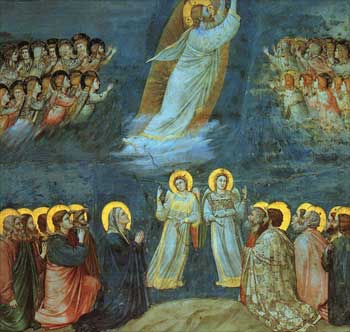
  3. Was the story of the “bodily ascension” perhaps a myth or pious legend? It is found only in Luke/Acts, not in the earliest Gospel, Mark, nor is it found in Matthew. Is the story in Luke/Acts modeled on other ascension stories that were popular at that time? The story of the “Ascension of Moses” was repeated by Josephus, a Jewish historian, which means the popularity of the “Moses ascension myth” preceded the writing of the Gospels and Acts. J. R. Porterʼs general work, Jesus Christ: The Jesus Of History, The Christ Of Faith (New York: Oxford Univ. Press, 1999), in his very brief section on the Ascension (p. 133), adds: “The special object of the Ascension narrative in Acts is to make clear that the post-Resurrection appearances have come to an end. [See Note #3] Jesus leaves the earth, not to be seen again until his second coming at some unknown date. His presence will be replaced by that of the Holy Spirit which will empower and inspire the Church (Acts 1:8). Lukeʼs account appears to be modeled on the ascension of Elijah as described in the Hebrew Scriptures (2 Kings 1:9-12). For example, the forty-day period between the Resurrection and the Ascension on the Mount of Olives recalls Elijahʼs forty dayʼs journey to Mount Horeb (1 Kings 19:8); and the gift of the Holy Spirit is paralleled by the gift to Elisha of the spirit of Elijah.”


Notes:

  1. http://www.ntgateway.com/ agrees it was an exclusive eating group of just the apostles according to the commentaries on Acts 10:40-41 which refer me back to Acts 1:8 which refers to the “witnesses” who are identified at Acts 1:2 as “the apostles” (e.g. http://www.bible.org/cgi-bin/netbible.pl#note_26). Indeed at Bible.Crosswalk it explicitly states that this was just “the apostles.”, i.e. ,even to us, who did eat and drink with him after he rose from the dead; namely, to the apostles, with whom he familiarly conversed by times, for the space of forty days after his resurrection

    Wesley Notes Not now to all the people - As before his death; to us who did eat and drink with him - That is, conversed familiarly and continually with him, in the time of his ministry.

    Who was conversing familiarly and continually with Jesus in the time of his ministry - the apostles of course.

  2. #2 Apocryphal Apparitions: 1 Corinthians 15:3-11 as a Post-Pauline Interpolation

    For added discussion see Miracles by Robert M. Price.

  3. #3 The “appearance” to Paul was well after Jesusʼ bodily ascension into heaven. Yet Paul ranks the Jesus “appearance” he had as being equal to what was originally seen by the “twelve.” Hmmm.

Biblical Exaggerations

And how can people be blamed eternally simply for relying on experts to fill in the gaps concerning things in which none of us has thorough expertise?
Because the matters central to salvation do not rely on such a high level of expertise. Anyone has access.

Edward: Non-answer. Anyone has access to Mormonism too. The book of Mormon says all you have to do to know if that book is true is to read it and then pray and ask God if it is so. Thatʼs all, instant access. The Christianʼs claim the same thing, pray a prayer, and youʼll know itʼs true. But then once you are a member of their church they stick you with their Holy Book, and additional commentaries, inspirational materials, etc., so you “understand the holy book right.”


Even the order of creation in Genesis echoes the Babylonian Enuma Elish.
No kidding. Yet as Heidel showed, the former cannot be derived from the latter. Why not attribute both to a common core as he indicated the evidence shows?
Exaggerations in Bible

Edward: Why not recognize the “common core” as being the ancient near eastern milieu in general? Besides, the similarities are more striking than Heidel even discusses in his book. And the influence of the annual Enuma Elish readings and creation festivals in Babylon during the captivity of the Jews there probably made the Jews realize they needed a fancy dancy creation account of their own. The ancient near eastern milieu also included henotheism, the belief in one high god raised above the rest. And the same phrases that described Marduk are echoed in the Old Testament. And traces of henotheism also exist in the Old Testament, as in “ye shall have no other gods before me.” Thereʼs books that list exact parallels between ancient near eastern literature and the Old Testament, laying them out verse by verse. Do you think the laws of Moses arose out of thin air? Hammurabi beat Moses to it, and his laws are show in stelles as being dictated right to Hammurabi by the god Shamash. Later, the Jews pulled the same trick, their laws being delivered right to Moses. And the Jews copied phrases and the general outlines of the Hammurabi code as well.


Moreover, the borrowings do not end with the creation accounts.
Borrowings from ancient wisdom literature found in the book of Proverbs have also been documented.
And the problem with this is what, exactly?

Edward: The problem is that the book of Proverbs contains examples of sayings totally lifted from other ancient sources that archaeologists agree existed before Solomonʼs day, and that means there is proof that the “wisdom of proverbs” wasnʼt all simply passing out of the Jewish nation into the world, but the Jews were incorporating information from the cultures around them into their holy Scriptures. Even the layout of the format for the book of Proverbs was lifted from a previous wise sayings collection that is now known. In other words Plagiarism. The ancients stole from one another without footnotes. All sorts of borrowings were going on. The Bible is a collection of stuff whose origins are unfootnoted and lost in time.

And when there are footnotes, which happens exceedingly rarely in the Bible, they raise questions of their own. Take the case of the Book of Jashar which is listed as a footnote in the Biblical Book of Joshua. The Book of Joshua admits that it quotes from “The Book of Jashar” when it comes to Joshuaʼs exact words spoken to “stop the sun.” Joshua 10:12 On the day the LORD gave the Amorites over to Israel, Joshua said to the LORD in the presence of Israel:
“O sun, stand still over Gibeon,
O moon, over the Valley of Aijalon.”
13 So the sun stood still,
and the moon stopped,
till the nation avenged itself on its enemies,
as it is written in the Book of Jashar.

Weirdly enough, the Bible lists the Book of Jashar as a source for two biblical events. One such event is Joshuaʼs command to stop the sun, and another concerns the life of king David!
2 Samuel 1: Davidʼs Lament for Saul and Jonathan

  1. David took up this lament concerning Saul and his son Jonathan,
  2. and ordered that the men of Judah be taught this lament of the bow — it is written in the Book of Jashar:
  3. “Your glory, O Israel, lies slain on your heights. How the mighty have fallen!

Doesnʼt that imply that the Book of Jashar was written or at least completed during the era of King David since it mentions him? And who is this “Jashar” fellow? But then, if the book of Jashar was written in the era of King David, it doesnʼt contain a very “fresh memory” of Joshua, does it, since Joshua lived hundreds of years before King David. Yet the author of the Book of Joshua would sooner quote from the Book of Jashar for Joshuaʼs words, rather than get them straight from Joshua himself?


As well as the well documented practice of exaggerations regarding battle victories, or the numbers of enemy slain, or sizes of armies, or amount of booty captured, such exaggerations being rife at that time.
Vague generalizations.

Edward: Thereʼs a grad paper by a Dallas Seminary Student that mentions how common such exaggerations were and he lists examples, and argues at that Evangelical institution that the numbers of the Exodus in the Bible are likewise exaggerations. I guess even the Evangelical scholarly world is passing Bob by. The name of the student and his paper is mentioned in an appendix in Leaving the Fold.


Itʼs also well documented that biased moderns have a problem assuming that ancient writers exaggerate.

Edward: So when Chronicles doesnʼt agree with Kings as to the number of the kingʼs horses, etc., but is off by thousands (tens of thousands), thatʼs not an exaggeration? When the size of Israelite armies is more phenomenal than anything archaeologists can possibly imagine, thatʼs not exaggerations? When the Bible says that Solomon had “had seven hundred wives, princesses and three hundred concubines” (1 Kings 11:3), in other words an even thousand, thatʼs not an exaggeration? When the Bible says that Solomon had 81% of the same amount of gold that currently lies at Fort Knox. [“A hundred thousand talents of gold, a million talents of silver, quantities of bronze and iron too great to be weighed, and wood and stone” (1 Chron. 22:14) The NIV Bible says that a hundred thousand talents of gold is equal to 7.5 million lbs. The U.S. federal gold depository at Fort Knox holds only 19% more than that, or 9.2 million lbs. Itʼs difficult for anyone today to believe that ancient kings, ruling over relatively parched and moderately populated lands like ancient Palestine, lacking modern methods and machines for gold mining and refining, could have accumulated 81% of what currently lies at Fort Knox. Likely, the author of 1st Chronicles was inflating the wealth of King David and King Solomon just as he inflated the numerical sizes of their armies — after all, “a hundred thousand talents of gold,” is a nice large round figure. ]
Hey, but go pull Deverʼs beard (if he has one) and let me know if he hollers when you try to explain to him that the Bible contains no “exaggerations.”

You want more? The Bible, like tons of holy books is filled with exaggerated speech and language or all types, not just numerically.
If you donʼt see them, then you are blinded by far more than just “Satan,” more like youʼve been blinded by the “snake-headed Gorgon” known as “Evangelical religion,” because your head must have turned to stone:

Exaggerations Of Biblical Proportions

The camels were without number as the sand of the sea.
- Judges 7:12

What an exaggeration, closer to a boastful lie than the truth. If the entire surface of the earth was filled with camels they would not be “without number,” nor would they be as plentiful as “the sand of the sea.”
- E.T.B.


As the host of heaven cannot be counted, and the sand of the sea cannot be measured, so I will multiply the descendants of David.
- Jeremiah 33:22

What an exaggeration, closer to a boastful lie than the truth. The number of Davidʼs descendants is nowhere near the number of stars in heaven, or sand in the sea.
- E.T.B.


Among all this people there were seven hundred chosen men left-handed; every one could sling stones at a hairʼs breath, and not miss.
- Judges 20:16

Seven hundred who could sling stones at “a hairʼs breath,” and “not miss?” Iʼm surprised the authorʼs nose didnʼt grow when he told that one. Even the greatest sharp shooters at the turn of this century, who performed in Wild West traveling shows, and shot cards out of each otherʼs hands, did not retire with all their fingers — because they “missed” some shots by “a hairʼs breath.”
- E.T.B.


Their slain shall be cast out, and their stink shall come up out of their carcasses, and the mountains shall be melted with their blood.
- Isaiah 34:3

Talk about an exaggeration guaranteed to turn your stomach. To “melt a mountain” with “blood” would require a helluva lot of blood. Isaiah must have been confusing mountains with molehills.
- E.T.B.


The famine was over all the face of the earth… And all countries came unto Egypt to Joseph to buy corn; because the famine was so sore in all lands.
- Genesis 41:56,57

Donʼt the words, “over all the face of the earth. all countries. all lands” mean “over all the face of the earth. all countries. all lands?” If they mean what they say, then even folks in far off China and Japan and Australia and North and South America must have been “sorely famished” and had to go to “Egypt” to buy corn! Or else, “over all the face of the earth. all countries. all lands” is an exaggerated way of speaking, closer to a boastful lie than the truth.
- E.T.B.


[In one of the plagues with which the Lord smote Egypt] All the dust of the land became lice throughout all the land of Egypt.
- Exodus 8:17

Doesnʼt the Bible use the word “dust” to describe the ground, mud, and sand upon which we all walk as in “the dust of the earth?” Therefore if “all the dust of the land became lice” would not the Egyptians have drowned in lice and the pyramids been adrift in seas of lice? “Knock, knock.” “Whoʼs there?” “Lice.” “Lice Who?” “Run for your lice!”
- E.T.B.


In one plague with which the Lord smote Egypt “all the cattle of Egypt died.” But a few days after that, “all the firstborn cattle died.”
- Exodus 9:6 & 12:29

How could any cattle be left to smite after “all the cattle” had already been smitten? Are we to believe that the Lord resurrected the “firstborn” among the cattle just so he could smite them again?
- E.T.B.


[The Lord said to the Israelites when they were wandering in the desert] “This day will I begin to put the dread of thee and the fear of thee upon the nations that are under the whole heaven, who shall hear report of thee, and shall tremble, and be in anguish because of thee.”
- Deuteronomy 2:25

Donʼt the words, “the nations that are under the whole heaven” mean “the nations that are under the whole heaven?” If they mean what they say, then even the distant nations of China and Japan and the Native American nations — to name just a few of the many “nations that are under the whole heaven” — must have been trembling in their boots, having “heard report of Israel.” Or else, “the nations that are under the whole heaven” is an exaggerated way of speaking, closer to a boastful lie than the truth.
- E.T.B.


The Exaggerated Abundance of the “Promised Land”

In the year 1553 Michael Servetus was on trial for his life in Geneva, Switzerland on the charge of heresy. One point raised by the prosecution was Servetusʼs edition of Ptolemyʼs Geography, in which Judea (the “promised land” of the Jews), was spoken of, not as “a land flowing with milk and honey,” but mainly meagre, barren, and inhospitable. In his trial this simple statement of geographical fact was used against him by Protestant Refomer, John Calvin, with fearful power. In vain did Servetus plead that he had simply drawn the words from a previous edition of Ptolemy; in vain did he declare that this statement was a simple geographical truth of which there were ample proofs; it was answered that such language “necessarily inculpated Moses, and grievously outraged the Holy Ghost.”
- A. D. White, A History of the Warfare of Science with Theology in Christendom, Vol. 1


Exaggerated Promise

I have set my king upon the holy hill of Zion. Ask of me, and I shall give thee the heathen [as slaves] for thine inheritance, and the uttermost parts of the earth for thy possession. Thou shalt break them with a rod of iron.
- Psalm 2:6,8,9,12

The above psalm is believed to have been sung at the coronations of Hebrew kings. But giving a king, “.the uttermost parts of the earth for thy possession” is an exaggerated promise to say the least. (Though it must be admitted that this psalm later proved popular with some Catholics and Protestants who used it to justify their “breaking” of the “heathen,” driving them into slavery and stealing their land in alleged fulfillment of this exaggerated Biblical promise.)
- E.T.B.


[Jesus said] “The Queen of the South [i.e., the Queen of Sheba] came from the uttermost parts of the earth to hear the wisdom of Solomon.”
- Matthew 12:42

The Queenʼs residence, being probably on the Arabian Gulf, could not have been more than twelve or fourteen hundred miles from Jerusalem. If that is the “uttermost parts of the earth” then it is a small world after all.
- E.T.B.


All the kings of the earth sought the presence of Solomon, to hear his wisdom.
- 2 Chronicles 9:23

Donʼt the words “all the kings of the earth” mean “all the kings of the earth?” If they mean what they say, then even Incan and Aztec kings in South America must have begun paddling their long boats toward Israel the instant they heard how wise king Solomon was. Or else, “all the kings of the earth” is an exaggerated way of speaking, closer to a boastful lie than the truth.
- E.T.B.


The devil took him [Jesus] up into an exceedingly high mountain, and showed him all the kingdoms of the world, and the glory of them.
- Matthew 4:8

Shown “all the kingdoms of the world” from an “exceedingly high mountain?” I suppose so, if the mountain was “exceedingly high” and the earth was flat. Verses in the Bibleʼs book of Daniel presume a flat earth the same way that verses in Matthew do:

I saw a tree in the midst of the earth, and the height thereof was great. The tree grew, and the height thereof reached unto heaven, and the sight thereof to the end of all the earth.
- Daniel 4:10-11

Instead of an “exceedingly high” mountain from which “all the kingdoms of the earth” can be seen, Daniel pictures a tree “whose height was great,” growing from the “midst” or center of the earth and “seen” to “the ends of all the earth.”

Funny how such flagrantly flat-earth verses appear in both the Old and New Testaments. “Bible believers” will of course reply that such verses are only “apparently difficult” to explain, and not the “real truth” as they see it. But it is the “apparent difficulties” that remain in the Bible, as it was written, and they will always remain there, regardless of all the ingenuity employed in explaining them away.
- E.T.B.


A decree went out from Caesar Augustus that a census be taken of all the inhabited earth.
- Luke 2:1

Donʼt the words, “all the inhabited earth” mean “all the inhabited earth?” If they mean what they say, then even the Chinese must have taken part in Augustusʼ census! Or else, “all the inhabited earth” is an exaggerated way of speaking, closer to a boastful lie than the truth.
- E.T.B.


And there were dwelling at Jerusalem Jews, devout men, out of every nation under heaven.
- Acts 2:5

“Out of every nation under heaven?” A Jew from the nation of the Sioux Indians in North America was there too? Or maybe Luke was not talking about a very wide “heaven?”
- E.T.B.


A great famine all over the world took place in the reign of Claudius.
- Acts 11:28

Donʼt the words, “all over the world” mean “all over the world?” If they mean what they say, then the Chinese, Japanese and Native Americans who lived in the world during the reign of Claudius must have suffered the effects of that great famine. Or else, “all over the world” is an exaggerated way of speaking, closer to a boastful lie than the truth.
- E.T.B.


Paul the apostle wrote:

Their voice [of first-century proclaimers of the Christian Gospel] has gone out into all the earth, and their words to the ends of the world.

The mystery is now manifested and. has been made known to all the nations.

The gospel, which has come to you, just as in all the world.

The gospel. which was proclaimed in all creation under heaven, and of which I, Paul was made a minister.
- Romans 10:18; 16:25-26; Colossians 1:5-6,23

What an exaggeration. Sorry Paul, but “Their voice” (of Christians proclaiming the Gospel) had only reached a handful of churches in the Roman Empire when you wrote the above verses. The Gospel had not reached, nor been proclaimed in “all the earth,” nor “to the ends of the world,” nor “to all nations,” and certainly not “in all creation under heaven,” not like you said it “has” and “was.”

The early church father, Irenaeus, maintained Paulʼs charade when he wrote: “Now the Church, spread throughout all the world even to the ends of the earth; “…even though she has been spread over the entire world;” “Anyone who wishes to see the truth can observe the apostleʼs traditions made manifest in every church throughout the whole world.” (Irenaeus, Against Heresies, 1.10.1, 1.10.2, 3.3.1-2) Not a very big “world,” mind you, leaving out most of Asia and Africa, not to mention the continents of Australia, North America and South America.

Summation of the “Exaggerations of Biblical Proportions

If an all-wise God had inspired the Bible He would have been able to give its human authors a few inspired geography lessons, just to show them how big the earth really is. Instead the Bible contains the same exaggerated speech, boastful lies and holy hyperbole common for its day and age, i.e., rather than evidence of special inspiration.

Furthermore, if the Bible is not speaking absolutely truthfully when it speaks of “all the earth,” “to the ends of the earth,” “from the uttermost parts of the earth,” “all the inhabited earth,” “in all creation under heaven,” “under all the heavens,” “every nation under heaven,” then how can anyone be expected to assume the truthfulness of the statement, “everywhere under the heavens,” when it is found in the tale of the Flood of Noah in Genesis? (It says in Gen. 7:17, “The water prevailed. and all the high mountains everywhere under the heavens were covered.” Why couldnʼt this instance of the phrase, “everywhere under the heavens,” be yet another boastful exaggeration and mythical way of speaking? Perhaps the “Flood” story is a myth? Hmmm, do ya think?)

Having run across so many instances of exaggerated speech in the Bible one even wonders what is to become of the central Christian boast, the exaggeration par excellence, namely that Jesus died “for the sins of the world?” Believers from every sacred tradition boast that their beliefs affect the “world,” or must be taken seriously by the “world.” Must they indeed? I find that I cannot take seriously many instances in which Biblical authors exaggerate (boldly lie about) the extent of a famine, a census, the distance to a queenʼs residence, the extent to which a message has been spread, the extent of a flood, etc. Indeed, didnʼt “orthodox” Christian doctrines and theology arise via exaggerating the importance of some interpretations of the alleged sayings and doings of Jesus above other rival interpretations?
- E.T.B.


The Exaggeration Found at The End of the Fourth Gospel

The Gospel of John ends with this great exaggeration:

And there are also many other things which Jesus did, the which, if they should be written, every one, I suppose that even the world itself could not contain the books that should be written. Amen.
- John 21:25

The “world” could not contain the books? The books we do have that tell of “things Jesus did,” consist of four slim “Gospels,” not one of them over forty pages in length. Two of them, Matthew and Luke, even repeat over 90% of what appears in Mark. So the four Gospels minus the overlapping portions would be even slimmer.

To reiterate the last sentence in the fourth Gospel:

And there are also many other things which Jesus did, the which, if they should be written, every one, I suppose that even the world itself could not contain the books.
- John 21:25

Is there a less convincing way for an allegedly “inspired” book to end?
Just notice the authorʼs use of the faltering phrase, “I suppose.”

“I suppose” such exaggerated speech made sense to believers back then, who were being entertained by ever new and fabulous tales of Jesusʼ infancy, youth and adulthood churned out by their fellows and incorporated into additional “Gospels” many of which we only know the titles of today. But really, ending an inspired book with a huge exaggeration, followed by the faltering words, “I suppose,” doesnʼt make much of an impression on me.
- E.T.B.


Exaggerated Commands: “Cut and Pluck” to Avoid “Hell”

Take the following verses:

[Jesus said] If thy right eye offend thee, pluck it out, and cast it from thee: for it is profitable for thee that one of thy members should perish, and not that thy whole body should be cast into hell. And if thy right hand offend thee, cut it off, and cast it from thee: for it is profitable for thee that one of thy members should perish, and not that thy whole body should be cast into hell.
- Matthew 5:29-30, repeated redundantly in Matthew 18:8

[Jesus said] If thy hand or thy foot offend thee, cut them off, and cast them from thee; it is better for thee to enter life halt or maimed, rather than having two hands or two feet to be cast into everlasting fire.
- Matthew 18:8

[Jesus also taught] All men cannot receive this saying, save they to whom it is given. For there are some eunuchs. which have made themselves eunuchs for the kingdom of heaven. He that is able to receive it, let him receive it.
- Matthew 19:12

The inspired words concerning “cutting off” body parts to avoid being “cast into hell,” along with Jesusʼ praise of those who “made themselves eunuchs for the kingdom of heaven,” made a deep impression on Origin (an early church Father). He castrated himself.

And in the 1700 to 1800s a group of Christians in Russia called the Skoptzies cut off their own testicles and scrotums. Female members mutilated their vulvas, breasts and nipples. (“For the days are coming, in the which they shall say, Blessed are the barren, and the wombs that never bare, and the paps which never gave suck.” Luke 23:29) Furthermore, they taught that if you also removed your penis (or removed both breasts if you were female) you would be granted the highest honors in heaven. Apparently with the aid of a perfect holy book like the Bible and with the promise of the Holy Spirit to “lead believers into all truth,” this was the truth that the Skoptzies came up with. Bodily sexual temptations could lead to hell, so if mutilating the body aided a person in denying those temptations, it increased oneʼs chances of avoiding hell and attaining heaven.

Maybe God could have used less emphatic language and not linked the cutting off of body parts with avoiding hell? “Let him who has ears to hear.”

“Whaaat? I canʼt hear you, I recently cut my ears off. They ‘offended’ me. And I would rather be in heaven without them than be cast into everlasting fire with them.”
- E.T.B.


Too Much Reverence for the Literal Words of the Bible Coupled with Too Much “Fear of God?”

Mr. Passmore thought he saw the number 666 on his right hand and so he used a circular saw to follow the teaching of the Bible, “If they right hand offend thee, cut it off, and cast it from thee, for it is better to enter eternal life maimed than have two hands and be cast into everlasting fire.” He then refused surgery at the Sentara Norfolk General Hospital in Virginia, saying he thought he would go to hell if the hand were reattached. Now, however, he has filed a lawsuit claiming that the hospital where he was treated was negligent in that they didnʼt contact his parents or his sister and get them to override his decision. Passmore is thirty-two years old.
- J. D. Bell, “Nuts in the News,” The American Rationalist, Sept./Oct. 1996


An Exaggerated Command: “Give to Everyone Who Asks”

[Jesus commanded] Give to him that asketh thee, and from him that would borrow of thee turn not away.
- Matthew 5:42

Give to every man that asketh of thee; and of him that taketh away thy goods ask them not again. But love ye your enemies, and do good, and lend, hoping for nothing again; and your reward shall be great, and ye shall be the children of the Highest: for he is kind unto the unthankful and to the evil.
- Luke 6:30,35

Next time an evangelical Christian targets you with their soul-seeking missiles, tell them to look up the above verses and read them aloud. After which, ask them for their Bible. If they do not give you their Bible then ask them to please turn to the end of the same sermon in which Jesus spoke the verses above, and read aloud what Jesus said at the very end of that sermon, emphasizing the word “doeth”:

Not every one that saith unto me, Lord, Lord, shall enter into the kingdom of heaven; but he that doeth the will of my Father… Many will say to me in that day, Lord, Lord, have we not prophesied in thy name? and in thy name have cast out devils? and in thy name done many wonderful works? And then will I profess unto them, I never knew you: depart from me, ye that work iniquity. Therefore whosoever heareth these sayings of mine, and doeth them, I will liken him unto a wise man. And every one that heareth these sayings of mine, and doeth them not, shall be likened unto a foolish man.
- Matthew 7:21-24,26

Remind your evangelical friend that if they do not “doeth” what Jesus commandeth them, they risk hearing Jesus say unto them, “Depart from me, ye that work iniquity!” Is that what they want to hear Jesus say to them? Or do they want to give you their Bible, since you asked them for it?

After they have handed it over, tell them, “Thank you,” and say that you donʼt want to keep their Bible forever, nor destroy it. You would just like them to read a few books about the Bible, books that take a more “inquisitive” approach to the Bible and Christianity, like Chicken Soup for the Damned Soul: The Damned say the Damndest Things. And then you will return their Bible to them.

Speaking of “giving to all who ask,” hereʼs an idea for the IRS to try. They should print Mat. 5:42 and Luke 6:30 on all tax forms. Beneath the verses should be a little note from the IRS that says, “We ask all Bible believing Christians, especially wealthy televangelists and pastors of mega-churches, to not claim religious tax exemptions this year.”

In fact, I invite everyone to ask their “Bible believing Christian” friends for money every day and keep asking, especially any fat cat Christian ministers they might know. Call their TV stations and radio stations, stand up in their mega-churches, etc., and quote the above verses and ask them for money. There is no limit put on the above commands.
- E.T.B.


An Exaggerated Promise: “You Wonʼt Be Hurt”

And these signs shall follow them that believe; In my name. They shall take up serpents; and if they drink any deadly thing, it shall not hurt them.
- Mark 16:17-18

This promise (which does not appear in the earliest known manuscripts of the Gospel of Mark) has inspired crippling illnesses and fatalities, including the death of the founder of the “serpent-handling” sect of Baptists who died from a poisonous snakebite.

Of course, if any Christians truly believe that “if they drink any deadly thing, it shall not hurt them,” why donʼt they move their families to homes built on toxic landfills which they could buy for a prayer?

Toxic Acres is the place for me!
Mark 16 lets me live there comfortably.
Land spreadinʼ out so cheap and wide.
Keep sin city just gimmie that DI-OXIDE!
- E.T.B.


Exaggerated Numbers of People Wandering in the Desert for Forty Years

According to the Bible the number of people who followed Moses out of Egypt during the Exodus was “about six hundred thousand on foot that were men.” (Ex. 12:37) To that number must be added women, children, and a “mixed multitude” of non-Hebrews who followed Moses out of Egypt, raising the total way above the six hundred thousand Hebrew males, and nearer to a grand total of two million men, women and children. That is like the population of New Orleans (or Columbus, Ohio, or San Antonio, Texas), being kept on the move (following “a pillar of smoke by day and a pillar of fire by night”) every day for forty years. The only day of the week they were not moving was the Sabbath day. Thatʼs a heap of packing and unpacking — of setting up “camp” and breaking it down again. Plus we are to believe they also performed necessary sacrificial/sacramental duties for two million people, and the men all walked “outside the camp” (a really huge camp) each time they had to go to the bathroom.

The Bible only mentions Aaron and his two sons as being available to conduct all the burnt-offerings, meat-offerings, peace-offerings, sin-offerings, trespass-offerings, thank-offerings for all of the Israelites. (Num. 3:10) Just the number of pigeons to be brought as sin-offerings for newly born children, would have averaged, based on a multitude of nearly two million, more than 250 a day, not counting all the bulls, sheep, lambs, rams, goats, and turtle doves needing to be sacrificed for reasons too numerous to mention — and their carcasses having to be ceremonially bled, the fat removed meticulously, the organs burned as an offering to God, and the carcass dragged “outside the camp” to be burned (a camp of perhaps 16 miles in diameter).

Miraculously, these two million or so Israelites left no traces of their forty-years in the wilderness. No traces of encampments, tent holes, potshards (or other items discarded during their marches), nor traces of their daily sacrifices — no evidence of large charred ash deposits nor blackened stones nor bones. (Oddly enough archaeologists have discovered the remains of a small fire in the Sinai wilderness that was carbon-dated back to about that time. But one small fire could not have warmed the alleged two million who marched nearly every day for 40 years up and down the Sinai.)

So staggering are the problems raised by the exaggerated Biblical number of “600,000 males” (an embarrassingly well attested number, repeated three more times in the Bible — on each occasion each separate tribe being numbered, the sum of the results making up the whole), that even conservative Christian scholars have admitted that “600,000 men,” beside children, women, and the mixed multitude, is an exaggeration on par with many others found in ancient Near Eastern lore.

Evangelical Christian, W. M. Flinders Petrie, author of Egypt and Israel (London Society for Promoting Christian Knowledge, 1911) pointed out, “There are. two wholesale checks upon the total numbers. The land of Goshen recently supported 4,000 Bedouin living like the Israelites, or at present holds 12,000 cultivators. To get “600,000 men” with their families out of that district would be utterly impossible. Also on going south the Israelites had almost a drawn battle with the Amalekites of Sinai. The climate of that desert peninsula has not appreciably changed; it will not now support more than a few thousand people, and the former inhabitants cannot have exceeded this amount. How could the Israelites have had any appreciable resistance from a poor desert folk, if they outnumbered them as a hundred to one? Again, we are compelled to suppose that the Israelites were not more than a few thousand altogether. Thus we see that more cannot be got out of Goshen or into Sinai.”
- E.T.B.


Exaggerated Sizes Of Armies in the Bible

In the 18th century, Frederick the Great had an army of 83,000 troops when he became King of Prussia. Other states — Austria, France, and Russia — fielded larger armies, but rarely did they approach 100,000 troops. Frederickʼs greatest victories — Rossbach and Leuthen — involved about 75,000 and 115,000 troops respectively on both sides. Napoleonʼs greatest victory - Austerlitz — involved about 150,000 troops total. So did Gettysburg, Americaʼs greatest Civil War battle. Alexander the Great, who controlled Greece, Macedonia, Thrace (Southern Yugoslavia), and a little bit of Western Anatolia, was able to raise between 90,000 and 100,000 troops total. Yet the Bible says that Hebrew kings, David and Saul, fielded far larger armies than those. King David had 1.57 million troops (1 Chron. 21:5)… or 340,000 plus the muster of Issacher… or 1.3 million (depending on which verses you read). While King Saul could field 210,000 troops. (1 Sam. 15:4)

Did the dry scrubland of Judea — populated by scattered villages and small settlements — raise up armies larger than the Persian Empireʼs when it faced destruction at Alexanderʼs hand, larger than Frederick the Greatʼs, larger than Napoleonʼs in all his battles save the invasion of Russia, larger than the Unionʼs and Confederacyʼs in their epic struggle? Truly such a feat must constitute one of the least heralded miracles in the Bible.

In the ancient world only the greatest powers, such as the Bronze Age Egyptians, Hittites, Assyrians, Babylonians, and later the Persians, fielded armies upward of 50,000 or more. When Egyptʼs king Ramesses II fought the Hittites at Kadesh in about 1285 B.C.E., he recorded their force as 37,000 infantrymen and 3,500 chariots and said that the Hittites mustered much of the military power of their empire, which covered most of Anatolia, Syria, and a bit of Iraq (Sir Alan Gardiner, The Kadesh Inscriptions of Ramesses II, 1975, p. 41-42). Ramesses had possibly the largest army Bronze Age Egypt ever fielded. It is worth noting that in his poetic account of the battle of Kadesh, Ramesses claimed to have personally killed “hundreds of thousands” of Hittites and their allies (Ibid., pp 10-13), and Ramesses probably lost the battle. (Propaganda was invented long before the Israelites appeared.)
- William Sierichs, Jr., “Those Amazing Biblical Numbers: Taking Stock of the Armies of Ancient Israel,” The Skeptical Review, Vol. 6, No. 1, 1995


Exaggerated Numbers of People Slain

According to the Bible, Abishai & Jashobeam each slew 300 men using only a spear (2 Sam. 23:8 & 1 Chron. 11:11). But thatʼs nothing, because Shamgar slew 600 men with an ox-goad (Judges 3:31). And Adino slew 800 with a spear (2 Sam. 23:8) Do ya suppose Adino was the inventor of Shish-ka-bob? Last but not least, Samson slew 1000 men with the jaw-bone of an ass (Judges 15:15). If only their techniques in the lethal arts of the “spear,” the “ox-goad” and the “jaw-bone” had been preserved for posterity, imagine what martial arts films Chinese directors could make today, featuring hundreds of deaths in one long (and obscenely bloody) scene!
- E.T.B.


Exaggerated Ages of the Biblical Patriarchs

It is certain that one cannot build up a chronology on the spans of years attributed to the Patriarchs, nor regard it as factual that Abraham was seventy-five years old when he left Harran and a hundred when Isaac was born and that Jacob was a hundred and thirty when he went into Egypt, for the evidence from the skeletons in the Jericho tombs shows that the expectations of life at this period was short. Many individuals seem to have died before they were thirty-five, and few seem to have reached the age of fifty.
- Dr. Kathleen Kenyon (the eminent~excavator of the city-mound of Jericho)


Why Evangelical Theologians Grade Godʼs Writing On A Curve

If I was teaching a class in the art and craft of writing, I would have to ask God what message he was trying to convey to his readers. His emotions and sentiments, like those of his characters, are on a constant roller coaster ride.

For example in the book of Exodus, Moses descends from a mountain holding Ten Commandments, one of which says, “Do not kill.” Plain enough. But Moses saw that some of the people had begun worshipping idols, so he said, “Kill every man your [idol worshipping] neighbor.” (Ex. 32:27). How do you get that from “Do not kill?”

And how can you confuse “Kill every man your neighbor” (Ex. 32:27) with “Love your neighbor?” (Lev. 19:18 & the Gospels).

And we are also to believe, based on the Bible that the same Moses who taught “Do not kill” also commanded the Israelites to “kill every [Midianite] male among the little ones.” (Num. 31:17)


And what about the use of the word “Blessed” to describe two very different sentiments in Matthew 5:9 and Psalm 137:9, respectively: “Blessed are the peacemakers, for they shall be called the sons of God.” “Blessed will be the one who dashes your little ones against the rock.”


Or take Psalm 34:14, “Seek peace, and pursue it,” and add the equally peace-loving, “Blessed are the peacemakers, for they shall be called the sons of God” (Mat. 5:9).

And compare them with Jesus allegedly saying, “Do you suppose that I came to grant peace on earth? I came not to bring peace, but a sword.” (Mat. 10:34)


Or compare Luke 2:14, “Peace on earth, good will toward men [at Jesusʼ birth]” with this verse: “Do you suppose that I [Jesus] came to grant peace on earth? I tell you, no, but rather division. I have come to cast fire on the earth and how I wish it were already kindled.” (Luke 12:49,51)


Or compare Matthew 5:7, “Blessed are the merciful” with the following verses:

“Leave alive nothing that breathes. show them no mercy.” (Deut. 7:2)

“The Lord hardened their hearts… that they might receive no mercy.” (Joshua 11:20)

“I will dash them one against another, even the fathers and the sons together, saith the Lord: I will not pity, nor spare, nor have mercy, but destroy them. A curse on him who is lax in doing the Lordʼs work! A curse on him who keeps his sword from bloodshed.” (Jer. 13:14; 48:10 — NIV)


Or compare Matthew 5:44, “Love your enemies and pray for those who persecute you” with “Chase your enemies and they will fall before you by the sword.” (Lev. 26:7)


Or take the following two verses on the joys of vengeance: “The Lord will rejoice over you to destroy you” (Deut. 28:63) “The righteous will rejoice when he sees the vengeance, he will bathe his feet in the blood of the wicked” (Ps. 58:10)

And compare such verses with: “Do not rejoice when your enemy falls, and let not your heart be glad when he stumbles… If your enemy is hungry, give him bread to eat; and if he is thirsty, give him water to drink… He who rejoices at calamity shall not go unpunished.” (Prov. 17:5; 24:17 & 25:21)

God should have slowed down and concentrated more when He wrote the Bible. However, if He had, that would have left theologians with little to do, since it is their job to contrive ingenious explanations that make “perfect” sense out of every verse in the Bible. I suppose English teachers could do the same thing with the papers they grade — they could contrive a host of ingenious explanations to make every exaggerated, contradictory, imprecise statement in a story or research paper appear to make “perfect” sense. But what would be the point in concocting so many ingenious explanations? Simply to spare giving the child a “D” on their writing assignment?
- E.T.B.


Armies of Bible scholars and theologians have for centuries found respected employment devising artful explanations of the Bible often not meaning what it says.
- J. S. Bullion, Jr.

What Are Bible Believers To Do?

The Bible commands:

Make no mention of the name of other gods, neither let it be heard out of thy mouth
- Exodus 23:13

Keeping in mind such a command, consider someone who eats a bowl of cereal then hops into their Saturn with Atlas tires on a Thursday afternoon in March to go rent the movie, Apollo 13. “Cereal” is named after “Ceres,” the Roman goddess of grain; “Saturn” was a Roman god; “Atlas” a Greek god; “Thursday” means “Thorʼs day,” and “Thor” was a Norse god; “March” is named after “Mars,” a Roman god; and “Apollo” is another Greek god. As you can see, it is a little difficult in todayʼs world to cease mentioning “other gods.” Even the membrane that closes off the vagina on virginal females is named after “Hymen,” a god of the Wedding feast. So how do you avoid “the names of other gods being heard out of your mouth?”

To add insult to irony, “Biblical hermeneutics” is the art or science of Biblical interpretation and is taught in every seminary, yet the word “hermeneutics” is based on the name of the Greek god, “Hermes.”
- E.T.B.


Does God “Do” All the Stuff the Bible Says He Does?

By His windy breath the heavens are cleared.
- Job 26:13

From the breath of God ice is made, And the expanse of the waters is frozen.
- Job 37:10

He says to the snow, fall to the earth, and to the rain, be strong.
- Job 37:6

He draws up the drops of water which the clouds pour down.
- Job 36:27

Who hath gathered the wind in his fists?
- Proverbs 30:4

[Clouds] turn around by His guidance.
- Job 37:12

He covers His hands with the lightning. And commands it to strike the mark. Its noise declares His presence; The cattle also, concerning what is coming up.
- Job 36:32-33

His thunder is incomprehensible.
- Job 26:14

Listen closely to the thunder of His voice, And the rumbling that goes out from His mouth, Under the whole heaven He lets it loose, And His lightning to the ends of the earth. After it a voice roars; He thunders with His majestic voice; And He does not restrain his lightnings when His voice is heard. God thunders with his voice wondrously.
- Job 37: 1-5 (NASB)

This just in. God breathed on Chicago, and His mighty thunder incomprehensibly shattered several windows in the Sears Tower.
- E.T.B.


The very god who, according to those who believe in him, made every last electron spin in its orbit everywhere throughout the universe, cannot write a clear, unmistakable volume of instructions to human beings who are supposed to follow his wishes?
- Fred Woodworth


If God got a job as an author of technical documentation, heʼd be back on the streets within a week.
- Overheard on an internet discussion group


Odd, isnʼt it, that some assume it all to be a divine revelation? If it is all so terribly important, why can we no longer even tell what some of it means?
- David Coomler


The Bible is like a badly Xeroxed chain-letter.
- Source unknown

What Is “Missing” From Conservative Christian Apologetics? The Body of Jesus

What Is “Missing” From Conservative Christian Apologetics? The Body of Jesus

Conservative Christian apologists from the lowliest to the most scholarly (N.T. Wright), continue to dare non-Christians to “find the missing body of Jesus.” Of course, archaeologists will probably never be able to declare with certainty that Jesusʼ corpse is “missing” from either Palestine or planet earth. Like the majority of first-century corpses, it could be dust by now, or scattered bones, or lost in the destruction of Jerusalem in 70 A.D. Neither would the declaration of a “missing” corpse be sufficient to prove that Jesus rose bodily from the dead and ascended bodily into the sky. (A missing corpse would be necessary, but not sufficient evidence.)

What is “missing” is the attention that conservative Christian apologists need to pay to items #1-5, below. Since the items remain contested, so does the entire question of a “missing body.”


Missing item #1: Uncontested evidence that Paulʼs belief in the “Resurrection” precluded a body (husk/shell) remaining on the earth and “wasting away”

If Paulʼs verses in 1st Corinthians 15 contain the earliest reference to Jesusʼ “resurrection,” then it is crucial that conservative Christians prove beyond a doubt that Paul understood “resurrection” as leaving no bodily remains behind. Paul mentions that Jesus “appeared” to him and others. But the word, “appear,” is used elsewhere in the Bible to denote visions. Neither are any conversations with Jesus described. (We will see how alleged post-resurrection conversations grew over time, below.) Even in the story that Luke tells of Paulʼs meeting with Jesus, such an appearance consisted of only a bright light accompanied by a voice — so there is no mention of corporeality, no touching Jesus, no eating with him. Paul himself described that “mortal flesh” “wasted away” or was “destroyed,” and he looked forward to receiving a “spiritual body,” an “eternal dwelling which comes from heaven” not from earth. (2nd Corinthians, chapters 4-5) Paul further explained, “What you sow [in death] is not the future body but a bare grain, whether of wheat or of some other variety.” (1st Corinthians 15:37) This verse has proven a topic of endless debate. But surely the fact was not lost on Paul (or on anyone who has ever seen a seed sprout) that after a “bare grain” is split open by the emerging plant, the seed leaves behind its husk or shell. Paul even added that the “spiritual body” lacked a stomach: “Food is for the stomach, and the stomach is for food; but God will do away with both of them” (1st Corinthians 6:13), and, “Flesh and blood cannot inherit the kingdom of God.” (1Cor. 15:50) Neither did Paul mention an “empty tomb.” All he mentioned was Jesus dying and being resurrected.

So what is “missing” is an uncontested answer to the question of whether the earliest resurrection teachings allowed (or disallowed) that Jesus could have left physical remains on earth.


Missing item #2: Uncontested evidence that anyone knew about an “empty tomb” story early on

The earliest Gospel that we possess, according to the majority of modern Biblical scholars, is the “Gospel of Mark.” And our earliest copies end with these words:

“Trembling and bewildered, the women went out and fled from the [empty] tomb. They said nothing to anyone, because they were afraid.” (NIV, 16:8)

So, the very first tale of an “empty tomb” was combined with these words, “they said nothing to anyone,” or, in other translations, “they told no one.”

In other words the “empty tomb” tale was “told [to] no one.” So no one knew about such a tale early on. For all anyone knows, an “empty tomb” story could have arisen up to forty years later, when the first Gospel (Mark) was completed.

So what is “missing” is uncontested evidence that the “empty tomb” tale was being “told” early on. [SEE NOTE AT END OF ARTICLE]


Missing item #3: Uncontested evidence that the “bodily ascension” tale arose early on

Paul does not mention the bodily ascension of Jesus (see Missing Item #1).
Neither does Mark nor Matthew. In fact Matthew has the resurrected Jesus say, “I am with you always.”

It is only in the Gospel of Luke and the Book of Acts (both written later than Mark, and probably a little later than Matthew as well) that the tale of Jesusʼ “bodily ascension” is first introduced. Likewise it is only in the Gospel of Luke where the resurrected Jesus takes care to convince the disciples that he is “not a spirit,” but “flesh and bone,” and even eats a piece of fish and honeycomb. And after eating, “he [Jesus] led them out as far as to Bethany, and he lifted up his hands, and blessed them.” (Were they “led” through the streets of Jerusalem “as far as Bethany” by a fish-eating “non-spirit” “flesh and bone” resurrected Jesus?) In the last chapter of the last written Gospel (John) the resurrected Jesus even prepares breakfast (fish and bread) for the apostles. But Luke and John are later tales of the resurrected Jesus, not the earliest tales.

So, what is “missing” is uncontested evidence that the tale of the “bodily ascension” of Jesus was being told early on.


Missing item #4: Tales of meeting with the resurrected Jesus in the earliest gospel

The earliest known copies of Markʼs Gospel end with the words, “Trembling and bewildered, the women went out and fled from the [empty] tomb. They said nothing to anyone, because they were afraid.” (NIV, 16:8)

Early Christian editors of the Gospel of Mark agreed that its ending seemed so uninspired that they took it upon themselves to add three different endings that included some mention of a meeting with the resurrected Jesus. But none of those three later endings are considered to be original to that Gospel.

If as some have hypothesized, the original scroll of Markʼs Gospel was accidentally torn apart at verse 16:8, and its original ending lost, how could such an embarrassing loss of the resurrection ending of the earliest Gospel have occurred? Seems more likely that it ended there, with such uncertainty because the “empty tomb” story itself was new and uncertain and had not yet been elaborated as it was later to be in Matthew, Luke and John.
[SEE NOTE AT END OF ARTICLE]

So what is “missing” is an uncontested tale of meeting with the resurrected Jesus in the earliest Gospel.


Missing item #5: the earliest words of the resurrected Jesus. There are so few of them, or none, to begin with. Then they grew over time (as most legendary embellishments are capable of doing).

The earliest stories by Paul in 1st Corinthians say that Jesus “appeared,” but not where the appearances took place (Galilee or Jerusalem), nor whether any words were spoken by the resurrected Jesus.

The Gospel of Mark contains no tales of resurrection appearances nor words of the resurrected Jesus.

The Gospel of Matthew (chapter 28) contains 79 words of the resurrected Jesus:

“Greetings. Do not be afraid. Go and tell my brothers to go to Galilee; there they will see me.”

“All authority in heaven and on earth has been given to me. Therefore go and make disciples of all nations, baptizing them in the name of the Father and of the Son and of the Holy Spirit, and teaching them to obey everything I have commanded you. And surely I am with you always, to the very end of the age.”

The Gospel of Luke (chapter 24) contains 191 words of the resurrected Jesus:

“What are you discussing together as you walk along?. What things?. How foolish you are, and how slow of heart to believe all that the prophets have spoken! Did not the Christ have to suffer these things and then enter his glory?”

“Peace be with you. Why are you troubled, and why do doubts rise in your minds? Look at my hands and my feet. It is I myself! Touch me and see; a ghost does not have flesh and bones, as you see I have. Do you have anything here to eat?.This is what I told you while I was still with you: Everything must be fulfilled that is written about me in the Law of Moses, the Prophets and the Psalms. This is what is written: The Christ will suffer and rise from the dead on the third day, and repentance and forgiveness of sins will be preached in his name to all nations, beginning at Jerusalem. You are witnesses of these things. I am going to send you what my Father has promised; but stay in the city until you have been clothed with power from on high.”

[The Acts of the Apostles was also written by Luke around the time of his Gospel. It contains some words of the resurrected Jesus, but Acts is not early, chronologically speaking. The words below were allegedly heard by Paul on his trip to Damascus. But Paul himself in his letters never mentions hearing so many words. They could be a latter expansion/legendary elaboration, which most evangelists are wont to do — just look at how much preaching a pastor can squeeze out of a few words in the Bible even today. Here is Lukeʼs preachy version of what Paul heard, as featured in Lukeʼs Book of Acts chapter 26:

“‘Saul, Saul, why do you persecute me? It is hard for you to kick against the goads.’ ‘I am Jesus, whom you are persecuting’. ‘Now get up and stand on your feet. I have appeared to you to appoint you as a servant and as a witness of what you have seen of me and what I will show you. I will rescue you from your own people and from the Gentiles. I am sending you to them to open their eyes and turn them from darkness to light, and from the power of Satan to God, so that they may receive forgiveness of sins and a place among those who are sanctified by faith in me.’”]

The Gospel of John (chapters 20 & 21) contains 283 words of the resurrected Jesus:

“Woman, why are you crying?. Woman, why are you crying? Who is it you are looking for? Mary. Do not hold on to me, for I have not yet returned to the Father. Go instead to my brothers and tell them, ‘I am returning to my Father and your Father, to my God and your God.’”

“Peace be with you!. Peace be with you! As the Father has sent me, I am sending you. Receive the Holy Spirit. If you forgive anyone his sins, they are forgiven; if you do not forgive them, they are not forgiven.”

“Peace be with you!. Put your finger here; see my hands. Reach out your hand and put it into my side. Stop doubting and believe. Because you have seen me, you have believed; blessed are those who have not seen and yet have believed.”

“Friends, havenʼt you any fish?. Throw your net on the right side of the boat and you will find some. Bring some of the fish you have just caught. Come and have breakfast. Simon son of John, do you truly love me more than these?. Feed my lambs… Simon son of John, do you truly love me?. Take care of my sheep. Simon son of John, do you love me?. Do you love me?. Feed my sheep. I tell you the truth, when you were younger you dressed yourself and went where you wanted; but when you are old you will stretch out your hands, and someone else will dress you and lead you where you do not want to go. Follow me!. If I want him to remain alive until I return, what is that to you? You must follow me.”

The Gospel of John ends with these words by its author:

“And there are also many other things which Jesus did, the which, if they should be written, every one, I suppose that even the world itself could not contain the books that should be written. Amen.” (John 21:25)

The “world” could not contain the books? The books we do have that tell of “things Jesus did,” consist of four slim “Gospels,” not one of them over forty pages in length. Two of them, Matthew and Luke, even repeat over 90% of what appears in Mark. So the four Gospels minus the overlapping portions would be even slimmer.

To reiterate the last sentence in the fourth Gospel: “And there are also many other things which Jesus did, the which, if they should be written, every one, I suppose that even the world itself could not contain the books.” (John 21:25)

Is there a less convincing way for an allegedly “inspired” book to end? Just notice the authorʼs use of the faltering phrase, “I suppose.” “I suppose” such exaggerated speech made sense to believers back then, who were being entertained by ever new and fabulous tales of Jesusʼ infancy, youth and adulthood churned out by their fellows and incorporated into additional “Gospels” many of which we only know the titles of today. But really, ending an inspired book with a huge exaggeration, followed by the faltering words, “I suppose,” doesnʼt make much of an impression on me.

What is “missing” is anything convincing about the resurrection sayings of Jesus. In the Gospels they grow from no sayings (Mark) to increasingly longer ones (Matthew, Luke, John), and they seem like statements that devout church leaders could and would have put into the resurrected Jesusʼ mouth to suit the early churchʼs belief in its own heavenly centrality and broadening missionary ideals. Like when Matthewʼs resurrected Jesus says, “Go and make disciples of all nations, baptizing them in the name of the Father and of the Son and of the Holy Spirit.” Or when Lukeʼs resurrected Jesus says, “Repentance and forgiveness of sins will be preached in his name to all nations, beginning at Jerusalem.” Or when Johnʼs resurrected Jesus says, “As the Father has sent me, I am sending you. Receive the Holy Spirit. If you forgive anyone his sins, they are forgiven; if you do not forgive them, they are not forgiven. blessed are those who have not seen and yet have believed. Feed my lambs.”


Conclusion

To reiterate what I said at the beginning, archaeologists will probably never be able to declare with certainty that Jesusʼ corpse is “missing” from either Palestine or planet earth. Like the majority of first-century corpses, it could be dust by now, or scattered bones, or lost in the destruction of Jerusalem in 70 A.D. Neither would the declaration of a “missing” corpse be sufficient to prove that Jesus rose bodily from the dead and ascended bodily into the sky. (A missing corpse would be necessary, but not sufficient evidence.)

And since the above items, #1-5, remain contested, so does the entire question of a “missing body.”


Note

Note to Christian apologists, please donʼt bring up Peterʼs speech in the Book of Acts that mentioned Jesusʼ tomb being empty, because Acts was written AFTER the Gospel of Mark, and by that time the “empty tomb” story was already being elaborated upon and probably had been added anachronistically to Peterʼs Jerusalem speech as well.

Below are four obvious prima facie instances in the Gospels texts themselves, showing how the “empty tomb” tale grew more elaborate in its retelling from Mark to Matthew and Luke.

  1. The Gospel of Mark, ends merely with the empty tomb, and a “young man in a long white garment” who tells the women, “He [Jesus] is going before you into Galilee; there you will see Him.” There is no mention of the “young man” being an “angel.” In fact Mark mentioned another “young man” (same Greek phrase) who was present at Jesusʼ arrest. Someone tried to grab the “young man” who “fled” away “naked,” leaving behind the linen cloth he had been wearing. (Mark 14: 50-52) So the “young man” in a “long white garment” sitting in Jesusʼ empty tomb on Sunday morning could be the same “young man” at Jesusʼ arrest. Mark could be trying to impress the reader with the faith of an anonymous “young man” who was the last to leave Jesus when he was arrested (who had to flee away naked), and also the first to arrive at the empty tomb (clothed in a “long white garment” covering his previously naked body). The “young man” could remain unidentified in both cases to draw readers into the tale of Jesusʼ resurrection, to allow them to envision themselves as that young man, and imagine how he went from being naked to clothed in a long white garment — the last to leave Jesus on the night of his betrayal and the first to arrive at Jesusʼ empty tomb full of faith. So by using the phrase, “young man” twice at such crucial times in that Gospel, the author may have been trying to get his readers to identify with that human figure and his faith. But sometime between the writing of Markʼs Gospel and the later three (Matthew, Luke and John) Markʼs description of a “young man” was dropped in favor of purely “angelic” figures. The other Gospels even dropped Markʼs story about the “young man” who “fled away naked at Jesusʼ arrest.” Instead, at the tomb Matthew has “the angel of the Lord who descended from heaven; his countenance like lightening, and his raiment white as snow,” and, Luke has “two men in shining garments [clothes that gleamed like lightning - NIV]…a vision of angels” (Luke 24:4 & 23), and John has, “two angels in white.” So you can see how the story has grown. Not only has the “young man” become an “angel” in Matthew, but in Luke and John he has become “two angels.”

  2. In Mark, the words spoken at the tomb by the “young man” were, “He [Jesus] is going before you into Galilee; there you will see him.”

    Matthewʼs “angel” at the tomb speaks the same words as Markʼs “young man,” but Matthew adds that one of the women encountered Jesus briefly on her way back from the tomb.

    One of Lukeʼs two “angels” does not speak the same words at the tomb as Markʼs “young man” or Matthewʼs “angel”, instead the words are changed in Luke so that no mention is made of Jesus “going before you into Galilee, there you will see him.” In Luke the words became, “Remember how he spoke to you while He was still in Galilee, saying that the Son of Man must be delivered into the hands of sinful men, and be crucified, and the third day raise again.” “Galilee” changes from a place where Jesus has “gone” and where Jesus “will be seen” (in Mark/Matthew), to a place where Jesus gave his discourse about the Son of Man being raised (in Luke). But didnʼt Jesus speak about the resurrection not just in Galilee, but also in Judea? The announcement in Mark is more to the point: “He is going before you into Galilee; there you will see him.” Lukeʼs point in his Gospel and Acts was to talk about appearances of the resurrected Jesus in and around Jerusalem (which is where they all occur in the Gospel of Luke and Acts). So it would have been an obvious faux pas to cite the words of Markʼs “young man,” which were: “He is going before you into Galilee; there you will see him.” For Luke, the disciples needed to remain in Jerusalem, otherwise the disciples would have been depicted as running off to Galilee (fifty miles from Jerusalem) to see Jesus who had “gone on there before them,” as Mark (and Matthew) say.

    Lukeʼs Jerusalem appearance stories include seeing Jesus in Emmaus, seven miles from Jerusalem; then in Jerusalem, where the disciples remained; and then on a mountain in Bethany (again not very far from Jerusalem), where Jesus “parted from them.” Luke-Acts added that Jesus told his disciples to “stay in the city,” and that Jesus ascended from mount Olivet, “near Jerusalem, a Sabbathʼs day journey away.”

    The changed message at the “empty tomb” suited Lukeʼs collection of Jerusalem appearance stories, thus leaving behind the original story in Mark and Matthew that Jesus went before the apostles to Galilee and thatʼs where Jesus was first seen. Comparing the messages delivered at the “empty tomb” shows how the story changed, apparently to suit an increasing number of new post-resurrection tales spread perhaps by a growing number of church members in Jerusalem.

  3. Even the story of the “guards at the tomb” (found only in Matthew) provides comparative Gospel readers with evidence of an awkward emendation. Mark mentions no guards, and the women go to the tomb “to anoint” Jesusʼ body. But in Matthew where “guards” are assumed, and contact with the body would not be foreseen as possible, the women no longer go “to anoint” Jesus, but merely “to look at the grave.”

  4. Mark and Matthewʼs story of the death of Jesus on the cross are the same, except that Matthew inserts two verses that mention an extraordinary miracle, the “opening of many tombs and the raising of the many.” Here is Markʼs version, followed by Matthewʼs with the insertion:

    Mark 15

    1. With a loud cry, Jesus breathed his last.
    2. The curtain of the temple was torn in two from top to bottom.
    3. And when the centurion, who stood there in front of Jesus, heard his cry and saw how he died, he said, “Surely this man was the Son of God!”

    Matthew 27

    1. Jesus, when he had cried again with a loud voice, yielded up the ghost.
    2. And, behold, the veil of the temple was rent in twain from the top to the bottom; and the earth did quake, and the rocks rent;
    3. And the graves were opened; and many bodies of the saints which slept arose,
    4. And came out of the graves after his resurrection, and went into the holy city, and appeared unto many.
    5. Now when the centurion, and they that were with him, watching Jesus, saw the earthquake, and those things that were done, they feared greatly, saying, Truly this was the Son of God.

    What is embarrassing about this insertion in Matthew is the lack of corroborating testimony throughout the New Testament and Josephus. No mention is made elsewhere of such a miracle, nor of who the raised saints were, what happened to them, what they said, or how such a miracle so near the time of Jesusʼ own resurrection, may have affected belief in the resurrection of Jesus.

    And if the tale of “many” empty graves could be swallowed by the Matthewʼs day, it should give conservative Christian apologists pause to reflect on how easily the story of one “empty tomb” like Jesusʼ (in Mark) could also have been found believable not long before Matthewʼs Gospel was written. In fact, it makes one wonder, what wonʼt a believer believe?

Finally, note the cumbersome phrase in Matthewʼs tale that they [the raised saints] came out of their graves “after his [Jesusʼ] resurrection.” That phrase was probably added to grant Jesus some sort of priority, i.e., “after HIS resurrection.” But it only makes the tale less believable (if that is possible), because the Greek states literally that the saints “arose” at Jesusʼ death but didnʼt “come out of their graves” until after Jesusʼ resurrection, a day and a half later. So what where they doing in their “risen” states and in their graves for a day and a half, before they “came out” and went into the holy city? Amazing what a lot of trouble the phrase, “after his resurrection,” can get you into!

End of Note

Bible Errors by Dave E. Matson

Bible Errors

Bible Errors
A Sampling From 4 Topics
2nd Edition
by Dave E. Matson

© Copyright 1991, 1994 Dave E. Matson
Pasadena, California
[all rights reserved]

selections culled or based on the text serving as an introduction
Note: title headings in bold face added by Dan Pezze unless otherwise noted, all emphases, underscorings, parentheses, bold-face matter, etc., are the authorʼs

Are Bible-Believers Always 100% Right And Never Wrong???

In its strictest sense a contradiction consists of the statement “A” and not “A.” That is, if we state that the earth is spherical and (at the same instant) not spherical, then we are guilty of a contradiction. Obviously, if the critical parts of a problem passage [in the Bible] do not fit the form “A” and not “A,” then we do not have a contradiction. That is to say, any loophole at all gets one off the hook. That is the idea most biblicists have in mind when they offer forced, improbable explanations. In short, believing that the Bible is something akin to a dictation from God, biblicists assume that the book is inerrant; they will not budge unless proven 100% wrong. In truth, the biblicists are playing with loaded dice! Produce a flat contradiction, and they will quickly supply the “presumed” meanings that dissolve that contradiction. Supply the presumed meanings and arrive at a contradiction, and they will invoke the rigorous laws of logic to admit every possible loophole. That is how they play the game. The possibility of error is alien to them. [brackets added]

How Good Are Exotic Explanations?

A miracle, for example, is not established if ordinary explanations are available; the latter are infinitely more probable. Fraudulent claims and confused witnesses abound the world over while, as far as I can tell, no supernatural event has ever been proven beyond a reasonable doubt. Objectivity means sticking to the face value of a verse (the common meaning of the words) unless doing so would be a clear cause of error. Again, it is a matter of starting with the common explanations and working, if necessary, towards the more exotic ones. Objectivity is not a matter of trying to see if our ideas will fit in, but rather of seeing if our ideas should fit in. Exotic explanations can always be squeezed in if we throw the truth out. “Objectivity” is a fisherman who goes into muddy waters with a big net. “Wishful thinking” is a fisherman who uses a teaspoon! Now, it is just possible that a fish might leap into that teaspoon while the big net comes up empty. But, who are you going to depend on for dinner? An argument which lacks objectivity is like a fisherman who uses a teaspoon to catch fish!

The Big Difference Between What Might Have Happened and What DID Happen

We must reject ad hoc arguments as they are not the fruit of positive evidence. They are the gods of the gaps, thriving where positive evidence is absent. The fact that something might have happened is a mighty poor substitute for the claim that it did happen!

We must weight the merits of biblical inerrancy against that of errancy. On those scales what might have happened is a hollow weight.

Take the Bible At Face Value… And What Value Would it Have Thereafter?

If the Bible is authoritative in all matters, as fundamentalists claim, then its passages must be taken at face value. (Of course, if a passage clearly fits another genre, such as poetry or allegory, then it must be interpreted accordingly.) Thus, if the Bible appears to be making a factual statement, then the biblicist must accept it as such. To do otherwise is to strip the Bible of its presumed authority and to acknowledge reason as the higher standard. That is the last thing the biblicist wants to do! His Bible is supposedly above man-made standards. Yet, that is exactly what he must do least he find himself joining the flat-earth Bible-believers! Few Bible-believers really take the Bible at its literal word: they accept what makes sense to their mind and find reasons for rejecting the rest.

What Does the Bible Mean?
Do We Take a Vote?

If the Bible does not mean what it says, then what does it mean?

Are Those Who Pose As Godʼs Messengers … Liars and Lunatics, Or Are They Plain Nuts?

Unfortunately, God* is rather stingy on verbal communication and short on personal appearances. Nor is he in the habit of giving his earthly messengers foolproof identification. Thus, given a world full of liars and lunatics who are only too happy to pose as Godʼs* messengers, one is at risk here. Of course, if you are one of those rare individuals who speak face to face with God every morning before breakfast, then you may have some privileged information. You might also be a nut with a malfunctioning brain!

* I use [the word] “God” here in the usual sense, and also as a stand-in for the various logical alternatives. [brackets added]

BIBLE ERRORS

A Sampling From 4 Topics
by Dave E. Matson

—————- 1 —————-

Peterʼs Denials of Christ

Background

During the first centuries of the Common Era many different gospels were circulating within the Mediterranean community. Even Luke (Luke 1:1) mentions the flood of active gospel writers in his day! Only centuries later (after still more gospels) did the church choose 4 of them as the heart of its New Testament. Four loose horses, selected from the herd, now found themselves hitched to the same wagon!

In all likelihood, gospels1 were written by Christian communities in Rome, Greece, Turkey, Egypt, and other lands often far removed from Jerusalem and Galilee. (Jerusalem, itself, was destroyed in 70 AD by the Romans, and much of Palestine was uprooted for a time. Partly as a result, Christian leadership passed into the hands of the gentiles who were scattered about the Mediterranean. )

Let us draw a few parallels between the gospel writers and local newspaper reporters. Those parallels will be useful in guiding our analysis.

Each reporter writes for a specific audience, usually a town or a region. Similarly, each gospel was created (or adapted) to serve a particular religious community, church, or a faction within a community.

Each reporter ideally writes to fill a need. Similarly, many gospels probably began as an official response to some ideological crisis. Schisms within the community and new competition without, the consequences of changing times, occasionally threatened the old order. A written document not only served to define and fix a doctrine but allowed it to reach a wider, more dispersed audience. It served as a theological anchor amid confusion.

Each reporter writes a complete report. That is, each report is self-contained and requires nothing further to make sense to its original audience. Similarly, the Gospels were not written as chapters to be bound together! Each author, according to his own purpose and ability, included everything he felt his audience needed to know. Luke, for instance, does not send his readers to Mark or Matthew for additional details. Indeed, he treated Mark as little more than raw material in need of editing! Anything useful to Luke was copied while the rest of Mark was discarded like a pile of fish bones.

Each reporter draws from various sources and molds the information to his or her needs. Similarly, Matthew uses Markʼs gospel (more than 90% of it!), which he freely edits to suit his own needs. Luke, using more than 60% of Mark, even corrects some of Markʼs rough grammar! To them Markʼs gospel was nothing more than a very human, if newsworthy, source; it is hardly the sacred “word of God.” Accordingly, Luke informs us that his account is superior to the gospels then circulating. Obviously, Matthew and Luke were not in the business of harmonizing their gospels with those already existing. They were in the business of writing their own definitive accounts.

As you can see, each Gospel had to make sense all by itself, at least to its original audience. Secondly, the gospel writers were not in the business of harmonizing their differences. We must analyze the Gospels accordingly.

That is our first point.

Our next step is to ask how one might intelligently judge conflicting reports, whether they be of an automobile accident or of a historic event. Obviously, given independent reports, those elements common to all versions are most likely to be correct. That is the common bedrock to which all intelligent discourse is rooted.

To abandon that foundation—without compelling evidence—is to abandon any pretense at rational inquiry. Here is where many attempted solutions fail, including an argument that supposedly involves 12 accusations and 12 denials.

Let us now identify the common thread running through the Gospel accounts of Peterʼs denials.

Overlook, for now, the three “group accusations” against Peter2. All 4 Gospels clearly depict the lone accuser as the only accuser. That is, Peter promptly denies each accusation the instant it occurs. Each accusation leads to one denial.

Now look at the “group accusations.” We might make allowance for some “thinking aloud” within a group, accompanied by dirty looks directed at Peter. However, in each case only one accusation is formally lodged against Peter by a representative of the group, and it provokes the denial.

As you can see, the common thread running through all 4 Gospels is that of one specific accuser provoking a denial, the sequence being repeated 3 times. Any analysis that denies this basic thread is one of desperation and shall be dismissed without further ado.

Finally, Matthew 26:75, Mark 14:72, and Luke 22:61 confirm that we are dealing with just 3 denials.

Therefore, we may tally the 4 accounts in parallel. (The expanded edition of The New Oxford Annotated Bible* applies throughout unless otherwise noted.)

Let us see how these accounts stack up.

The Data

Accuser #1, the accusation, and Peterʼs response

MATTHEW:

One of the servant girls approached Peter.
“You also were with Jesus the Galilean.”
I do not know what you mean.

MARK:

One of the High Priestʼs servant girls came by and looked at Peter.
“You also were with the Nazarene, Jesus.”
I neither know nor understand what you mean.

LUKE:

A servant girl looked right at Peter.
“This man also was with him.”
Woman, I do not know him.”

JOHN:

The girl who was attending the gate questioned Peter.
“Are not you also one of this manʼs disciples?”
I am not.

The location of the first denial

MATTHEW:

Peter is sitting in the courtyard with others, these presumably being the guards with whom Peter initially sat.

MARK:

Peter is warming himself by the fire in the courtyard, presumably still sharing it with the guards.

LUKE:

Peter is sitting by the fire in the middle of the courtyard, sharing it with those who seized Jesus.

JOHN:

The girl who questioned Peter is stationed at the gate. The denial plainly occurs just after Peter enters and before he has moved beyond the range for a normal conversation. (There is no suggestion that either the girl or Peter were shouting over a distance, and we must not rewrite the text to conform to our prejudices.)

The timing of the first denial

MATTHEW:

The sequence of events is identical to Markʼs account.

MARK:

The denial occurs after Peter seats himself in the courtyard, after Jesus is questioned at some length and confronted with many witnesses. (Jesus is questioned in the presence of all the chief priests and elders, and they ask him if he is the son of God. His answer causes the High Priest to ask, “Why do we still need witnesses?” The fatal question—and final judgment —occurred that night.) In many translations a cock crows immediately after Peterʼs denial.

LUKE:

Those who had seized Jesus had kindled a fire and were seated. Peter joins them. An unspecified (but apparently short) interval passes before the denial.

JOHN:

There is no appreciable delay as Peter had followed at a distance and was shortly admitted to the courtyard. The denial occurrs as Peter passes the gate, before he warms himself at the fire, before Jesus is questioned.

Accuser #2, the accusation, and Peterʼs response

MATTHEW:

A servant girl recognized Peter near the entrance to the courtyard and pointed him out to bystanders. (She is a different girl than accuser #1.)
“This man was with Jesus of Nazareth.”
I do not know the man.” (As an oath.)

MARK:

A servant girl saw Peter in the gateway or passageway and pointed him out to some bystanders. (“And the maid saw him, and
began again to say…” can only refer to the previous maid mentioned in Mark 14:66.
Thus, she is the same girl as accuser #1.)
“This man is one of them.”
Scripture only tells us that Peter denied the accusation.

LUKE:

A man passing by recognized Peter. (The “some one else” who saw Peter, presumably at the campfire, would not be one of that group. Those around the campfire were already aware of Peterʼs presence.)
“You also are one of them.”
Man, I am not.

JOHN:

A spokesman for some of those around the campfire put the question to Peter. (They are the “others” [Good News Bible] who are near enough to converse with Peter.)
“Are not you also one of his disciples?”
I am not.

The location of the second denial

MATTHEW:

Peter went out to the “porch.” (The Good News Bible interprets the location as “the entrance of the courtyard” and The New English Bible speaks of a “gateway.”) It is there that Peter is pointed out.

MARK:

Peter is in the “gateway” (“passageway” or “porch”) when he is pointed out. (This appears to be the same spot as in Matthewʼs account.)

LUKE:

There is no sign that Peter has moved from the campfire when someone else notices him “a little later.”

JOHN:

Peter is standing near the fire to keep warm.

The timing of the second denial

MATTHEW:

Peter walks a short distance, presumably because the first accusation left him in an uncomfortable spot. A servant girl quickly spots him. (“And when he went out to the porch, another maid saw him…”)

MARK:

Peter walks a short distance, presumably because the first accusation left him in an uncomfortable spot. He is spotted again by his first accuser.

LUKE:

A “little later” Peter is again identified.

JOHN:

The High Priest questions Jesus about his disciples and about his teaching. How long this took is not clear.

Accuser #3, the accusation, and Peterʼs response

MATTHEW:

The bystanders who had witnessed the second denial approached Peter.
“Certainly you are also one of them, for your accent betrays you.”
I do not know the man.” (Sworn with a curse.)

MARK:

The bystanders who had witnessed the second denial soon questioned Peter again.
“Certainly you are one of them; for you are a Galilean.”
I do not know this man of whom you speak.” (Sworn with a curse.)

LUKE:

Another man, who had not previously accused Peter, lodged the third accusation.
“Certainly this man also was with him; for he is a Galilean.”
Man, I do not know what you are saying.”

JOHN:

One of the servants of the High Priest, a relative of the man whose ear Peter had cut off, questioned Peter. (He is probably a member of the campfire group since his question immediately challenges the second denial.)
“Did I not see you in the garden with him?”
Scripture only tells us that Peter denied the accusation.

The location of the third denial

MATTHEW:

A little earlier Peter had been in the gateway or entrance of the courtyard.
He is probably still there.

MARK:

Peter still seems to be in the “gateway” (“passageway” or “porch”) as the same bystanders accuse him again after a little while. There is no suggestion that they had to seek Peter out.

LUKE:

Peter is probably still warming himself at the fire. The third accusation, which consists of a forceful statement combined with evidence, is likely a delayed response to Peterʼs first or second denial. We have the same audience which witnessed Peterʼs earlier denial(s) and, thus, a stronger accusation is required. Therefore, Peter is probably still at the campfire. In Luke, all the action seems to take place around the campfire, and there is not the slightest hint that Peter left the area during the course of his three denials.

JOHN:

Peter is standing by the fire warming himself when the second accusation occurs, and the third accusation appears to follow immediately.

The timing of the third denial

MATTHEW:

A little while passes. At the third denial the cock immediately crows. (“And Peter remembered the saying of Jesus, ‘Before the cock crows, you will deny me three times.’”) There is no hint of two cockʼs crows.

MARK:

A little while passes. At the third denial the cock immediately crowed a second time. (“And Peter remembered how Jesus had said to him, ‘Before the cock crows twice, you will deny me three times.’”) The next morning all the officials gather to plan their strategy; there is no evidence that Jesus was questioned further.

LUKE:

About an hour passes. Peter had not finished his third denial when the cock crowed. (“And Peter remembered the word of the Lord, how he had said to him, ‘Before the cock crows today, you will deny me three times.’”) There is no hint that the cock crowed a second time. Luke actually tells us that the cock would not crow that day until the third denial! The next morning the chief priests and scribes gather and ask Jesus if he is the son of God. Jesusʼ answer causes one of them to ask, “What further testimony do we need?” The fatal question occurred that morning. Obviously, final judgment has not been pronounced before that moment.

JOHN:

Possibly only a few seconds have elapsed. The third accusation follows on the heels of the second, and it appears to challenge Peterʼs second denial. And, at once, the cock crowed.

The Problem

The conflicting number of cockʼs crows is just the tip of the iceberg! How many errors did you catch?

Check out these potholes if you will: Peter is standing near the gate (having just entered) when he made his first denial [John] versus sitting at a fire in the middle of the courtyard [Luke]. The first denial occurred before Peter warms himself by the campfire, before Jesus is really questioned [John] versus after he has warmed himself by the campfire, after Jesus has been questioned at length [Matthew, Mark]. The morning after we find the officials getting together merely to plan their strategy [Mark] versus gathering to question Jesus [Luke]. The fatal question about Jesusʼ identity (followed by the dramatic claim that no further witnesses were needed) occurred that night [Mark] versus the next morning [Luke]. The second accuser speaks for those around the campfire [John] versus an individual near the entrance to the courtyard [Matthew]. The second accuser is a man [Luke] versus a woman [Matthew, Mark]. The time between the first two denials is enough to question Jesus about his teaching and his disciples [John] versus the time to walk a short distance and be quickly spotted [Matthew]. The second accuser addresses Peter [John, Luke] versus the bystanders [Matthew, Mark]. The same servant girl is responsible for the first two accusations [Mark] versus two different girls [Matthew]. In some Bibles, including the King James Bible, the cock crows twice (with a matching prophecy) [Mark] versus once (with a matching prophecy) [Matthew, Luke]. In answering his third accuser Peter states that he does not know Jesus [Matthew, Mark] versus he does not know what they were talking about [Luke]. The third denial occurs at the campfire [John] versus at the gateway [Mark]. A few seconds probably elapsed between the second and third denials [John] versus about an hour [Luke].

Note that the accusations and denials, where given, differ in every single Gospel!

Apologists are quick to offer excuses as to why the Gospel quotations all differ, but does not it strike you as odd that one must continually apologize for Godʼs inerrant book? Is it asking too much of Godʼs inerrant book, if the Bible be such, to get the quotes right?

As for the contradictions between the Gospels, I am fully aware that a small army of biblicists has worked overtime to harmonize each and every one. You will find their various excuses scattered here and there in the apologetic literature. Do weigh their arguments for inerrancy against the case for error, merit for merit and weakness for weakness, and you will find their defenses forced and contrived. Biblicists lean upon the ad hoc fallacy and find refuge in the dubious translation of a word. The improbable loophole is their fortress, begging the question commonplace.

Read on!

A Close Look at Several Faulty Solutions

Let us now look at a few suggested solutions in depth.

The Two-Campfire Model
Illustrating A Basic Blunder

One solution, offered to me by the editor of a Bible newsletter, envisioned two campfires—one in the passageway near the gate and one, mentioned by Luke, in the middle of the courtyard. Just how this arrangement is supposed to sweep the above contradictions away is a mystery to me, but it does weaken a couple of them.

The rule of reasoning this fellow was following, so very common in Bible apologetics, holds that any loophole destroys the claim of error.

At first glance this rule appears reasonable, but it is easily the single biggest blunder in Bible apologetics! It is the chief source of misunderstanding between those who defend biblical inerrancy and those who reject it. Therefore, this rule deserves our closest scrutiny.

In its strictest sense a contradiction consists of the statement “A” and not “A.” That is, if we state that the earth is spherical and (at the same instant) not spherical, then we are guilty of a contradiction. Obviously, if the critical parts of a problem passage do not fit the form “A” and not “A,” then we do not have a contradiction. That is to say, any loophole at all gets one off the hook. A harmonization—any harmonization—will do the job.

This is the reasoning most biblicists have in mind when they offer forced, improbable explanations. In practice, Bible-believers extend this approach to biblical statements about historical and scientific matters as well. That is, they count every loophole that does not press the wildest imagination to the breaking point (and a few that do).

In short, believing that the Bible is something akin to a dictation from God, biblicists assume that the book is inerrant; they will not budge unless an error is proven with 100% certainty—and sometimes not even then. “Donʼt claim an error,” they say, “unless you are 100% certain.”

The problem with this philosophy is that, in the real world, statements often carry hidden or imprecise meanings. We are not dealing with well-defined mathematical propositions. That is not the way people write or talk.

The statement “The earth is spherical” is not, according to how we actually speak, necessarily contradictory to the statement “The earth is not spherical.” I may offer the first statement to you as a close approximation of the earthʼs shape as seen from the moon. Later, I may offer the second statement in recognition of the fact that the earth is slightly flattened at the poles. It is a matter of perspective.

The statement “Los Angeles has a population of 2,968,528” is not necessarily in conflict with the statement “Los Angeles has a population of 3,000,000.” The intelligent reader assumes that the second figure was rounded off, not that the author has contradicted himself.

The statement “It was the best of times; it was the worst of times” is not necessarily a blunder by some poor half-wit!

The hard rules of logic ignore the abbreviated ways in which we write and speak. The real world is full of sentences that clearly have unstated conditions or implied meanings attached to them.

Indeed, the simplest statements about everyday life are exceedingly difficult to make if rigor is demanded! If written communication is to function at all, let alone efficiently, then we must allow for unstated (but identifiable) conditions in a statement.

If a flat contradiction (the most certain form of error) is not necessarily an error in practical discourse, then what is?

The biblicists are playing with loaded dice! Produce a flat contradiction, and they will quickly supply the “presumed” meanings that dissolve that contradiction. Supply the presumed meanings and arrive at a contradiction, and they will invoke the rigorous laws of logic to admit every possible loophole. Thus, by one means or another, the Bible-believer makes all those nasty errors go away! That is how they play the game.

Either we must seek a more realistic definition of “error” (and, consequently, of “proof”) or else admit that we cannot even rule out Little Red Riding Hood! Give me the loaded dice of the biblicist and I can defend Santa Claus — or a flat earth!

Perhaps we should take a lesson from the sciences—that immensely successful enterprise—which put the moon within our reach.

Scientists long ago recognized that our knowledge of the physical world is largely a product of inductive reasoning. In principle, inductive reasoning can yield a high degree of confidence, but it can never confer 100% certainty.

The uncertainty of inductive reasoning follows from the fact that any set of observations can be explained, in principle, by an infinite number of hypotheses! There will always be loopholes, even to the most rigorous conclusions about the physical world!

(Deductive reasoning, on the other hand, tests and refines our beliefs about the physical world by exposing contradictions and laying bare the hidden but logical consequences of oneʼs assumptions. It can provide a fail-safe path from “A” to “B.” In mathematics the “A”s are arbitrarily given up front as postulates that define the system. Thus, in principle, we can reach conclusions within the world of mathematics with 100% certainty by way of deductive reasoning. Mother Nature, however, is not so accommodating. She does not supply us with a priori truths. We must work backwards to uncover the basic truths about our universe, and that is the job of inductive reasoning.)

Strictly speaking, my own consciousness is the only thing I can know with certainty about the real world! Everything else appears to require various assumptions that, at least in principle, might be false.

Take something rather basic, for example, such as the physical existence of the earth beneath your feet. How can we prove (with 100% certainty, mind you!) that the earth is not an illusion?

Perhaps you are just a brain wired up in some alien laboratory, and the earth is merely an illusion programmed for your benefit! Perhaps those aliens are applying signals to the various areas of your brain even now to simulate false senses of touch, taste, sight, smell, and sound. Can you disprove that model with 100% certainty? As far as I know, nobody has the foggiest idea how to do that. Thus, I have given you one of an infinite number of logically possible defenses for a nonexistent earth!

By now you may feel that we are in a hopeless quagmire, but that is true only if we insist on 100% certainty. Once we make the reasonable assumption that our collective senses do give meaningful data about the real world, once we understand that every proof concerning the physical world must contain an element of uncertainty, then we are back in business.

If we err in trusting our collective senses at their most basic level, then we have lost nothing! We have nothing to lose, and, judging by the success of the sciences, everything to gain. This is the only “leap of faith” that science allows itself. It is the bare minimum if we are to understand reality at all.

Truth and error, then, at least in the physical world of atoms and energy, cannot be established with 100% certainty. Outside the realm of mathematics, of abstract reasoning, proof of error is always accompanied by loopholes. No amount of data will ever remove all doubt.

To put it another way, in matters of inductive reasoning no one can ever plug the last loophole. There will always be loopholes in every theory about the real world. It is how we handle them which marks us as seekers of truth or wishful dreamers.

The simple fact of pointing out a loophole counts for nothing in evaluating a claim about the physical world.

For each bone of contention we must weigh the available evidence and select the better argument. Which argument makes the more credible claims? Both will have loopholes—that much we already know.

That brings us to the very important concept of objectivity.

“Objectivity” is not an easy term to define, and books probably have been written on the subject. In a nutshell, an objective procedure tries to maximize the chances of being right by employing rules distilled from past successes.

What might these rules entail?

To begin with, an objective argument favors explanations with an established track record. The most common experiences, the most likely assumptions, are tried first in the evaluation process. Secondly, an objective argument attempts to minimize the number of assumptions needed to explain a matter fully. We discard all unnecessary baggage.

Consequently, an objective argument concerning the real world must, at some point, be grounded in repeatable observations. Judging by the phenomenal success of the sciences, it appears that we need nothing more to explain things save logic itself. Thus, in keeping with our concept of objectivity, we must strive to explain the universe in those minimal terms. If someday that proves insufficient, then we will adjust our thinking accordingly.

You might object that this procedure is prejudiced in that it rules out a god-creator from the very start. But, all that is really being asked for is that extraordinary claims be backed by extraordinary evidence, and that the unknown be explained in terms of the known. So far, it has been very easy to explain human history and the workings of our universe (to the extent we understand them) without invoking a god-creator. So far, invoking a god-creator to explain scientific fact has been akin to piling on unneeded baggage, an exercise in speculation. Until that changes, science will favor natural explanations and rightly so.

Most Christians readily understand that the Hindu explanation of the universe involves exotic and unnecessary assumptions. However, most of those very same Christians, who displayed such sharp eyesight, become as blind as cave fish when their own turf is up for grabs. If you cannot understand that invoking God to explain nature is presently to tote excess baggage, to explain the unknown with the unknown, then at least understand the principles behind the concept of objectivity!

Who are you likely to believe — the employee who says he is late because of a flat tire or the employee who says that he was kidnaped by Martians but managed a quick escape? Flat tires do happen, so even a skeptical boss is not going to require much proof. However, you can be certain that he will not buy into the marauding-Martians story short of a national investigation.

It is a foolʼs gamble to bet on improbable explanations when common ones will do.

A miracle, for example, is not established if ordinary explanations are available; the latter are infinitely more probable. Fraudulent claims and confused witnesses are in abundance the world over while, as far as I can tell, no claim of a supernatural miracle has survived close scientific scrutiny.

Objectivity means sticking to the face value of a verse (the ordinary, most common meaning of the words) unless doing so would be a clear cause of error. Again, it is a matter of starting with the common explanations and working, if necessary, toward the more exotic ones.

Objectivity is not a matter of trying to see if our ideas will fit in but of seeing if our ideas should fit in.

“Objectivity” is a fisherman who goes into muddy waters with a big net. “Wishful thinking” is a fisherman who uses a teaspoon! Now, it is just possible that a fish might leap into that teaspoon while the big net comes up empty.

But, who are you going to depend on for dinner?

An argument that lacks objectivity is like a fisherman who uses a teaspoon to catch fish!


Let us now get back to the two-campfire argument. That two campfires are lit, that the second one is conveniently located to support biblical inerrancy, is strictly an ad hoc argument with no support from the text whatsoever. None of the Gospels remotely suggests such a scene!

We must reject ad hoc arguments as they are not the fruit of positive evidence. They are the gods of the gaps, thriving where positive evidence is absent. The fact that something might have happened is a mighty poor substitute for the claim that it did happen!

To sum up, we must weigh the merits of inerrancy against those of errancy. On those scales what might have happened is a hollow weight. Thus, the two-campfire defense lacks objectivity. The solution tries to overthrow the face value of the text without benefit of factual support. Those are excellent grounds for rejecting any interpretation.


How Many Times Did the Cock Crow — 1, 2, 3???

Another faulty argument, concerning the number of times the cock crowed, claims that the cockʼs crow in Johnʼs account corresponds to the second cockʼs crow in Markʼs account.

Thus, John only focused on the last cockʼs crow whereas Mark gave a somewhat fuller account by also mentioning the first. (Today, many modern translations drop Markʼs first crowing of the cock but retain his statement that the cock had crowed twice.)

Where, may I ask, is the evidence for this harmonization? There is not an iota of evidence in the Gospel of John suggesting that 2 cockʼs crows are involved and that the first went unreported!

Now, John may have accepted 2 cockʼs crows in the story—or 3 or 7—but we do not have the right to put such figures into his mouth without compelling evidence. What if John accepted one cockʼs crow and wrote accordingly? Should not the plain meaning of his words be our starting point?

Who are we to say that John really meant something else? We must mold our interpretation to what the text says, not by what it fails to rule out! It is that old god-of-the-gaps argument again, egged on by the usual a priori assumption of biblical inerrancy!

We are not at liberty to interpret the Gospel of John with an eye to Mark: the two accounts were written at different times by different people, and probably in different places and for different reasons.

Any attempt to harmonize them by force, at the expense of the natural meaning of the Johannine account, presumes inerrancy as a starting point.

Of course, that will not do if oneʼs goal is to establish biblical inerrancy by rational arguments.


Matthew and Luke—Only 1 Cockʼs Crow

A similar problem exists with Matthew and Luke who know of only one cockʼs crow. Indeed, Luke implies that the cock would not even crow that day until the third denial!

You may object that the Bible could not possibly have meant that, but that is exactly what it says. (In judging legal promises and biblical inerrancy, it is the statement on the paper that counts!)

Luke says, “Before the cock crows today.” Luke does not say, “Before the cock finishes crowing.” I know of no respectable translation that supports the latter interpretation.


Who Did “Number 2” Speak To?

Let us consider one more example. In John and Luke the second accuser addresses Peter; in Matthew and Mark, she addresses the bystanders.

It is naive to claim that Peterʼs accuser first addressed the crowd and then put the question to Peter. In Matthew and Mark the accuser is a woman; Lukeʼs accuser is a man.

Consider also the full implications of such a claim.

Though the story is getting into detail, we must believe that Matthew and Mark both overlooked the accusation against Peter, while John and Luke both overlooked the accusation addressed to the crowd!

This naive and awkward defense dismisses the central thread running through all 4 Gospels. (Each Gospel speaks of 3 accusations and 3 denials.)

The case for error, on the other hand, merely requires that we take the text at face value and apply some common sense. (Since the Gospels originally circulated as complete units, we may easily be picking up on two different traditions.)

Thus, we must reject this defense.

Gleason Archer, in his Encyclopedia of Bible Difficulties, argues for another defense, a variation of the 12-accusations-and-12-denials argument. He suggests that the second accuser in Matthew and Mark is the same girl while those of Luke and John are separate individuals. They all launch their accusations within seconds of each other, and this barrage provokes several quick denials out of Peter. Archer counts this as one accusation and one denial.

Thus, a group of accusations is fobbed off as one accusation, and Peterʼs replies are treated likewise! Cute!

Obviously Archer has wholly abandoned—with a vengeance—the common bedrock underlying the four accounts. Need we say more?
That scotches his argument right there.

A final comment does seem appropriate, however.

Read Archerʼs commentary (pages 339-341) and count, if you can, the number of ad hoc (god-of-the-gaps) arguments he uses to make all the fractured pieces fit together. Then read his remark about us Bible critics being “incompetent to sit in judgment in any court of law.”! 3

Archerʼs defense is no better than the first one.


Peterʼs Denials—A Summary

The conclusion favoring biblical error has these points in its favor:

  • it arises naturally from the face value of the verses in question;
  • it employs no ad hoc assumptions;
  • it respects those threads common to all 4 Gospels;
  • it is fully compatible with the early, independent circulation of the Gospels; and
  • it invokes an explanation with an excellent track record. 4

In short, we do not need any exotic assumptions or hanky-panky to make the facts fit.

Compare those credentials with what the biblicists offer:

  • defenses loaded with ad hoc assumptions;
  • defenses which do violence to the common thread running through the 4 Gospels; and, therefore,
  • defenses which rest primarily on events which might have happened rather than on events which probably happened.

There is only one rational choice here.

The Bible has erred.

—————- 2 —————-

Biblical Harmony: Hosea vs. Kings

Hosea 1:4 speaks of the murders that Jehu committed at Jezreel, i.e., the fact that Jehu wiped out the king of Israel along with the royal family. (Indeed, he managed to nail the king of Judah as well!)

II Kings 9:6-10 and 10:11, on the other hand, claim that God ordered Jehu to kill King Joram of Israel (Ahabʼs son) and all of Ahabʼs family. (Part of Godʼs sentence was carried out at Jezreel.)

II Kings 10:30 sums it all up. God tells Jehu that he did a great job in exterminating Ahabʼs descendants!

The murders of which Hosea speaks are important enough that he feels no need to specify them by name, and that can only mean the murder of Joram along with Ahabʼs family line. (Had Hosea a lesser crime in mind he would have found it necessary to supply additional detail, if only to avoid confusion with the above noteworthy event.)

The two accounts obviously refer to the same event, and Hosea condemns the action while II Kings totally approves. Furthermore, God gave his approval after the dust had settled.

Thus, there can be no question of some terrible miscarriage in the execution of the order, one that might have alienated God. In fact, God rewards Jehu! (Only later does Jehu run afoul of God.)

Can any two biblical accounts be further apart?

Obviously, these authors are working at cross purposes. Nor is that rare in the Bible! William Neil is refreshingly candid:

It is not unusual to find one book of the Bible written to correct another. Job was written to protest Ezekielʼs doctrine that a man receives his just desserts in this life. Ruth was intended to tilt at the prohibition of mixed marriages by Ezra and Nehemiah.
(Harperʼs Bible Commentary, 1962, p. 321)

The Bible scholar Howard M. Teeple gives us an example from the New Testament:

Inconsistencies and conflicting points of view occur [in the Bible] . . . not only between the Old and New Testaments, but also within them. For example, Paul states that Christians are not obligated to obey the Jewish Law now that Christ has come (Gal. 3 and 5), but the author of the Gospel of Matthew stoutly upholds every letter of it (Matt. 5:17-19).
(I Started to be a Minister, 1990, pp. 239-240)

Farrell Till, former minister and editor of The Skeptical Review 5, analyzed several examples of discordant views in the Bible. Here is the conclusion he reached:

The truth is that the Bible, rather than being remarkably consistent and harmonious in its themes, is a book riddled with discrepancies and divergent theological views. Although unity of theme . . . was undoubtedly a criterion considered by the councils and conferences of rabbis and clerics who arbitrarily made canonical decisions, the selection processes were nevertheless imperfect in that they failed to produce a Bible free of discrepancies.
(“A Perfect Work of Harmony?” The Skeptical Review, Winter 1993)

Among serious scholars there is no question about it: Perfect harmony among the books of the Bible is but a myth.

—————- 3 —————-

Those Who Went to Heaven

John 3:13 claims that only Jesus (he that came down from heaven) had ever ascended to heaven:

No one ever went up into heaven except the one who came down from heaven, the Son of Man whose home is in heaven.
(John 3:13 The New English Bible)

No one has ascended into heaven but he who descended from heaven, the Son of Man.
(John 3:13 The New Oxford Annotated Bible)

And no one has ever gone up to heaven except the Son of Man, who came down from heaven.
(John 3:13 Todayʼs English Version)

But II Kings 2:11 tells us that Elijah was taken up into heaven by a whirlwind. Genesis 5:18-24 and Hebrews 11:5 speak of Enochʼs trip to heaven.

Although Enochʼs destination is not specifically given, as it is for Elijah, there can be little doubt about what the author meant. Enoch was, after all, one of the good guys—and he was not going to sheol!

That only left heaven as the Old Testament divided the universe into heaven, earth, and sheol (the pit or underworld).

By Jesusʼ time, entire books had been written and attributed to Enoch, and they describe his trip through the heavens in considerable detail.

One defense claims that the writer is speaking of Jesusʼ authority to know heavenly things, and that the statement applied only to the immediate group. However, had Jesus intended to limit his claim to those present he could have said, “None of you has ever ascended into heaven. . . .”

Look at John 3:13 again; it is quite universal.

There is nothing in the surrounding text that disputes the universal meaning of the phrase “no one,” and if there had been we would possess excellent grounds for claiming a contradiction. (One cannot revoke the clear meaning of a statement without damage; either oneʼs ability to write is called into question or oneʼs consistency suffers. Either case is fatal to biblical infallibility.)

Thus, those who make this claim are in the unenviable position of correcting their supposedly inerrant Bible!

A similar defense may be found in Brad McCoyʼs 136 Biblical Contradictions Answered. 6 McCoy states: “In John 3:13 Jesus is in effect saying that no one had been to heaven and then came down to talk about it, except himself the one who had descended from heaven and was then on earth.”

The text says nothing of the sort! The claim made in John 3:13 is quite categorical, John 3:12 notwithstanding.

If that were Jesusʼ intention he might have said, “I am the only one who can tell you about heaven, and if you have trouble believing what I say about matters down here on earth, then you will never believe me concerning heavenly things.”

Was that so difficult?

Both defenses are nothing more than bald-faced attempts to rewrite Scripture!

—————- 4 —————-

A Very Great City

Jonah 3:3 informs us that the old Assyrian capital, Nineveh, was an exceedingly great city, three dayʼs journey across! Tʼwas a really, really big city!

Assyria was the first world-class power to really collide with Israel, and the size of its fabled capital may have slipped out of focus.

At any rate, the Bible gives us a figure of 3 dayʼs journey. Scholars, using old travelersʼ accounts, usually reckon a dayʼs journey in ancient times as 20 miles or thereabouts. The fact that Jonah was probably on foot is irrelevant since Jonah is not the standard of measurement.

That gives us a city 60 miles in diameter!! Holy flying swordfish! That is bigger than Los Angeles!

Archaeologists have dug up portions of Nineveh, and their findings tell a far different story—it turns out that Nineveh scarcely exceeded 3 miles at its greatest width. It extended over some 1,850 acres with a circumference of about 8 miles.

How do Bible-believers reconcile these facts?

The Denial “Theory”

Jonah could never have been so far off, so the Bible must have had something else in mind.

Unfortunately, Jonah was not the only one to assign a large dimension to Nineveh. The Anchor Bible has this to say:

Bewer [Bewer, J.A., 1912: Jonah] gives ample citations from classical sources, most of which accentuate its inordinate size.
(The Anchor Bible, Jonah, p.230)

Ancient embellishments are not that rare. Aristotle, himself, is said to have speculated that Babylon had been taken for 3 days before all of its citizens became aware of the fact! Herodotus, that famous historian of the ancient world, held that Babylon was in the shape of a square whose sides were 14 miles long.7 Diodorus Siculus, another ancient Greekhistorian but of a later period, claimed 8 that Nineveh was a quadrangular city with a circumference of 60 miles.

Thus, Jonahʼs embarrassing account of Nineveh cannot be dismissed with the idea that no one could have taken it literally. Many Bible scholars believe that the book of Jonah was written several hundred years after the fall of Nineveh; facts had given way to legend.

The Province “Theories”

A few biblicists claim that the Bible is really talking about a region or a province instead of a city.

What do the professionals say?

The translators of The New English Bible, The New Oxford Annotated Bible, Todayʼs English Version, The New Jerusalem Bible, and other top-rated Bibles say “city.”

That should settle it!

The Hebrew word, here rendered as “city,” also applies to Jerusalem, Jericho, and virtually every other city mentioned in the Bible! Thus, if we are to take the Bible at its word, we are talking about a city.
We are not talking about some province having the same name.

Nineveh is also mentioned in Genesis, II Kings, Isaiah, Nahum, Zephaniah, and Matthew. None of these passages refers to a region; most of them unmistakably refer to a proper city.

Strongʼs Exhaustive Concordance of the Bible gives only one meaning for “Nineveh.” It is the name of the last capital city of ancient Assyria.

Nor is the Bible talking about sprawling suburbs. Ancient Mideastern cities, even important ones, were shockingly small by modern standards. The larger ones surrounded themselves with walls to guard against bands of robbers, passing armies, etc. Those walls marked the limits of the city. There were no suburbs.

Nor can we count the farmland around Nineveh as a kind of “suburb.” Farmlands attached to Nineveh would certainly lie closer than 30 miles! The poor farmer is not going to spend a whole day walking to his field! If Nineveh needed that much grain, they would have imported it from nearby regions.

Nor do we have evidence that Jonah was using the capital of Assyria as a symbol for an entire nation, as is sometimes done with Jerusalem or Babylon in the Bible. A city spanning 60 miles is, indeed, exceedingly great—not so a 60-mile-wide nation. Furthermore, Jonah later removes himself a short distance from the city, builds a little hut, and waits to see what will happen to Nineveh. Obviously, Jonah is referring to a city whose walls he can keep an eye on while sitting a short distance away.

We do not hear of Jonah traveling from town to town, as Jesusʼ disciples did, to prophesy to an entire region.

The “Greater Nineveh” “Theory”

Perhaps our would-be revisionist will claim that Nineveh was surrounded by many small towns and cities, which, being closely tied to Nineveh, made up “Greater Nineveh.” The Jehovahʼs Witnesses, in fact, support a variation of this argument.

In their June 1, 1993 issue of The Watchtower the Jehovahʼs Witnesses claim that the Book of Genesis refers to a group of 4 cities in ancient Assyria as the “great city.”

We are further informed that mounds corresponding to these four cities have been located and that they form a rectangle whose sides add up to 60 miles! “Evidently, then, Jonah included all these settlements as one ‘great city,’ calling them by the name of the city listed first at Genesis 10:11, namely, Nineveh.” (The Watchtower, June 1, 1993)

Out of that land he went forth into Assyria and set himself to building Nineveh and Rehoboth-Ir and Calah and Resen between Nineveh and Calah: this is the great city.
(Genesis 10:11-12 The New World Translation of the Holy Scriptures)

Thus, we have the Jehovahʼs Witnessesʼ solution to the problem.
But can it hold water?
Contrary to their claims, Rehoboth-ir and Resen have never been found! 9 Nor is there any mention of those cities in the clay tablets that have been recovered.
The peculiar name of Rehoboth-ir (“open space”-“city”) appears to be a reference to the wide streets or open spaces of Nineveh!

Rehoboth-ir. In all likelihood, this is not a city name but a phrase which describes Nineveh as a city of broad streets; the Gilgamesh Epic speaks analogously, and repeatedly of Uruk-rebitu “Uruk of the spacious markets,” the Akk. epithet being actually a cognate of Heb. rehob (singular).
(Anchor Bible, Genesis, p.68)

Thus, the “city” of Rehoboth-ir is probably nothing more than a description originally attached to Nineveh in praise of its wide streets or spacious plazas. It might even have referred to an open part of that city.

That is how The Harper Atlas of the Bible (1987), the work of 50 renown Bible scholars, handles it; “Rehoboth-ir” follows the name of Nineveh, the two names designating one spot on the map.

As for Resen, The Illustrated Bible Dictionary thought that it might correspond to a mound located on the right bank of the Tigris River about a third of the way between Nineveh and Calah. It is so placed in The Harper Atlas of the Bible.

Instead of having 4 cities in the shape of a square, as suggested by The Watchtower, we are reduced to 3 cities that sit on the upper Tigris River like pearls on a string. If anything, they form a straight line!

Consequently, the latter portion of the Jehovahʼs Witnessesʼ claim is destroyed. But what of Genesis 10?

Does the Bible, in fact, associate 4 cities with Nineveh?

To answer that question, let us consult several renderings of Genesis 10:11-12 from highly regarded Bible translations:

From that land [Babylonia] he went to Assyria and built the cities of Nineveh, Rehoboth Ir, Calah, and Resen, which is between Nineveh and the great city of Calah.
(Todayʼs English Version)

From that land [Shinar] he migrated to Asshur and built Nineveh, Rehoboth-Ir, Calah, and Resen, a great city between Nineveh and Calah.
(The New English Bible)

From this country [Shinar] came Asshur, and he built Nineveh, Rehoboth-Ir, Calah, and Resen between Nineveh and Calah (this being the capital).
(The New Jerusalem Bible)

Todayʼs English Version (also known as the Good News Bible) clearly pegs Calah as “the great city.” The New English Bible implies that Resen is the great city. The New Jerusalem Bible seems to be saying that Calah is the capital (great city). If you consult other scholarly translations, where a priori assumptions about biblical inerrancy do not intrude on good translation, such as The New Oxford Annotated Bible, you will not find the cities of Genesis 10:11-12 collectively named “the great city.”

According to the Anchor Bible, that unsurpassed scholarly but readable work consisting of scores of volumes, the above verses of Genesis were written at a time when Calah was greater than Nineveh in political importance. “The final clause, therefore, should apply to Calah, as the word order of MT demands, and not to Nineveh, as is commonly assumed.” (The Anchor Bible, Genesis, page 68)

The contradiction between the NEB and the other translations in naming the “great city” may be due to the use of different manuscripts or the ambiguity of the Hebrew. All translators must begin by choosing the manuscripts they will use, and, contrary to popular opinion, there are several choices. Many translators now use “critical texts” which select from several different manuscripts in an attempt to avoid corrupted portions of each. Besides the problems of choosing oneʼs manuscripts, the Hebrew itself is often ambiguous. Thus, even good translations can contradict each another surprisingly often.

It should be clear by now that the Jehovahʼs Witnesses have read their own doctrinal needs into Genesis 10, even as they have for certain archaeological findings.

The expression “great city” may also be found in Revelation: it refers to Rome—usually called “Babylon” as it was dangerous to openly oppose Rome. Revelation 11:8 may be an exception since the name “Sodom” is applied to Jerusalem in Isaiah 1:10, the city where Jesus was crucified.

None of these verses in Revelation, however, have the slightest connection with Nineveh. I only mentioned them because some biblicists have actually used them to support the “Greater Nineveh” idea!

Consequently, the attempt to resolve the problem of Ninevehʼs size by way of Genesis 10 does not hold water.

If there are other arguments involving “Greater Nineveh,” then let our would-be revisionists produce a map showing the vicinity of ancient Nineveh. Let them show that towns and villages form a well-defined cluster about Nineveh, one that is 60 miles in diameter. Let them show that the Hebrews referred to such an arrangement as a “city,” if they can!

Next, our would-be revisionists must turn to the Bible and show us why we cannot accept Jonah 3:3 at its face value. Is it because a certain number is a wee bit inconvenient?

Whatever happened to biblical inerrancy? Perhaps biblical inerrancy is just a matter of reinterpreting the Bible when it gets a little wild!

Unless the above steps are taken, any would-be revisionist is just whistling in the dark. Speculation must not be confused with facts, and facts are needed if we wish to overrule the face value of a passage.

Miscellaneous “Theories”

Another faulty solution claims that the passage refers to the circumference of the city, but a 19-mile-wide city is hardly an improvement! 10

Still another approach views Jonah as walking “into” the city in a roundabout way. Perhaps he spent his day checking out the bazaars!

Surely, this is not what the ancients meant by “a dayʼs journey,” an expression that seems self-explanatory. It would be a very confusing way to describe the size of a city, and the ruse is clearly shot down in many good Bible translations. Here are several translations of Jonah 3:3-4 for your inspection:

Jonah obeyed at once and went to Nineveh. He began by going a dayʼs journey into the city, a vast city, three dayʼs journey across. . .
(The New English Bible)

So Jonah arose and went to Ninʼeveh, according to the word of the LORD. Now Ninʼeveh was an exceedingly great city, three dayʼs journey in breadth. Jonah began to go into the city, going a dayʼs journey.
(The New Oxford Annotated Bible)

Jonah set out and went to Nineveh in obedience to the word of Yahweh. Now Nineveh was a city great beyond compare; to cross it took three days. Jonah began by going a dayʼs journey into the city and then proclaimed, “Only forty days more and Nineveh will be overthrown.”
(The New Jerusalem Bible)

Jonah went at once to Nineveh in accordance with the LORDʼs command.
Nineveh was an enormously large city a three daysʼ walk across. Jonah started out and made his way into the city the distance of one dayʼs walk, and proclaimed: “Forty days more, and Nineveh shall be overthrown!”
(Tanakh-The Holy Scriptures)

This last translation is from the Jewish Neviʼim. Since the ancient Jews wrote the Old Testament, a Jewish translation just might be useful in clarifying the subject.

There is one Bible translation (of which I am aware) that actually supports a version of the second defense above, and that is the NIV (New International Version, 1978). We find that “Nineveh was a very important city—a visit required three days.”

Since the NIV is a serious contender, at least among conservatives, we need to examine its treatment of Jonah 3:3.

Dr. Blair 11 informs us that all the translators of the NIV were expected to subscribe to the “high view of the Scripture” set forth in the Westminster Confession of faith, the Belgic Confession, and the Statement of Faith of the National Association of Evangelicals.

When translators are hobbled with doctrine, doctrine will hobble the translation. Indeed, Dr. Blair gives us 12 examples in the NIV where translation has been so affected. Other examples, such as Genesis 2:19, Isaiah 7:14, and Acts 22:9 may be added to the growing list. It seems that the NIV is determined to translate away every Bible error it can lay its hands on! Even an honest conservative, such as O’Brien 12, will admit that doctrine has intruded in places.

Take the afternoon off sometime and look through all the modern Bible translations at a large library, if you will. You will find that the NIV is the odd man out in its handling of Jonah 3:3. Its rendering of Jonah 3:3 appears to be based on Stuartʼs translation:

There is no merit to Stuartʼs translation, “requiring a three-day visit,” which depends on Wisemanʼs incongruous weaving of Assyrian evidence regarding diplomatic visits to royal cities . . . Jonah is hardly sent to Nineveh to negotiate treaties or the like.
(The Anchor Bible, Jonah [1990], page 230)

Thus, we may dismiss this rendering of Jonah 3:3. It is one of those places in the NIV where doctrine has overridden good translation.

A pathetic attempt to get around the problem, yet another variation based on twisting the meaning of a “dayʼs journey,” imagines that Jonah was a feeble walker.

Thus, he would not have traveled very far in a day. But alas! Jonah is not the standard of measurement. None of the translations say that Jonah walked for 3 days; the city was a 3-dayʼs walk across. Jonah went into the city a dayʼs journey. The usual standards apply, and, as mentioned earlier, that means about 20 miles per day in ancient times.

Non-literal “Theories”

At this point the biblicist may wish to join hands with the liberals who deny the historicity of Jonah. For once, the biblicist would be right—but at great cost to the fundamentalist doctrine!

If the straightforward narrative of Jonah can be dismissed, then what of Noahʼs flood? What about Jesusʼ statements in Matthew 12:40-41? Where does the avalanche end?

If the Bible is truly authoritative in all matters, as fundamentalists claim, then its passages must be taken at face value. (Of course, if a passage clearly fits another genre, such as poetry or allegory, then we must interpret it accordingly.)

Thus, if the Bible appears to be making a factual statement, then the biblicist must accept it as such. To do otherwise is to strip the Bible of its presumed authority and to acknowledge reason as the higher standard.

That is the last thing the biblicist wants to do! His Bible is supposedly above human reasoning.

We thus arrive at an important point.

If the biblicist advances a claim—such as hyperbolic usage—which denies the face value of the passage, then the burden of proof is on his shoulders. Furthermore, he may not invoke such a defense merely because the passage is scientifically or morally embarrassing.

To do so, again, is to undercut the very pillars of biblical authority in favor of human reason. If the Bible does not mean what it says, then what does it mean? Who decides? Biblical authority is reduced to a consensus of human opinion!

The “hyperbolic” and “allegorical” defenses are attractive to the biblicist precisely because they plaster over a multitude of sins. They fill those odd gaps not amendable to normal repair. Therefore, let us see if either applies to Jonah 3:3.

Is the evidence for such usage overwhelming? On that point alone rests every valid claim of hyperbolic or allegorical usage.

Archerʼs Encyclopedia of Bible Difficulties affirms the historicity of Jonah, as do most apologetic works. If Matthew 12:40-41 is accepted at face value, then Jesus himself supported the same. Therefore, the biblicist dare not conclude that allegorical or hyperbolic usage characterizes the Book of Jonah.

That leaves Jonah 3:3, the specific claim about Ninevehʼs size, for our consideration.

Clarkʼs commentary on the Bible treats the passage as factual. Clark even cites one or two ancient accounts attesting to the huge size of Nineveh, though he cautions his readers about their reliability.

Consider also, if you will, the various defenses of Jonah 3:3 that are common to many apologetic works, defenses already noted. They all assume that the passage is factual.

How, then, with such dissension among his ranks, can the biblicist claim overwhelming evidence for a non-literal interpretation of Jonah 3:3? Obviously, at least from a conservative viewpoint, there is nothing about this passage that demands a non-literal interpretation.

There is nothing wild about this passage except the size of Nineveh. Thus, the biblicist is obliged to take it at face value or else admit that reason has overridden the authority of the Bible!

Therefore, allegorical or hyperbolic usage is of no help to the biblicist in this instance.

::: Summary of the Non-literal Options :::

In judging the case for biblical inerrancy, we must accept the face value of a passage unless another genre (poetry, allegory, etc.) obviously applies. That is, we may not abandon the face value of the text unless the evidence compels us to do so.

We are not compelled to abandon the plain meaning of a biblical passage merely because it is morally or scientifically embarrassing. (One might expect an ancient work to contain such errors, a possibility that we cannot rule out a priori.)

We are not compelled to abandon the plain meaning of a biblical passage unless sticking to it would be a clear and obvious abuse of the authorʼs intended meaning.

Therefore, the burden of proof is on those who claim that a passage fits another genre. Poetic usage, allegorical usage, hyperbolic usage, and other non-literal usages must always be justified by positive, compelling evidence. We are never at liberty to substitute mere speculation for the plain meaning of a text.

Once the biblicist accepts Jonah as an historical account, then he is stuck with an impossibly big city called Nineveh.

Conclusion

If you accept biblical inerrancy on faith, then you will be blind to biblical error. Like the proverbial ostrich with its head in the sand, you cannot see beyond the blindfold of your own making. How can you recognize error if your mind is closed to the very possibility? If that is your mentality, then biblical errors will appear as mere puzzles to you, as something that might be explained away if time allowed. Indeed, the true fanatic does not even worry about the lack of good answers; Jesus will simply hand them out once we get to heaven!

The heart that rejects reason cannot be called upon to recognize the force of evidence, be it piled ever so high! Let such a mind slumber on, for it would take the labors of Hercules to awaken it! I speak to the man or woman whose mind still functions.

There is no substitute for reason.

It will not do to claim that God wrote the Bible, thus conferring inerrancy on it. We have no way of knowing, a priori, what God wrote—if anything. Furthermore, in this line of thought we must first establish Godʼs existence. Of course, we would still have to prove that, in fact, God wrote the Bible. No shortcut here!

If the Bible is divinely inspired, then how might we know it? God 13 (or his agent) may choose to inform us directly; we may learn by mystical means; we may conclude that this is the case after analyzing the evidence.

Unfortunately, God 13 is stingy on direct communication and short on personal appearances. Nor is he in the habit of giving his earthly messengers distinctive uniforms or foolproof badges. Thus, given a world full of liars and lunatics who are only too happy to pose as Godʼs 13 messengers, who are we to believe?

Of course, if you are one of those rare individuals who speak face to face with God every morning before breakfast, then you may have some privileged information. You might also be a nut with a malfunctioning brain!

The second option is not much better.

Mystics are always disagreeing with one another. How do we know, without appealing to evidence, who is right? How do we know that feeling right is being right?

Thus, in the end, we cannot escape the need to analyze the evidence, to exercise our reason.

No matter how you slice it, we cannot establish 14 the inerrancy of the Bible—or any book—before studying it. Such a study, if taken seriously, cannot begin with the premise of inerrancy. We must not be so foolish as to assume the very thing we must prove! (Arguments that use biblical inerrancy to prove biblical inerrancy are as common as weeds after a spring rain!)

If we approach the Bible with an objective, open mind—and not the fortress mentality born of the dark fears of ignorance—then it soon becomes obvious that its pages contain numerous errors. Before you is a small sampling of the Bibleʼs errors, drawn from a vast ocean.

Notes

  1. A capital “G” will be used in “gospel” whenever the word serves as a direct substitute for the names of one or more of the 4 Gospels.
  2. The second accusation in John and the third accusation in Matthew and Mark are the group accusations.
  3. The gifted reader will probably recognize that the rules guiding a criminal trial are not those for determining the best interpretation of a text. Archerʼs analogy is not sound, but that is another story for another time.
  4. Discrepancies in accounts widely separated in time and space usually turn out to be contradictions.
  5. The Skeptical Review: Skepticism, Inc., P.O. Box 617, Canton, IL 61520-0617 (Farrell Till edits this 16 page, quarterly review of Bible errors)
  6. McCoy, Brad: 136 Biblical Contradictions Answered (1985; pamphlet, photocopy, 30 pages). (McCoy, whose present address I do not have, wrote this pamphlet in response to 136 Biblical Contradictions put out by Crusade Publications.)
  7. Josh McDowell mentioned this tidbit in his Evidence that Demands a Verdict [Hereʼs Life Publishers, Campus Crusade for Christ, 1972, 1981: Volume 1]. (Herodotus sometimes allowed his readers to choose from several accounts.)
  8. The Watchtower (June 1, 1993), page 4 (The Watchtower is a publication of the Jehovahʼs Witnesses.)
  9. Harperʼs Bible Dictionary. 1985. Paul J. Achtemeier, General Editor Harper & Row, San Francisco; (see “Rehoboth-ir” and “Resen”)
    The Interpreters Dictionary of the Bible. 1962. 4 vols. George Buttrick, Chief Editor; Abingdon Press, Nashville, Tennessee; (see “Rehoboth-ir” and “Resen”)
    The Illustrated Bible Dictionary. 1980. 3 vols. J.D. Douglas, Chief Editor Inter-Varsity Press; Tyndale House Publishers; (see “Rehoboth-ir” and “Resen”)
  10. If you recall your geometry, the diameter of a circle is found by dividing the circumference by pi. Pi is approximately equal to 3.14.
  11. Blair, Edward P. 1987. The Illustrated Bible Handbook
  12. O’Brien, David E. 1990. Todayʼs Handbook for Solving Bible Difficulties
  13. I use “God” here in the usual sense and as a stand-in for the generic sense.
  14. That is, to supply the evidence and reasoning necessary for a consensus of expert opinion.